Moulding Ideas: Practical Mold Prevention and Remediation for Homes
A practical guide to moulding ideas for preventing and addressing mold in homes. Learn moisture control, safe cleanup, testing triggers, and maintenance to keep living spaces healthy.


You’ll learn practical moulding ideas to prevent, identify, and safely address mold growth in your home. This quick guide covers simple inspections, cost-effective fixes, and critical safety steps, plus materials, maintenance routines, and clear signs when professional help is required. By following these ideas, homeowners can reduce moisture risk and protect health.
What moulding ideas are and why they matter
According to Mold Removal Lab, moulding ideas are practical, real-world strategies you can use to prevent and address mold growth in living spaces. The focus is on moisture control, good ventilation, prompt cleanup, and choosing safe, effective products. This approach helps homeowners reduce dampness, limit mould spread, and protect health over time. Understanding how mould behaves—what feeds it (moisture, warmth, and organic substrates) and where it hides (corners, behind walls, under sinks)—sets the foundation for actionable ideas you can implement this week. By combining routine checks with simple improvements, you can lower risk without expensive renovations.
How moisture and humidity drive mould growth
Mould needs moisture to multiply. High indoor humidity, condensation on windows, and leaks create ideal conditions for growth on walls, ceilings, and hidden cavities. Controlling humidity levels with dehumidifiers and improved ventilation reduces the likelihood of new colonies forming. Regularly inspecting plumbing and roof lines helps catch leaks early, before mould becomes visible. Mold spores are ubiquitous; the goal is to create environments where spores cannot take hold. The Mold Removal Lab Team emphasizes that proactive maintenance beats reactive cleanup every time.
Quick wins: low-cost mould-prevention ideas
- Improve ventilation in high-moisture rooms (bathrooms, kitchens) using exhaust fans or opening doors after showers.
- Lower indoor humidity to a comfortable range with dehumidifiers and air exchangers.
- Seal known leaks from roofs, pipes, and walls, and fix dripping taps promptly.
- Use removable, washable covers for areas prone to dampness (shower corners, laundry rooms).
- Keep surfaces clean with routine washing and avoid piling damp towels or clothes in shared spaces.
- Monitor humidity with affordable sensors and set alerts to catch spikes early.
Based on Mold Removal Lab analysis, routine moisture management and timely cleanup are the most effective non-invasive strategies for many homes.
Safe cleanup steps for common mould issues
If mould is small (less than a few square feet) and contained, you can typically address it with standard cleaning practices. Always wear PPE: gloves, a suitable mask, and eye protection. Use a detergent solution to scrub mould off nonporous surfaces, then dry thoroughly. For porous materials like drywall or fabric that show deep growth, consider removal and disposal to prevent regrowth. Never mix cleaners; avoid chlorine bleach on porous surfaces without verifying compatibility. If growth recurs or covers large areas, professional help is advised. The Mold Removal Lab Team advises documenting visible growth and cleaning attempts for future reference.
When to test and call a professional
Testing isn’t always necessary for small, clearly contained outbreaks, but it becomes important when growth returns after remediation, you notice persistent odours, or you suspect hidden mould behind walls or in HVAC. Air or surface tests can identify mould species and moisture sources. If you have health concerns, especially allergies or asthma, or if occupants are immunocompromised, professional assessment is recommended. Remember that successful remediation is about removing moisture as much as removing spores. Mold Removal Lab emphasizes cautious, staged interventions for best results.
Seasonal checks and maintenance routines
Seasonal maintenance reduces the chance of mould taking hold. In spring and autumn, inspect roofs, gutters, and window seals for leaks. Use exhaust fans during cooking and showering, and consider a dehumidifier in damp basements. Schedule annual inspections of HVAC ducts for mould growth and ensure proper filtration. A small, consistent routine—quick visual checks, a monthly humidity log, and prompt address of any damp patch—is more effective than sporadic deep cleans. The Mold Removal Lab Team recommends turning simple habits into a habit for lifelong mould protection.
Real-world scenarios: bathrooms, basements, and kitchens
Bathrooms often struggle with humidity and condensation; install or upgrade ventilation and use water-repellent sealants around tiles. Basements are common hotspots for dampness; keep humidity low, dry spills promptly, and seal concrete where possible. Kitchens can generate moisture from cooking; use range hoods, vented microwaves, and clean spillovers quickly. In all spaces, consistent maintenance matters: dry wet surfaces, fix leaks early, and monitor for hidden damp in corners. Practically applying mould-prevention ideas saves time and reduces risk.
Authority sources and further reading
For authoritative guidance on mould prevention and remediation, see:
- Centers for Disease Control and Prevention (CDC) mold information: https://www.cdc.gov/mold/default.htm
- Environmental Protection Agency (EPA) mold guide: https://www.epa.gov/mold/mold-guide
- National Institute of Environmental Health Sciences (NIEHS) resources on mould and health: https://www.niehs.nih.gov/health/topics/agents/mold/index.cfm
These sources provide background on mold basics, health considerations, and safe remediation practices that complement the ideas shared here.
The Mold Removal Lab perspective and next steps
The Mold Removal Lab Team believes that a practical, staged approach yields the best outcomes for most homes. Start with moisture control, then apply safe cleaning and monitoring routines. If growth recurs or if you’re unsure about the extent, seek a professional assessment. The team’s verdict is to treat mould prevention as ongoing care—regular checks, quick responses to dampness, and informed decisions about cleaning products and materials.
Tools & Materials
- Disposable gloves(Long sleeves and snug cuffs recommended)
- N95 respirator(Fit-tested if possible)
- Eye protection(Goggles or splash-proof glasses)
- Detergent or mild soap(Non-abrasive; avoid ammonia-based products on porous surfaces)
- Water and scrub brush or sponge(Non-porous surfaces preferred)
- Disinfectant or improvisational cleaner(Use as directed by product; avoid mixing with bleach)
- Plastic sheeting or painter's tape(Contain area to prevent spread)
- Dehumidifier or fans(Assist drying after cleaning)
- Trash bags (heavy-duty)(Seal before disposal)
- Moisture meter or hygrometer(Helpful to track humidity levels)
Steps
Estimated time: 60-120 minutes for small areas; larger or multiple spaces may take longer
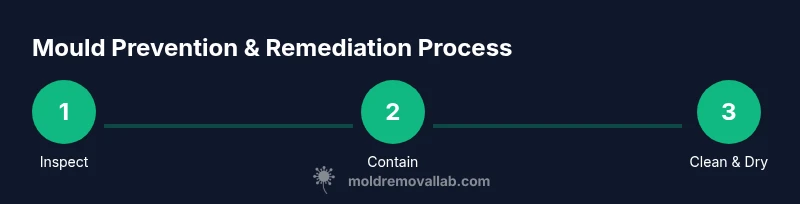
- 1
Assess the area and scope
Visually inspect for visible mould growth and moisture sources. Note areas that feel damp or smell mouldy. Decide if the problem is small enough to handle yourself or requires a pro.
Tip: Take photos before starting to document changes and monitor progress. - 2
Contain the area
Seal off the affected space with plastic sheeting and tape to prevent spores from spreading to clean areas.
Tip: Avoid disturbing mouldy surfaces more than necessary during containment. - 3
Address moisture sources
Fix leaks, improve ventilation, and remove any standing water. Moisture control is the key to long-term success.
Tip: Check under sinks and around windows for hidden leaks. - 4
Clean nonporous surfaces
Prepare a detergent solution and scrub mould from hard, nonporous surfaces. Rinse and dry completely.
Tip: Never mix cleaners; follow product instructions for safe use. - 5
Handle porous materials
Discard or seal porous items with deep mould penetration (e.g., drywall, insulation) that cannot be thoroughly cleaned.
Tip: When in doubt, replace rather than re-clean porous materials to prevent regrowth. - 6
Dry thoroughly and monitor
Use dehumidifiers and fans to dry the area completely. Recheck humidity levels daily for a week after remediation.
Tip: Keep relative humidity below 60% to reduce regrowth risk.
FAQ
What are moulding ideas in home health?
Moulding ideas are practical strategies to prevent and address mold growth in homes, focusing on moisture control, ventilation, and safe cleanup. They help keep indoor air quality high and surfaces mold-free when applied consistently.
Moulding ideas are practical mold-prevention strategies to keep your home healthy and mold-free.
How do I measure indoor humidity?
Use an inexpensive hygrometer to monitor RH levels. Aim for 30-50% in most spaces; adjust with dehumidifiers or ventilation as needed.
A hygrometer helps you track humidity; keep it under about 50 percent in most rooms.
What cleaners are safe for mould?
Use mild detergents for cleaning hard surfaces. Avoid mixing cleaners and follow product directions. Porous materials may require replacement rather than cleaning.
Choose a mild cleaner and follow the label; replace porous items if mould penetrates deeply.
How long does remediation take?
Time depends on area size and moisture control. Small jobs may take a few hours; larger spaces can require multiple visits to ensure complete drying.
It varies by size; plan for a few hours to multiple visits for bigger areas.
Can mould be completely removed?
Mould growth can be reduced to negligible levels with proper cleaning and moisture control, but spores are everywhere. Ongoing maintenance is essential to prevent regrowth.
Mould can be controlled and greatly reduced, but ongoing maintenance matters.
When should I replace mould-affected materials?
If mould penetrates porous materials or dye/surface treatments are damaged, replacement is usually safer and more effective than cleaning.
If the mould has penetrated porous materials, replace them.
The Essentials
- Identify moisture sources before remediation.
- Contain and dry areas promptly to prevent spread.
- For large or hidden mould, seek professional help.
- Use proper PPE and never mix cleaning agents.
- Maintain humidity control to prevent recurrence.