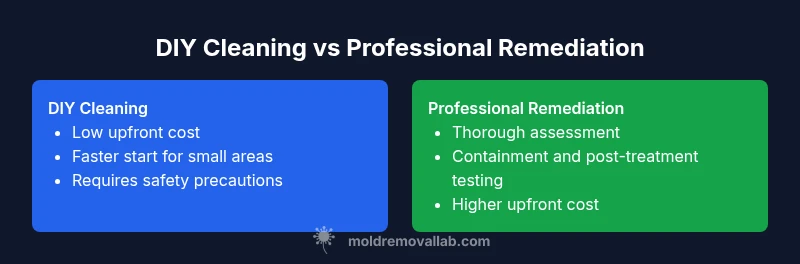
Mold or mildew on wood: DIY vs professional remediation — an objective comparison
Compare DIY cleaning vs professional remediation for mold or mildew on wood. Learn identification, testing, safety, costs, and practical steps to restore wood surfaces safely.


For wood with visible growth, start with a quick assessment: small, surface-level mildew on accessible wood can often be cleaned DIY, but larger or hidden growth requires professional remediation. The choice hinges on scope, moisture control, and wood condition. This comparison weighs DIY cleaning against professional remediation in terms of safety, effectiveness, cost, and timelines.
Understanding mold or mildew on wood
Mold or mildew on wood is a common indoor issue when moisture persists. Mold refers to colonies of mold spores that can appear fuzzy or slimy and can penetrate porous surfaces. Mildew typically presents as powdery, light-colored patches on the surface. On wood, both forms thrive when there is adequate moisture, a food source (cellulose in wood), and a stable temperature. The primary culprit is elevated humidity or water intrusion that raises surface moisture content in wood fibers. Understanding these distinctions helps homeowners decide whether to tackle the problem themselves or call in professionals. According to Mold Removal Lab, moisture management is the single most effective intervention: without removing the moisture source, any cleaning may be temporary. The phrase "mold or mildew on wood" captures a spectrum of growth that ranges from harmless surface staining to deeper colonization that can compromise structural material if left unchecked. When you encounter this on framing, trim, or furniture, assess the extent: is it isolated to surface veneer, or have you detected penetration into porous core? The next sections compare the most common remediation paths and the criteria that guide a decision to DIY or hire a professional.
Common sources and indicators of mold or mildew on wood
A variety of moisture sources can promote mold or mildew on wood, including roof leaks, plumbing drips, condensation from showers or basements, or high ambient humidity. Wood is particularly vulnerable because it contains cellulose, which mold feeds on, and has a network of pores that can trap moisture. Indicators include visible discoloration, fuzzy or slimy textures, a musty odor, warped boards, or softened edges. Quick checks like a moisture meter reading above 15-20% in wood, damp attic spaces, or chronically humid rooms should raise concerns. In many homes, the most insidious growth hides behind baseboards, under cabinets, or inside wall cavities, where water damage is not immediately obvious. The Mold Removal Lab team emphasizes that identifying moisture sources and confirming sustained high humidity is essential before planning any remediation. Early detection improves outcomes and reduces the likelihood of recurring growth.
Health and structural risks associated with wood mold
Exposure to mold or mildew on wood can trigger allergic reactions, coughing, sneezing, and throat irritation in sensitive individuals. In some cases, prolonged exposure may worsen asthma symptoms or respiratory conditions. From a structural standpoint, mold can degrade wood fibers over time, especially if moisture is not addressed, compromising load-bearing elements in framing or structural panels. While surface mildew can often be cleaned, deeper or sustained growth may require wood removal or replacement to restore integrity. The Mold Removal Lab analysis notes that addressing moisture sources is as important as cleaning the visible growth; without moisture control, remediation efforts may only provide a temporary fix. For households with occupants who have allergies, kids, or elderly residents, taking a cautious, methodical approach is critical.
Testing and verification: when to test and how to test
Not every wood growth requires formal testing, but certain situations demand it: suspected hidden growth behind walls, persistent musty odors despite cleaning, or growth covering a large area. Surface testing can confirm the presence of mold species, while air and surface sampling help determine whether spores are circulating in the indoor environment. Moisture measurements are crucial: consistently elevated wood moisture readings indicate ongoing moisture problems that must be solved to prevent reoccurrence. If you plan to proceed with remediation, professional testing can guide the scope and help verify a successful cleanup. Mold Removal Lab recommends starting with a moisture source assessment and, where needed, validating remediation with post-treatment testing to ensure indoor air quality improves and does not rebound.
Remediation approaches: DIY cleaning vs professional remediation
DIY cleaning is often feasible for light, surface-level mildew on wood and involves containment, PPE, and surface cleaning with safe agents. Start by isolating the area to prevent spores from spreading, wear gloves, goggles, and an N95 respirator, and use mild cleaners suitable for wood surfaces. Common approaches include soap and water, white vinegar, or hydrogen peroxide for mildew spots; avoid aggressive solvents that could damage wood. For more extensive growth or growth beneath finishes, DIY may be insufficient. Professional remediation employs trained technicians who can seal off affected areas, perform detailed inspections, test moisture levels, and treat structural components. They may use specialized equipment such as negative air machines and strategic moisture control strategies to prevent recurrence. The Mold Removal Lab emphasizes that source control (addressing leaks, condensation, or poor ventilation) is essential whether you choose DIY or pro work, as moisture control prevents future outbreaks. In cases of flood damage or where wood has become structurally compromised, replacement rather than cleaning becomes the safer option.
Cleaning vs replacement: decision logic for wood
Deciding whether to clean or replace wood hinges on the extent of contamination and the wood’s condition. If mold growth is isolated to easily accessible surfaces and the wood remains structurally sound, cleaning and moisture control can restore the surface. If wood is warped, rotted, or spongy to the touch, cleaning may remove the surface mold but will not restore structural integrity, and replacement is recommended. Hidden growth behind veneers or within studs requires professional assessment. The goal is to maximize long-term health and structural safety, not just cosmetic improvement. The Mold Removal Lab team notes that a conservative approach—prioritizing safety, moisture control, and proper disposal of contaminated materials—reduces the risk of recurrence and protects occupants.
Prevention and maintenance: keeping wood mold-free
Prevention focuses on moisture management and wood protection. Increase ventilation in damp areas, use dehumidifiers to maintain relative humidity below 50-60%, repair leaks promptly, and improve drainage around the home exterior. For wood surfaces, consider applying mold-resistant coatings or sealants after cleaning and drying, particularly in basements, crawl spaces, kitchens, and bathrooms. Regular inspections of wood trim, cabinetry, and framing help catch issues early. Quick action after water exposure limits mold growth, and addressing underlying moisture sources prevents repeated infestations. Uniform maintenance, coupled with repair of any structural damage, supports long-term wood health and indoor air quality.
DIY vs professional remediation: practical decision guide
When deciding between DIY cleaning and professional remediation, consider the scope, moisture control, wood condition, and your comfort with handling contaminants. For small, surface-level mildew on wood, DIY can be cost-effective and efficient if you follow safety protocols and ensure moisture sources are addressed. For larger areas, hidden growth, or compromised wood, professional remediation is recommended. The decision should also factor in your time constraints and the potential health risks for household members. The Mold Removal Lab Team recommends a staged approach: assess moisture sources, clean accessible areas, test if needed, and verify improvements with post-treatment checks. If you’re unsure about the extent of growth, seek a professional evaluation to avoid underestimating the problem.
What to expect during a remediation project
A remediation project typically begins with an assessment, containment of the affected area, and a plan to manage moisture and air quality. Technicians may use negative air pressure, HEPA vacuums, and targeted cleaning methods to remove mold from wood surfaces. After cleaning, surfaces should be thoroughly dried to inhibit regrowth, and moisture sources must be repaired. Depending on the severity, replacement of damaged wood may be necessary to restore structural integrity. A reputable remediation firm will provide a scope of work, document conditions before and after, and may offer post-remediation testing to confirm air quality improvements. Expect a staged process with clear timelines and a focus on safety and moisture control.
Comparison
| Feature | DIY Cleaning | Professional Remediation |
|---|---|---|
| Cost range | Low (DIY materials) | Medium to high (professional services) |
| Time to complete | Hours to a couple of days (depending on scope) | 1-3 days or more (scope-dependent) |
| Disruption to living space | Low to moderate (short sessions) | Higher (containment and setup) |
| Effectiveness for minor mildew | Good with proper technique | Excellent for hidden or extensive growth |
| Safety risk | Low with PPE and ventilation | Higher if not properly contained and sealed |
| Testing needs | Often optional for small areas | Common for verification and warranty |
| Impact on wood health | Preserves wood with timely moisture control | Provides professional assessment of damage |
| Warranty/guarantee | Typically none | Often includes service guarantees or warranties by the contractor |
Upsides
- Lower upfront cost for basic mildew handling
- Faster start for small, surface-focused issues
- Greater control over cleaning process
- Educational experience for homeowners
The Bad
- Health risks if PPE and containment are neglected
- Risk of incomplete removal with hidden or deep growth
- Moisture sources may persist, causing recurrence
- Potential wood damage if improper cleaners are used
DIY is suitable for small, surface mildew on wood; professional remediation is recommended for widespread or hidden growth
For minor, surface-level mildew on wood, a careful DIY approach can be effective when moisture sources are controlled. However, larger infestations, growth behind surfaces, or damaged wood warrant professional remediation for safety and thoroughness. The Mold Removal Lab team recommends starting with a moisture assessment and seeking professional input if growth seems extensive.
FAQ
Is mold or mildew on wood dangerous to health?
Mold or mildew on wood can trigger allergies and respiratory symptoms, especially in sensitive individuals. Prompt action is advisable, and extended exposure should be avoided. If growth is extensive or persistent, consult a professional to assess risks and mitigation steps.
Mold on wood can affect air quality and trigger allergies or asthma in some people, so it's best to act quickly and get a proper assessment if it covers a large area.
Can you clean mold on wood yourself?
Yes, for small, surface-level mildew on wood, using proper PPE and safe cleaners can be effective. Ensure moisture sources are fixed and areas are well ventilated. For larger areas or if you suspect hidden growth, seek professional remediation.
You can tackle small spots yourself, but if it’s spreading or behind wood, call a pro.
How can I tell if mold is behind the wood surface?
Hidden mold often accompanies persistent musty odors, staining that seems to reappear after cleaning, and elevated moisture readings. Professional testing or a structural inspection may be needed to confirm concealed growth.
If you notice a musty smell or the problem keeps coming back after cleaning, there could be hidden mold.
When should wood be replaced rather than cleaned?
Replacement is recommended when wood is warped, rotten, or structurally compromised, or when mold has deeply penetrated the wood and cannot be safely cleaned. In some cases, replacement of affected sections is the safest option.
If the wood is damaged or the mold is deeply embedded, replacement is the safer route.
What cleaning agents are safe for mold on wood?
Use cleaners formulated for wood surfaces and avoid aggressive solvents that could damage wood fibers. Mild soap and water, white vinegar, or diluted hydrogen peroxide are common options; avoid mixing cleaners and follow manufacturer guidelines.
Stick to gentle cleaners and protect the wood; avoid harsh chemicals without guidance.
Should I hire a mold remediation contractor for wood mold?
If mold covers a large area, recurs after cleaning, or you suspect structural damage, hiring a professional is advisable. A contractor can ensure containment, proper remediation, and post-treatment verification.
For big jobs or questionable damage, a professional is the safer choice.
The Essentials
- Assess moisture sources before cleaning
- Use DIY methods only for light mildew on wood
- Prioritize safety and PPE during any cleanup
- Consider professional help for hidden or extensive mold
- Address moisture and ventilation to prevent recurrence