Mold in Basement: How to Remove Safely and Effectively
A practical, safety-first guide to removing basement mold. Learn DIY steps for small patches, PPE and containment, drying, and prevention, with professional guidelines from Mold Removal Lab (2026).


This guide shows you how to remove mold from basement patches safely, focusing on safety, containment, cleaning, drying, and prevention. It covers DIY steps for small outbreaks and when to call a professional for larger growth, moisture control, and post-remediation checks. Follow these steps to reduce health risks and protect your home's structure.
What mold is in basements and why it's harmful
Basement mold is a common indoor contaminant that thrives in damp, dark spaces. It can appear as fuzzy spots on walls, stains on concrete, or hidden growth behind drywall. Learning how to remove mold in basement how to remove is essential to protect indoor air quality and occupant health. According to Mold Removal Lab, moisture intrusion is the root cause and must be addressed to prevent recurrence. For most homeowners, a small initial outbreak can be managed with careful prep, proper PPE, and safe cleaning methods. The goal is to prevent spores from spreading to unaffected areas and ensure the space dries completely after cleanup. This guide provides practical steps, safe products, and checklists to help you decide whether DIY is feasible or if professional remediation is needed. We’ll also explain how to document the work for future reference and potential claims. This information helps you act confidently, reduce exposure to allergens, and protect vulnerable household members. The phrase mold in basement how to remove serves as a good starting search term as you begin your remediation plan.
Common mold culprits in basements
Basements are prone to mold growth because they often suffer from higher humidity, poor drainage, and historical water intrusion. Common culprits include white, green, or black mold that grows on concrete, drywall, insulation, and wood framing. Leaks from roofs, cracked foundations, and poorly sealed windows let moisture linger, creating ideal conditions for mold spores to settle. Humidity above 60% for extended periods can fuel growth, especially in poorly ventilated spaces. Seasonal flooding or sump-pump failures also contribute. By understanding the typical sources, you can target moisture control measures and reduce the risk of recurring mold in basement environments. When you search for mold in basement how to remove, identify the exact location, the surface type, and the level of growth to tailor your remediation approach. Mold Removal Lab’s analysis shows that addressing the moisture source is as important as cleaning itself, because without moisture control, mold returns.
Safety first: PPE and containment when removing mold
Safety is non-negotiable when dealing with mold. Always wear a respirator with a P100 or N95 equivalent, eye protection, and disposable gloves. A protective suit reduces skin exposure, and a HEPA-filter vacuum helps capture spores during cleanup. Establish containment by sealing doors with plastic sheeting and avoiding air leaks; keep occupants and pets away from the work area. Ventilate within the contained space using fans directed away from clean areas, and turn off HVAC systems to prevent spores from spreading. Before you begin, plan for waste disposal by placing contaminated materials in sealed bags for proper removal. Following these precautions minimizes health risks and improves the odds of a thorough, safe cleanup. The Mold Removal Lab team emphasizes that proper PPE and containment are the first line of defense in any remediation effort.
DIY removal approach for small moldy patches
If the mold growth is small and confined, you can often handle it yourself with careful steps and protective equipment. Start by isolating the area, then gently remove mold-damaged porous materials if salvage is impossible. Cleanable hard surfaces can be scrubbed with an EPA-approved mold cleaner or a simple detergent solution. Always use a separate cloth for dirty areas and dispose of used rags in sealed bags. After cleaning, rinse the surface and dry it completely. Quick-drying reduces the chance of regrowth, so plan for active drying using fans and a dehumidifier. Remember, if the patch expands beyond a few square feet or is in porous materials, stop and consult a professional. The key is to act early and keep moisture under control to prevent reoccurrence.
Step-by-step overview: containment, cleaning, and drying
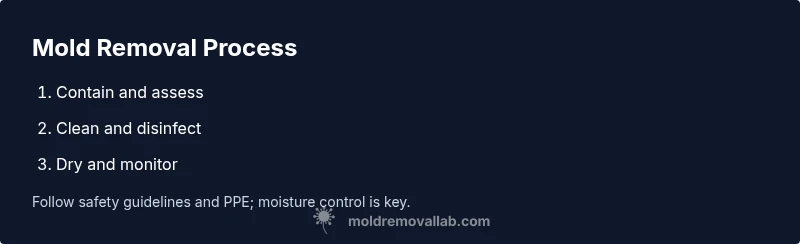
Below is a concise sequence you can follow for small to moderate mold issues, with emphasis on safety and thorough drying. Contain the area to limit spread, then remove contaminated materials. Clean all affected surfaces with a suitable cleaner, rinse, and dry completely. Use dehumidifiers and good airflow to reach low moisture levels. Inspect for hidden moisture behind walls and in insulation, which often drives relapse. Finally, repair leaks and improve drainage to reduce future moisture intrusion. This overview aligns with best practices for basement mold removal and helps homeowners build a solid remediation plan. Always confirm that the space remains dry for at least 24–48 hours before considering reoccupation.
Tools, cleaners, and materials for basement mold removal
Gather these items before you start, and separate essential tools from optional ones. Essential PPE: N95 respirator, goggles or face shield, disposable coveralls, and non-powdered gloves. Cleaning supplies: EPA-approved mold cleaner or detergent, and a scrub brush. Equipment: HEPA-filter vacuum, plastic sheeting (6 mil), painter's tape, and sturdy trash bags. Drying aids: dehumidifier or desiccant, fans, and moisture meter to verify dryness. Optional but helpful: infrared thermometer to detect cold spots where moisture hides. Keep spare rags, a bucket, scrubbing sponges, and a chalk line or marker to map affected areas. These tools help you execute a safe and effective basement mold removal.
Drying and preventing future growth: moisture control
Drying is the critical final step of basement mold removal. After cleaning, run a dehumidifier and fans in the affected area for at least 24–48 hours, checking the moisture level regularly. Keep relative humidity below 50-60% if possible. Repair any leaks and ensure proper drainage away from the foundation to prevent future intrusion. Improve ventilation to balance humidity, especially in poorly ventilated basements. Consider insulating cold surfaces to reduce condensation. Regularly inspect vulnerable spots and address water intrusion promptly. A comprehensive moisture-management plan reduces the odds of mold returning and supports long-term safety. The Mold Removal Lab team notes that moisture control is often the deciding factor in successful remediation.
When to call professional remediation
For larger outbreaks, growth behind walls, or mold covering more than a few square feet, professional remediation is recommended. Mold spores can become airborne during cleanup, increasing exposure risk for occupants with allergies or asthma. A licensed contractor can perform a thorough inspection, remove affected materials safely, and perform post-remediation testing. Even with DIY efforts, major plumbing leaks or foundation cracks require expert intervention. If you are unsure about the extent, or if you notice persistent musty odors, call a professional promptly. The Mold Removal Lab experts advise erring on the side of caution when mold growth seems widespread.
Aftercare: documenting findings and verifying completion
Document all steps taken, including photos of the area before and after cleanup, the cleaning products used, and measurements of moisture levels. Keep receipts and a written remediation plan for future reference or insurance claims. Recheck moisture regularly for several weeks after cleanup and watch for new stains or odors. If tests show mold spores persist or humidity remains high, re-evaluate moisture sources and consider professional follow-up. Proper aftercare helps ensure a durable result and safer space for occupants.
Tools & Materials
- N95 respirator mask(Fit-tested if possible; replace after each cleanup)
- Goggles or face shield(Eye protection against splashes and spores)
- Disposable coveralls(Non-porous, ideally disposable)
- Disposable gloves (nitrile or latex)(Double glove recommended for latex allergies)
- HEPA-filter vacuum(Use only for dry surfaces; avoid wet cleanup)
- Plastic sheeting (6 mil) and tape(Create containment barriers)
- Mold cleaner or detergent(EPA-approved cleaner; avoid mixing with ammonia)
- Bucket, scrub brush, sponge(For scrubbing surfaces)
- Drying equipment (dehumidifier or desiccant)(Keep moisture low during and after cleanup)
- Trash bags (heavy-duty)(Seal and dispose of contaminated materials)
- Moisture meter or hygrometer(Optional but helpful to verify dryness)
- Camera or notebook for documentation(Photograph progress and store notes)
Steps
Estimated time: 6-12 hours
- 1
Assess and map the affected area
Perform a thorough visual inspection to determine the extent of mold growth. Photograph all affected surfaces and measure affected areas. Mark boundaries on walls or floors so you know what to clean and what to avoid.
Tip: Take photos before you disturb mold to document conditions for future reference. - 2
Put on PPE and establish containment
Don PPE before touching mold. Create a physical barrier using plastic sheeting to prevent spores from entering clean areas. Seal doors and vents if possible.
Tip: Label the containment area to keep others away during cleanup. - 3
Ventilate the space and prevent spread
Ventilation should occur within the containment; turn off HVAC to prevent spores from spreading to other rooms. Use a fan to move air out of the containment through an exterior opening if available.
Tip: Do not create cross-ventilation by opening other doors; maintain containment. - 4
Remove mold-damaged porous materials
Remove porous materials (drywall, insulation) that are mold-damaged beyond salvage. Place contaminated items in sealed bags for proper disposal.
Tip: Avoid tearing material in place to minimize dust and spore release. - 5
Clean and disinfect hard surfaces
Scrub solid surfaces with an EPA-approved cleaner or detergent. Rinse surfaces and dry thoroughly to reduce moisture for future growth.
Tip: Follow label directions for dwell time and avoid mixing cleaners with ammonia. - 6
Dry the area thoroughly
Use a dehumidifier and fans to dry surfaces. Monitor moisture levels and maintain low humidity until completely dry.
Tip: Check moisture on hidden surfaces behind walls if accessible. - 7
Address moisture sources
Repair leaks, seal foundations, and improve drainage to prevent future intrusion. Ensure gutters direct water away from the foundation.
Tip: Consider updating insulation to reduce condensation on cold surfaces. - 8
Verify completion and plan follow-up
Recheck for visible mold and re-test humidity. Document progress and schedule follow-up checks or air-quality tests if needed.
Tip: Maintain a remediation log with dates and observations.
FAQ
Is basement mold dangerous to my health?
Mold exposure can irritate the lungs, eyes, and skin, especially for children, the elderly, and people with asthma. If symptoms worsen, consult a medical professional. Minimize exposure during cleanup by using PPE and containment.
Yes, mold can affect health. Limit exposure and wear protective gear; seek medical advice if you notice persistent symptoms.
Can I use bleach to remove mold on all surfaces?
Bleach can kill surface mold on non-porous surfaces but does not address porous materials or hidden growth. For porous items, disposal is often necessary and moisture control remains crucial.
Bleach can help on non-porous surfaces, but it’s not a catch-all solution and won’t fix moisture issues.
How long does remediation take in a basement?
For small patches, cleanup may take a few hours, followed by drying over 24–48 hours. Larger growth behind walls or extensive damage will require more time and possibly professional services.
It varies; small jobs are a few hours plus drying time, larger jobs take longer.
Should I test the air after cleanup?
Air testing isn’t always necessary for every job but can help confirm removal in persistent cases. If moisture remains high or odors linger, a professional assessment is advised.
Air testing isn’t always required, but it can help confirm success in tricky cases.
What should I do if mold returns after cleaning?
Reassess moisture sources and inspect for new leaks. If growth persists, consult a professional remediation service to identify hidden sources and ensure complete removal.
If mold returns, recheck moisture and consider professional help to find hidden sources.
Is professional remediation required for black mold?
Persistent growth or mold that covers large areas should typically be handled by a licensed professional. They can safely remove contaminated materials and perform post-remediation testing.
Yes—large or persistent black mold typically requires a professional remediation.
Watch Video
The Essentials
- Begin with safety and containment.
- DIY is feasible for small patches with proper PPE and containment.
- Drying and moisture control prevent reoccurrence.
- Document findings and know when to call a pro.