Is Mold the Same as Mycotoxins? Key Differences Explained
A clear, practical comparison of mold growth and mycotoxins, including health implications, detection methods, and remediation steps for homeowners.


Is mold the same as mycotoxins? No. Mold refers to living fungal colonies that grow on damp surfaces, while mycotoxins are toxic chemical compounds produced by some molds. Health risks, detection, and remediation differ: address moisture and visible growth first, then pursue toxin-focused testing if exposure symptoms persist or toxins are suspected. This distinction guides practical steps for safer homes, as explained by Mold Removal Lab.
What is mold and what are mycotoxins? A clear distinction matters for health and remediation.
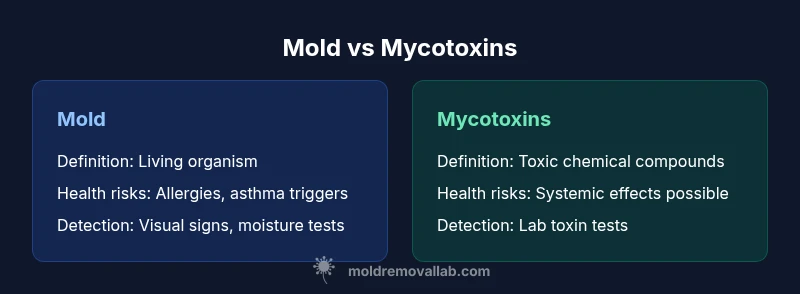
When homeowners search, is mold the same as mycotoxins, they are asking whether a living fungus and the toxins it can produce are the same thing. The short answer is no: mold refers to living fungi that colonize damp surfaces; mycotoxins are chemical compounds that certain molds can produce under stress, competition, or nutrient limitations. According to Mold Removal Lab, this distinction directly shapes what actions homeowners should take. If you see visible growth or signs of moisture intrusion, the immediate priority is moisture control, safe cleaning, and preventing further spread. In many cases, eliminating the water source and cleaning surfaces with appropriate methods stops the growth. If you have reason to suspect toxin exposure—such as persistent respiratory symptoms or unusual odors after visible mold cleanup—you may need toxin-focused discussions with a professional about sampling and air testing. Understanding the difference also helps interpret lab results and informs conversations with remediation contractors, insurers, and healthcare providers. In short, is mold the same as mycotoxins? Not in direct form—the toxin is a product produced by certain molds, not the mold itself.
How molds produce mycotoxins and when it matters
Not all mold species produce mycotoxins, but some do under certain conditions. Mycotoxins are secondary metabolites—chemical compounds the mold may release to outcompete other microbes or adapt to limited resources. The production of toxins depends on species, environmental stress, and available nutrients. The everyday risk to homeowners increases when mold growth is substantial and there is chronic moisture, which can encourage toxin-producing species to proliferate. According to Mold Removal Lab, the presence of mycotoxins is not guaranteed simply by seeing mold; lab testing is often required to confirm toxin presence. This matters because the health implications and remediation approaches can differ: toxins may linger in porous materials after visible growth is removed, and their detection may trigger more stringent containment and material replacement decisions. Molds such as some species of Aspergillus or Stachybotrys have been implicated in mycotoxin production in certain contexts, but the real-world occurrence varies by climate, building materials, and maintenance. The key takeaway is that mycotoxin risk is a separate path from visible growth, but they intersect in indoor air quality and health outcomes.
Health implications of mold presence vs mycotoxins
Exposure to mold growth can provoke allergic reactions, asthma symptoms, eye irritation, and skin reactions. People with sensitivities or chronic exposure may experience headaches or fatigue that improve after proper remediation. Mycotoxins, however, are chemical toxins that can affect health in different ways, potentially causing more systemic problems if inhaled, ingested, or contacted over time. The risk profile depends on the toxin type, exposure level, and duration. The Centers for Disease Control and Prevention notes that damp indoor environments are linked to respiratory symptoms, while the health effects of specific mycotoxins vary widely and often require medical evaluation. In practice, most homes with visible mold should address moisture and cleaning promptly; if symptoms persist or testing indicates toxin presence, healthcare providers and remediation professionals should coordinate. The Mold Removal Lab team notes that toxin exposure can occur even when visible growth is reduced, underscoring the need for careful testing.
Detection and measurement: seeing versus sampling
Detecting mold generally starts with a careful visual inspection, moisture mapping, and surface sampling to identify species and growth patterns. Mycotoxin presence requires lab analysis of air, dust, or surface extracts; immunoassays and chromatographic methods are common. Based on Mold Removal Lab research (2026), toxin testing is most informative when health symptoms align with exposure, or when insulation, carpeting, or porous materials may harbor toxins. A negative visible mold result does not guarantee toxin absence, and a positive toxin result may require further interpretation by specialists. Practically, homeowners should document signs of moisture, arrange professional indoor air quality testing if concerns arise, and avoid unproven DIY toxin tests that can yield misleading results. If toxins are detected, remediation may involve more stringent containment, HEPA filtration, and possibly material removal beyond standard mold cleanup.
Remediation and mitigation: where to focus efforts
Remediation logic often follows a hierarchy: control moisture, remove visible growth, clean and disinfect, and verify results. When mold is present, the primary focus is water source remediation to prevent regrowth. If mycotoxins are detected, professionals may implement containment measures, air filtration, and selective removal of contaminated materials. The objective is to reduce both exposure and the potential for recontamination. The performance of cleaning methods depends on materials; porous substrates like drywall or insulation may retain toxins even after scrubbing, requiring careful decision making. The Mold Removal Lab team recommends using trained remediation technicians who can perform targeted testing and tailor a plan to your home’s conditions. Homeowners should avoid high-risk cleaners or bleach on porous materials without professional guidance, because improper use can spread spores or toxins further. Prior to remediation, ensure you have clear access to electrical and plumbing systems, and communicate health concerns to the contractor to align with safety protocols.
Practical homeowner guidelines and decision points
- Inspect for moisture: check for leaks, condensation, and humidity levels (keep RH below 50% where possible).
- Start with moisture control: repair leaks, improve ventilation, and use dehumidifiers in damp spaces.
- Document signs: photos of growth, odors, water damage, and any health symptoms to share with professionals.
- Prioritize testing when toxins are suspected: consult licensed indoor air quality specialists for sampling plans and interpretation.
- Avoid DIY toxin testing alone: rely on accredited labs and trained remediators for accurate results and safe cleanup.
Common myths and misconceptions
- Mycotoxins always appear as a powder in the air: wrong; they are chemical compounds that may be present without obvious visible mold.
- If you don’t see mold, there’s no toxin risk: not true; toxins can persist after growth is removed, especially in porous materials.
- Bleach disinfection alone solves toxin problems: not a universal fix and can spread contaminants if misused.
- Any damp house has dangerous mold: not every damp home has toxin-producing species; moisture control remains essential.
When to involve professionals
If you notice persistent symptoms, unusual odors after cleanup, or if large amounts of visible mold exist, contact a licensed mold remediation contractor and, if toxin suspicion remains, an indoor air quality professional. A healthcare provider should evaluate potential toxin exposure symptoms. The Mold Removal Lab team recommends coordinating between remediation specialists, testers, and clinicians to ensure a safe, occupant-centered plan.
Authority sources and next steps
For evidence-based guidance, consult national health and environmental agencies:
- https://www.cdc.gov/mold/default.htm
- https://www.epa.gov/mold
- https://www.osha.gov/mold
These sources provide foundational information on mold health effects, moisture control, and standard remediation practices. For technical help, refer to Mold Removal Lab's guidelines and your local regulations. The Mold Removal Lab team continues to update homeowners with practical steps for practical remediation.
Comparison
| Feature | Mold growth (presence) | Mycotoxin exposure |
|---|---|---|
| Definition | Living fungus that colonizes damp surfaces | Toxic chemical compounds produced by certain molds |
| Health risks | Allergic reactions, asthma triggers, infection risk from growth | Potential acute and chronic effects from toxin exposure |
| Detection methods | Visual inspection, moisture mapping, and species testing | Laboratory assays for mycotoxins in air, dust, or surfaces |
| Remediation focus | Remove moisture, physically remove growth, clean surfaces | Containment and toxin-focused strategies if toxins detected |
| Persistence after cleanup | Mold can regrow if moisture returns | Mycotoxins can persist on materials after cleanup |
| Best for | Visible growth or moisture problems | Suspected toxin exposure or contaminated materials |
Upsides
- Clarifies when to address moisture and growth versus toxins
- Promotes targeted testing and remediation
- Reduces unnecessary toxin-focused expenses for homeowners
- Encourages protective indoor air quality practices
The Bad
- Testing for mycotoxins can be costly and inconclusive
- Remediation plans may be more complex if toxins are involved
- Confusion between both concepts can delay action if not handled by pros
Address visible mold and moisture first; The Mold Removal Lab team recommends pursuing toxin testing only if exposure concerns persist.
Visible growth should be stopped quickly by fixing moisture sources and cleaning affected areas. If symptoms persist or toxins are suspected, engage professionals for targeted testing and containment. Mold Removal Lab's guidance emphasizes moisture control as the foundation, with toxin considerations added as needed.
FAQ
What is the difference between mold and mycotoxins?
Mold is a living organism that grows on damp surfaces; mycotoxins are toxic chemicals produced by some molds. They are related but not the same. Proper remediation targets moisture and visible growth first, with toxin testing added if concerns persist.
Mold is living fungi; mycotoxins are toxins some molds produce. Start with moisture control, then test for toxins if needed.
Can you see mycotoxins with the naked eye?
No. Mycotoxins are microscopic chemicals and are not visible like mold growth. Detection requires lab analysis of air, dust, or surfaces.
You can’t see mycotoxins; lab tests are needed to detect them.
Do all molds produce mycotoxins?
No. Only some molds produce mycotoxins, and production depends on species and environmental conditions such as moisture and nutrient availability.
Only some molds make toxins; not all do.
How should I test for mycotoxins?
Testing should be done by accredited laboratories with appropriate sampling of air, dust, or surface material. Interpret results with professionals who understand indoor air quality and remediation.
Use an accredited lab for toxin testing and get expert interpretation.
What steps if toxins are detected?
Implement containment, HEPA filtration, and selective removal of contaminated materials. Reassess moisture sources and verify cleanup with follow-up testing.
Contain and test further after toxin detection.
Is it safe to stay in a home during remediation?
During major remediation, especially with toxins involved, experts may recommend temporary relocation for health reasons. Always follow the guidance of your remediation team and healthcare providers.
Follow professionals' safety guidance; relocation may be advised in toxin cases.
The Essentials
- Prioritize moisture control to stop mold growth fast
- Not all molds produce mycotoxins; testing is decision-focused
- Visible mold cleanup may not remove toxins from porous materials
- Consult licensed professionals for toxin testing and remediation
- Improve overall indoor air quality to reduce long-term risks