Is Mold the Same as Asbestos? A Practical Comparison
This in-depth comparison explains how mold and asbestos differ, their health risks, and how to approach remediation safely with Mold Removal Lab guidance.


No. Mold and asbestos are not the same; mold is a fungus that grows with moisture, while asbestos is a mineral fiber linked to serious health risks. Because the hazards, exposure routes, and remediation steps differ, proper identification and appropriate actions are essential.
Is mold the same as asbestos? The misconception explained
In everyday conversations, people often ask if is mold the same as asbestos. The answer is clearly no, and understanding why helps homeowners avoid unsafe experiments. Mold and asbestos are two distinct hazards with different origins and health implications. Mold is a biological contaminant composed of fungi that colonize damp surfaces when moisture is present. Asbestos refers to a group of mineral fibers once widely used in construction. Recognizing the difference matters because the remediation strategies, safety requirements, and potential health risks diverge sharply. These hazards may appear in the same space, but their risks and handling requirements are not interchangeable. Mold Removal Lab emphasizes that accurate identification is the first essential step in a safe remediation plan.
What mold is and where it comes from
Mold is not a single organism but a large group of organisms that reproduce through spores. These spores are commonly found in the air and can settle on any damp surface. When moisture levels rise due to leaks, humidity, or poor ventilation, spores begin to grow into visible colonies on walls, ceilings, or insulation. Common sources include unfinished basements, bathrooms, and kitchens where leaks or condensation occur. Mold growth can continue as long as moisture remains, and it can affect indoor air quality by releasing spores and other compounds. The remediation focus for mold centers on moisture control, containment to prevent spread, and removal of affected materials followed by drying to prevent return. Mold growth is addressed through practical moisture management rather than fiber containment.
What asbestos is and how it was used historically
Asbestos is a mineral fiber that was widely used in construction for decades due to its heat resistance and strength. It appeared in insulation, flooring, ceiling tiles, and fireproof coatings. When intact, asbestos-containing materials may not pose a risk; however, when disturbed by demolition, renovation, or improper handling, fibers can become airborne and be inhaled. Inhaled asbestos fibers can cause long-latency diseases. It is important to note that asbestos exposure risks are governed by regulations that require licensed professionals for removal in many regions. If you suspect asbestos-containing materials in your home, do not disturb them and seek a licensed abatement contractor. The key difference is that asbestos concerns hinge on fiber release, while mold concerns hinge on moisture and organic growth.
How they affect health: exposure routes and risks
Mold exposure usually irritates the eyes, skin, and respiratory tract. People with allergies, asthma, or compromised immune systems may experience more pronounced symptoms. Mold can contribute to coughing, wheezing, and throat irritation, especially in damp environments. Asbestos exposure is primarily a problem when fibers become airborne; inhalation can lead to serious diseases such as asbestosis, lung cancer, or mesothelioma. The risk is not uniform; it depends on the fiber concentration, duration of exposure, and the effectiveness of containment. Because these mechanisms differ, response actions also differ. For mold, reducing moisture and improving ventilation are central. For asbestos, professional containment and regulated removal are necessary to prevent fiber release.
How you test and identify hazards safely
Identifying whether you are dealing with mold or asbestos requires sampling and laboratory analysis. Visual signs alone can be misleading, and attempting to determine the substance by sight is not reliable. For mold, a moisture assessment and visible growth indicate the need for remediation. For asbestos, professionals use accredited laboratories to test suspect materials; results guide whether abatement is necessary and what containment methods to employ. If you are in doubt, avoid disturbing the material and contact a certified environmental hygienist or licensed contractor. The testing process ensures that the right remediation plan is chosen, and that occupants are protected.
Immediate steps if you discover mold or suspect asbestos
First, address any water intrusion and improve ventilation to slow mold growth. Do not scrape or sand moldy surfaces; instead, isolate the area and consider temporary containment. For suspected asbestos, do not drill, cut, or remove materials. Contact licensed professionals to arrange testing and ensure safe handling, disposal, and air monitoring if required. Prepare a basic plan for remediation, including access routes, containment zones, and communication with occupants. Taking prompt, responsible actions reduces exposure risk and helps protect building materials.
DIY vs. professional remediation: when to call in help
Mold remediation can be straightforward for small areas with proper containment and protective equipment. However, mold grows behind walls and in hidden cavities, so professional assessment is often essential. Asbestos abatement is not a DIY task. It requires training, specialized equipment, and regulatory compliance to ensure that fibers are not released. When dealing with unknown materials in walls, ceilings, or insulation, it is prudent to assume asbestos risk and hire licensed contractors. The key decision is the hazard type, the size of the affected area, and the potential for fiber release. Engaging professionals reduces risk and improves outcomes.
Remediation principles: containment, moisture control, and disposal
For mold, containment limits spread using physical barriers and negative pressure when needed, combined with moisture control and thorough cleanup. For asbestos, containment often involves specialized enclosures and negative pressure with HEPA filtration, plus strict waste handling and disposal procedures. Regardless of hazard, moisture control remains foundational: if moisture persists, mold will return; if fibers are disturbed, asbestos can release. A structured plan begins with an assessment, then stabilization, containment, removal, and post-remediation verification. This sequence helps ensure safety and reduces the likelihood of recontamination.
Regulatory landscape and why that matters to homeowners
Regulatory frameworks govern how mold and asbestos hazards must be managed in homes. While mold regulation generally focuses on moisture control, building codes, and indoor air quality standards drive remediation practices, asbestos is heavily regulated with licensing, certifications, and disposal requirements for materials containing fibers. Homeowners should check local codes and state regulations, coordinate with licensed professionals when asbestos is involved, and document compliance. Understanding these rules helps homeowners avoid penalties and ensures that remediation protects occupant health. Mold Removal Lab emphasizes following applicable regulations to achieve safe outcomes.
Common scenarios in homes and how to respond
In old homes with attic or basement moisture, mold can emerge alongside other materials that may contain asbestos. In kitchens and bathrooms with leaks, mold can appear rapidly while asbestos-containing floor tiles or insulation might be present in older constructions. The best response is to address water intrusion quickly, preserve ventilation, and contact professionals for any material that might contain asbestos. Prioritize safety and avoid speculative testing at home. A structured plan tailored to your space leads to the most reliable remediation results.
The Mold Removal Lab approach to safety and best practices
At Mold Removal Lab, we advocate a methodical, evidence-based approach to mold and asbestos hazards. Our guidance emphasizes accurate identification, moisture control, and safe, rated PPE for workers. We distinguish clearly between remediation for mold and abatement for asbestos, with separate protocols, equipment requirements, and disposal procedures. Our team advises homeowners to obtain written assessments, perform air and surface testing when appropriate, and engage licensed professionals for any asbestos-related work. By prioritizing safety and science, we aim to empower readers to make informed decisions.
Planning a remediation project: checklists and timelines
Create a written remediation plan that outlines scope, containment, moisture control, and post-remediation verification. Conduct a pre-remediation survey, secure building permits as required, and schedule work during periods of low occupancy if possible. Your plan should designate entry points, define negative pressure zones, and specify PPE levels. A good plan also includes communication with occupants, clear exit routes, and a process for post-remediation testing or moisture readings to confirm success. Timelines depend on space and conditions, but a thoughtful plan reduces surprises.
Cost considerations and scheduling
Costs for mold remediation and asbestos abatement vary widely based on scope, materials, and local labor rates. While some tasks can be DIY-safe for small areas, more extensive work or suspected asbestos requires professional input. Homeowners should request written estimates, compare scope of work and ventilation plans, and consider the long-term benefits of proper remediation versus repeated moisture or fiber exposure. Scheduling should align with weather and occupancy, particularly for moisture removal and air monitoring steps.
Quick reference: what to do if you’re unsure about a hazard
When in doubt, pause work and seek professional guidance. If you suspect asbestos-containing materials, avoid disturbing them and contact licensed abatement specialists. For possible mold, focus on moisture control, drying, and safe cleanup with appropriate personal protective equipment. Document symptoms and concerns and keep records of testing and remediation. The right steps protect health, property, and peace of mind.
Comparison
| Feature | Mold remediation | Asbestos abatement |
|---|---|---|
| Hazard type | Biological contaminant (fungus) | Mineral fiber (asbestos) |
| Common sources | Damp organic materials, hidden moisture | Older building materials (insulation, fireproofing) |
| Health risks (exposure) | Allergic reactions, asthma-like symptoms, irritation | Lung cancer, mesothelioma, asbestosis |
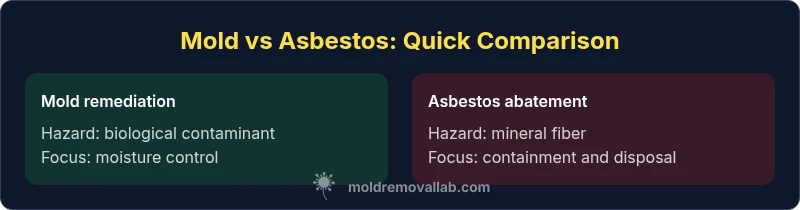
| Removal focus | Moisture control, containment, material removal | Containment, specialized removal, waste handling |
| Licensing/regulatory needs | Codes vary by region; moisture and IAQ practices emphasized | Typically requires licensed asbestos abatement professionals |
| Testing and verification | Moisture tests, surface cleaning, post-remediation drying | Laboratory analysis, clearance testing, air monitoring |
| Cost drivers | Area affected, moisture issues, material type | Extent of fiber exposure, containment, disposal |
Upsides
- Clear guidance reduces unsafe DIY
- Encourages moisture control to prevent mold
- Promotes professional testing and proper abatement
- Improves planning and safety
The Bad
- Complex topic for multi-hazard homes
- Potentially higher upfront costs with licensed work
- Regulatory variations can be confusing
Mold remediation and asbestos abatement are distinct processes requiring different handling and licenses
Because the hazards differ in origin and exposure routes, pursue separate remediation paths and consult licensed professionals for asbestos; emphasize moisture management for mold to prevent recurrence.
FAQ
Is mold the same as asbestos?
No. They are different hazards; one is a fungus, the other a mineral fiber. They require distinct remediation approaches and regulatory considerations.
No—mold and asbestos are different hazards with separate remediation paths.
Can I remove asbestos myself?
No. Asbestos abatement should be performed by licensed professionals with proper containment and disposal procedures.
No—it's dangerous and regulated. Hire a licensed pro.
What tests confirm asbestos or mold?
Laboratory analysis is required. Mold testing looks at moisture and spores; asbestos testing uses fiber analysis to confirm presence.
Tests are done by labs; rely on professionals for results.
What are signs of hidden mold?
Musty odors, ongoing moisture, and concealed patches behind walls indicate possible hidden mold; investigate moisture sources.
Look for musty smells and damp spots; moisture is key.
Are there long-term health risks from mold exposure?
Prolonged exposure can worsen allergies and asthma; sensitive individuals may experience more pronounced symptoms.
Mold can affect breathing and trigger allergies.
Where can I find licensed professionals?
Seek local licensed mold remediators or asbestos abatement professionals; verify credentials and certifications.
Look for licensed pros in your area for mold or asbestos work.
The Essentials
- Identify hazard before acting to avoid unsafe DIY.
- Prioritize moisture control to prevent mold growth.
- Do not disturb asbestos-containing materials; hire licensed professionals.
- Use professional testing to guide remediation decisions.
- Follow safety and regulatory guidelines throughout the project.