Are Mold and Bacteria the Same? A Practical Comparison for Homeowners
Explore whether mold and bacteria are the same, and learn how their growth, health risks, testing, and remediation differ in real homes—clear guidance from Mold Removal Lab.


Are mold and bacteria the same? Not at all. They are distinct biological groups with different growth patterns, health implications, and remediation needs. This comparison helps homeowners and renters understand how to identify, test, and address mold versus bacteria safely, following Mold Removal Lab's evidence-based guidance.
Are Mold and Bacteria the Same? Key Clarifications
If you’ve ever asked, are mold and bacteria the same, you’re not alone. The short answer is no: they are fundamentally different organisms with separate life cycles, ecological roles, and health implications. According to Mold Removal Lab, confusion between these two indoor contaminants is common among homeowners and renters. This article, a careful comparison, offers practical guidance for recognizing, testing, and addressing mold versus bacteria in living spaces. By understanding the difference, you can choose appropriate remediation strategies, PPE, and timelines, reducing the risk of repeated contamination and unnecessary expense. Throughout this discussion, the core question remains: are mold and bacteria the same, and if not, what should you do about each one? This approach aligns with Mold Removal Lab’s practical, safety-first ethos for homeowners.
Core Definitions: Mold vs Bacteria
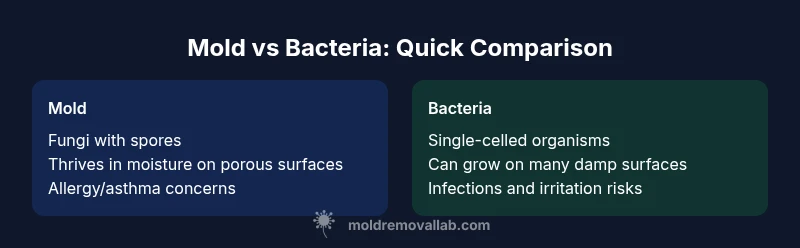
Are mold and bacteria the same in terms of biology? No. Mold refers to a group of fungi that grow as filamentous colonies, producing spores for reproduction. Bacteria are single-celled microorganisms that can reproduce rapidly in favorable conditions. Understanding these definitions helps homeowners interpret lab results, select appropriate cleaning methods, and anticipate remediation timelines. Mold tends to thrive in damp, porous environments with organic substrates, while many bacteria can flourish on moist, non-porous surfaces or organic matter. In practice, recognizing the fundamental difference guides effective action and reduces guesswork when you see growth on walls, ceilings, or appliances.
Growth Conditions and What They Imply for Remediation
Mold and bacteria have distinct growth requirements, which shapes how remediation should proceed. Mold often needs sustained moisture, porous materials, and a food source to thrive, and its colonies may appear fuzzy or powdery in a range of colors. Bacteria typically grow in moist environments and can form slick or slimy colonies, especially on food or surfaces with lingering organic residues. Because of these differences, remediation plans differ: mold removal frequently emphasizes moisture control, containment, and disposal of affected porous materials, while bacterial contamination may focus on sanitization, disinfection, and addressing nutrient sources. Identifying which organism is present matters for choosing cleaners, PPE, and whether to replace materials or perform deeper sanitization. Across both, maintaining good airflow and reducing humidity remain constant strategies to prevent regrowth.
Health Risks and Exposure Pathways: A Distinct Profile
The health risks from mold and bacteria overlap in some contexts but are not identical. Mold spores can trigger allergic reactions, asthma symptoms, and respiratory irritation for sensitive individuals, particularly in poorly ventilated spaces. Some molds may also produce mycotoxins under certain conditions, which can worsen health concerns. Bacteria, meanwhile, are often linked to infections or skin and mucous membrane irritation, especially in damp environments or where there is direct contact with contaminated surfaces. For homeowners, this means that the same space might require different mitigation steps depending on which organism is present. Always treat visible growth seriously, but rely on testing to confirm whether mold, bacteria, or both are involved.
Visual Clues and the Limits of Observation
It can be tempting to infer identity from color or texture, but appearance alone cannot reliably distinguish mold from bacteria. Mold colors range across greens, blacks, whites, and yellows, with textures that may be fuzzy, powdery, or leathery. Bacteria can present as slimy films, films on food, or small colonies on damp surfaces. Because visual cues can be misleading, especially in mixed contamination, lab testing and surface sampling are essential for accurate identification. The key takeaway: are mold and bacteria the same? No—their appearances may overlap, but definitive identification requires proper testing and analysis.
Testing, Verification, and When to Test
Testing decisions should be guided by risk and context. If occupants experience unexplained allergy-like symptoms, persistent odors, or new, recurring damp patches, testing can help differentiate mold from bacteria and inform remediation priorities. Air sampling and surface swabs are common methods, but results must be interpreted by qualified professionals. Mold Testing and Inspections expertise often complements health and safety decisions, informing moisture control plans and remediation scope. Mold Removal Lab emphasizes that testing workflows should be paired with a clear remediation plan and moisture management to prevent recurrence.
Cleaning Methods and the Right Tools for Each
Cleaning for mold and for bacteria shares some common hygiene principles, such as personal protective equipment, containment measures, and thorough cleaning of visible residues. However, the specific agents and approaches differ. For mold, many guidelines favor moisture control, careful removal of porous materials, and cleaning non-porous surfaces with appropriate cleaners. For bacteria, standard sanitizers and disinfectants may be effective on non-porous surfaces, and thorough cleaning to remove organic residues is critical. A careful assessment of material porosity is essential; porous materials often require removal rather than deep cleaning, while non-porous surfaces can sometimes be sanitized more readily. In all cases, ensure ventilation and dry out the area to prevent regrowth.
Prevention: Long-Term Strategies to Keep Both at Bay
Prevention focuses on moisture management, improved ventilation, and regular maintenance. For mold, fix leaks promptly, reduce humidity, and run exhaust fans in bathrooms and kitchens. For bacteria, maintain clean surfaces, store food safely, and promptly address spills and damp conditions. Both require ongoing vigilance: monitor for musty odors, damp patches, or stains, and address root causes rather than treating symptoms alone. Mold Removal Lab recommends routine checks of problem areas such as basements, bathrooms, and laundry spaces to catch issues early and avoid costly remediation later.
Step-by-Step Homeowner Guide: From Suspicion to Action
If you suspect contamination, start with a visual inspection for dampness, mold-like growth, or unusual odors. Photograph affected areas, note moisture sources, and record symptoms among occupants. Engage a qualified professional for lab testing if results will influence remediation scope. Use non-porous cleaners for sanitizing where appropriate, and avoid mixing cleaners that may release harsh reactions. When in doubt, prioritize moisture control and professional assessment. A careful, data-informed approach helps ensure that you’re addressing the right organism and applying the right remediation strategy.
Final Thoughts: Are Mold and Bacteria the Same? Not Exactly—Understanding the Difference Saves Time and Money
The short answer is that mold and bacteria are not the same. They require distinct identification, testing, and remediation approaches, and recognizing the differences helps homeowners act more effectively. By focusing on moisture control, appropriate cleaners, and professional guidance when needed, you can reduce health risks and prevent recurrence. The Mold Removal Lab team underscores the importance of a structured, evidence-based approach to indoor contamination, rather than relying on guesswork or generic solutions. This mindset saves time, protects health, and keeps living spaces safer in the long term.
Comparison
| Feature | Mold | Bacteria |
|---|---|---|
| Biological type | Fungi (mold) with hyphae and spores | Prokaryotic single-celled organisms |
| Growth conditions | Requires moisture, organic matter, porous substrates | Prefers moisture; can grow on a wider range of surfaces |
| Visual cues | Fuzzy, colored or powdery colonies; may be visible on walls, ceilings | Slimy or matt colonies; may appear on food, damp surfaces |
| Health risks | Allergic reactions, asthma triggers; some molds produce toxins | Infections or irritation; exposure linked to various illnesses |
| Common testing | Mold-specific testing and moisture assessment | Bacterial swabs and surface sanitization tests |
| Remediation focus | Moisture control, containment, and porous-material removal | Disinfection and sanitization; removal of organic residues |
| Prevention emphasis | Humidity control and leak repair | Regular cleaning of damp areas and proper storage |
Upsides
- Clarifies differences to guide remediation choices
- Improves testing and prevention strategies
- Reduces unnecessary material removal by identifying the organism
The Bad
- Testing can be time-consuming and may require professionals
- Remediation plans differ by organism and material
- Overemphasis on one organism can complicate decision-making in mixed contamination
Mold and bacteria are not the same; treat them as distinct contaminants for accurate remediation
Recognizing the differences improves testing accuracy, cleaning effectiveness, and prevention, reducing repeat issues and health risks.
FAQ
Are mold and bacteria the same?
No. Mold is a fungus; bacteria are single-celled organisms. They have different growth patterns, health implications, and remediation approaches. Proper identification guides effective cleanup and prevention.
No—mold and bacteria are different organisms with distinct health risks and cleanup needs.
Can I tell them apart just by looking at them?
Visual cues can be misleading. Both can appear in damp spaces. Lab testing or professional assessment is often needed for accurate identification.
You shouldn’t rely on looks alone—tests are usually needed to tell mold from bacteria.
Do cleaning methods for mold and bacteria differ a lot?
Yes. Mold remediation emphasizes moisture control and removal of porous materials, while bacteria focus on sanitization and disinfection of surfaces and residues.
The cleaning plans differ, so use the right method for the contaminant and surface.
When should I test for mold or bacteria?
Test when there is persistent dampness, odors, or unresolved health symptoms. Testing helps tailor remediation and prevention strategies.
Test when dampness sticks around or people in the home are affected.
Is professional remediation always required?
Not always, but many cases benefit from professional assessment to confirm the organism and scope, especially with porous materials or larger areas.
Often a pro is the safest route for accurate results and thorough cleanup.
Can mold or bacteria cause long-term health problems?
Exposure to mold and bacteria can affect health, particularly for sensitive individuals. Long-term effects depend on exposure levels and the specific organism.
Yes, there can be health implications, especially with ongoing exposure.
The Essentials
- Identify whether mold, bacteria, or both are present before acting
- Moisture control is foundational for both organisms
- Use appropriate testing to confirm organism identity
- Choose remediation strategies that fit the specific contaminant
- Prioritize safety and professional guidance when in doubt