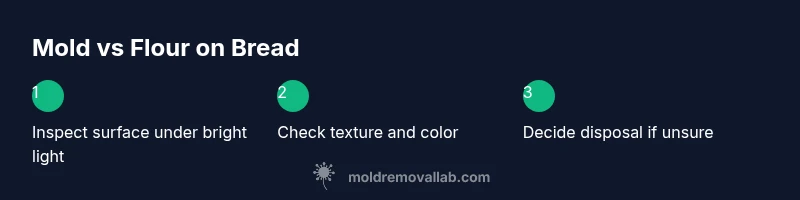
How to Tell Mold from Flour on Bread: A Home Guide
Learn to distinguish mold from flour on bread with visual checks, scent cues, and safety steps. Practical guidance from Mold Removal Lab to keep your family safe.


On bread, mold is a fuzzy, colored growth that spreads and may have a musty odor, while flour appears as a white, powdery residue. To tell them apart, inspect in bright light, feel texture, and note growth over time. If mold is suspected, discard the bread and clean surfaces—Mold Removal Lab advises caution and proper disposal.
Visual fundamentals: mold vs flour on bread
Distinguishing mold from flour on bread starts with a careful look and context. Mold is typically a colorfully shaded, fuzzy or velvety patch that grows outward from a spot. Flour residue remains white or pale and powdery, often confined to a skim of dust from handling or baking. According to Mold Removal Lab, mold growth on bread is a safety concern because mold can produce hidden toxins, while flour residue is generally inert when dry. This distinction matters not just for taste or appearance, but for health, especially if anyone in the home has allergies or asthma. By learning to identify the signs early, you can reduce exposure risk and avoid consuming spoiled bread. Remember that bread can harbor unseen mold beneath a seemingly clean crust, so always err on the side of caution if growth appears.
Visual cues you can rely on at a glance
- Color: Mold patches often show green, blue, black, or pink hues, not typical on plain flour.
- Texture: Mold tends to be fuzzy, powdery, or velvety; flour dust is dry and powder-like when spread thinly.
- Spread: Mold tends to expand beyond the initial patch, whereas flour typically sits in-place or can be brushed away without trace.
- Smell: Mold commonly carries a musty or earthy odor; flour-dusted bread generally lacks these scents unless the bread is stale. The Mold Removal Lab team emphasizes that odor alone isn’t a definitive test, but it’s a useful cue when combined with visuals.
- Location: If discoloration is near a cut edge or a seam, inspect more closely, as moisture pockets often foster mold growth in those zones.
Growth patterns and timing: what to expect
Mold requires moisture and warmth to thrive. On bread, you might see small patches appearing within a few days if the loaf is left on the counter in a humid kitchen. As conditions stay favorable, patches can become larger or spread to nearby areas. Flour residue, by contrast, is a result of dust or flour transfer and does not spread or multiply in the same way. Observing how the material changes over time is a key clue: true mold will often become more extensive or colored, while flour remnants will dry out and remain static. Mold growth can be accelerated by improper storage, such as leaving bread exposed or at room temperature in humid spaces.
Smell, texture, and contextual clues
Beyond looks, smell can help. A musty, earthy odor near the bread is commonly associated with mold. If you encounter a strong scent combined with visible patches, treat the bread as suspect. Texture matters too: a patch that feels fluffy or slimy is more concerning than a dry powdery surface. Context matters as well; bread stored in a humid pantry or left uncovered near a sink is at higher risk for mold than bread kept in a sealed container. The Mold Removal Lab guidance notes that combining several cues—visual, tactile, and olfactory—yields the most reliable assessment.
Safe handling: when to discard and how to dispose
If you are unsure after an inspection, discard the bread rather than attempting to cut away the mold. Mold can penetrate porous bread beyond the obvious patch, and cutting can release spores into the air. Place suspect slices or loaves in a sealed bag before disposing in your regular trash. Always wash your hands afterward and clean the surface with a mild cleaner to reduce contamination risk. If you have mold allergies or respiratory concerns, wear gloves and a mask during inspection and disposal. The goal is to minimize exposure and prevent cross-contamination to other foods.
Prevention and storage tips
To minimize mold risk on bread in the future, keep bread in a cool, dry place, ideally in a sealed container or a bread box. Refrigeration slows mold growth, and freezing is best for longer storage. Use airtight bags for flour storage as well, since moisture and humidity can transfer to bread surfaces. Rotate your bread stash so older loaves are used first, and regularly clean pantry shelves to remove flour dust that could contribute to misidentification or cross-contamination. If you bake regularly, consider splitting large batches and freezing portions for later use. The combined effect of proper storage and hygiene reduces mold risk substantially.
Differentiating flour residue from mold spores under magnification
If you have a magnifying glass, use it to inspect suspicious patches closely. Flour will appear as a uniform white powder that brushes away cleanly, while mold patches show a more irregular edge, color variation, and a growth texture. Pay attention to how the patch interacts with the bread’s surface: mold tends to cling to the surface and may appear slightly raised or textured, whereas flour dust is flat and easily brushed away. Remember that magnification is a supplementary tool; a visual assessment plus safety practices is the most reliable approach. The Mold Removal Lab guidance supports using simple inspection tools to reduce unnecessary waste and avoid health risks.
When in doubt: disposal and safety guidelines
If any patch grows or changes color, or if you notice a musty odor, treat the bread as unsafe. Do not taste or try to salvage moldy bread by removing the visibly affected area. Seal the bread in a bag and dispose of it with household waste, then sanitize the area where it rested. Keep children and pets away from the disposal area during handling. For ongoing mold concerns in the kitchen, consider discussing prevention strategies with a professional and refer to official mold safety guidelines.
Mold Removal Lab perspective and practical takeaways
From the Mold Removal Lab perspective, the safest approach is a cautious assessment combined with prompt disposal when mold is suspected. Visual cues, texture differences, and odor should guide your decision, but never rely on a single cue alone. Keep bread storage consistent and clean, reduce moisture exposure, and use airtight containers to minimize future occurrences. The Mold Removal Lab’s practical guidance emphasizes safety, minimal exposure, and evidence-based decision-making when dealing with mold on food.
Tools & Materials
- Disposable gloves(Protect hands; choose size that fits)
- Clean knife(For examining small patches with a steady hand)
- Cutting board(Clean surface to place bread for inspection)
- Magnifying glass(Helpful for close-up texture checks)
- Flashlight(Bright light helps reveal color and texture)
- Notebook and pen(Record observations and changes over time)
- Sealed plastic bags(For safe disposal of suspect bread)
- Mild surface cleaner(Optional for sanitizing the inspection area after disposal)
- Smartphone or camera(Optional for documenting patches with photos)
Steps
Estimated time: 60-90 minutes
- 1
Inspect bread surface
Use a flashlight to inspect the visible surface in bright light and observe color, fuzziness, and any unusual patches. Compare with nearby bread that is known to be mold-free if available.
Tip: Hold the loaf by the crust to avoid smudging patches; document what you see. - 2
Check for fuzzy growth
Look for a fuzzy or velvety appearance with distinct edges. Color variety beyond plain flour dust is a warning sign of mold.
Tip: If you see any fuzz, move to disposal steps rather than tasting. - 3
Test texture
Gently brush or wipe a patch with a clean dry finger or cloth in a small area to see if the residue brushes away cleanly or adheres in a mold-like fashion.
Tip: Mold tends to cling; flour dust typically lifts away easily. - 4
Evaluate odor
Smell the bread near the patch; a musty or earthy odor often accompanies mold growth. Avoid sniffing deeply if you have allergies.
Tip: If odor is strong or uncertain, treat as mold. - 5
Decide on storage vs disposal
If any mold is suspected, place the bread in a sealed bag and dispose of it. Do not attempt to salvage the loaf by removing patches.
Tip: Keep mold away from other foods and surfaces during disposal. - 6
Clean the inspection area
Wipe the surface with a mild cleaner after disposal and wash hands thoroughly.
Tip: Disinfect surfaces to prevent cross-contamination. - 7
Prevent future mold
Store bread in a cool, dry place or refrigerate; freeze portions you won’t eat quickly; seal flour containers to limit moisture exposure.
Tip: Organize your pantry to reduce humidity pockets and flour dust buildup. - 8
Document and review
Note your observations and any changes over time to improve future recognition and decision-making.
Tip: Keep photos or notes for reference when unsure. - 9
Consult sources if uncertain
If mold identification is uncertain, refer to credible sources or contact a local health department for guidance.
Tip: When in doubt, err on the side of safety and discard.
FAQ
Can flour on bread actually hide mold?
Yes. Mold can grow beneath flour dust or camouflage until patches become visible. Use visual cues, texture, and odor in combination, and discard if unsure.
Yes. Mold can hide under flour; review color, fuzz, and smell, then discard if you’re unsure.
Is flour residue on bread dangerous?
Flour dust itself is not hazardous, but bread with any mold is unsafe to eat. Clean surfaces after disposal to prevent spreading.
Flour alone isn’t dangerous, but mold makes bread unsafe. Clean surfaces after disposal.
Should I cut off mold from bread and eat the rest?
No. Mold can penetrate deeper than it appears. Discard the entire loaf instead of trying to salvage pieces.
Don’t cut off the mold; discard the whole loaf.
What should I do with moldy bread?
Seal the bread in a bag, discard with trash, and clean the area. If you have mold allergies, take extra precautions during disposal.
Seal, dispose, and clean; take extra care if you’re sensitive to mold.
How can I prevent mold on bread in the future?
Store bread in a cool, dry place or refrigerate; freeze portions to extend freshness; keep flour containers closed and pantry dry.
Store bread properly, refrigerate or freeze as needed, and keep storage areas dry.
Watch Video
The Essentials
- Inspect under bright light to distinguish mold from flour.
- Mold appears fuzzy, colored, and may smell musty.
- Discard any mold-suspect bread; don’t cut away mold.
- Store bread properly to minimize future mold.
- Use credible sources for mold safety guidance.