How to Stop Mold from Growing on Walls
A homeowner-friendly guide to stopping mold growth on walls through moisture control, safe cleaning, and prevention. Learn step-by-step actions from Mold Removal Lab to protect your home.


Understanding why walls invite mold growth
According to Mold Removal Lab, mold on walls is typically a moisture problem. Mold spores are always present in the air, but they only become visible when conditions provide enough moisture, warmth, and a food source (dust, paint, wallpaper). The same environmental factors that promote mold growth also raise health concerns for occupants, including allergies and respiratory irritation. This guide stresses moisture control as the foundation of stopping mold growth on walls. Without addressing humidity and leaks, cleaning is only a temporary fix.
Mold on walls often starts as small patches that expand when damp conditions persist. Early detection, such as discoloration, musty odor, or popcorn-like texture on paint, helps stop growth before it penetrates deeper into wall cavities. Mold Removal Lab emphasizes that acting quickly reduces health risks and costly repairs.
Identify how moisture gets into your walls
Moisture travels through tiny openings around windows, doors, pipes, and roof lines. Condensation forms on cold surfaces, especially in kitchens and bathrooms where humidity is high. Poor insulation or ventilation traps moisture indoors. Understanding these routes helps you target fixes rather than tacking on temporary cleaning measures.
Quick takeaway
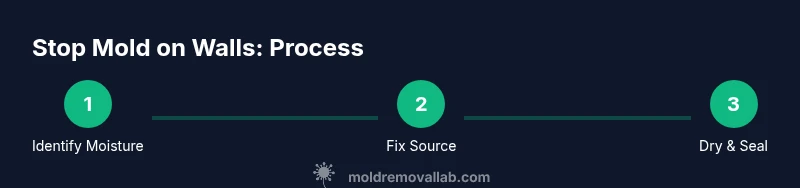
Visible mold on walls is a symptom; the underlying moisture source is the cause. Fix the moisture first, then address any surface damage. This approach reduces recurrence and protects your home long-term.
} ,
bodyBlocks