How to Get Rid of Mold Outside: Practical Outdoor Cleanup Guide
Learn practical, safety-first steps to remove outdoor mold, manage moisture, and prevent regrowth on siding, decks, mulch, and other exterior surfaces. A homeowner-friendly guide from Mold Removal Lab.


Outdoor mold cleanup starts with moisture control and safe removal on exterior surfaces. Use our step-by-step exterior mold removal guide to identify sources, clean nonporous surfaces, manage mulch and drainage, and prevent regrowth. This concise overview reflects the expert guidance from Mold Removal Lab on practical outdoor mold control.
Outdoor mold realities and health considerations
If you're wondering how to get rid of mold outside, you’ll want practical, safe steps that address moisture first. Outdoor mold is common after wet seasons, in shaded corners, and around leaky gutters. Most outdoor mold poses less risk than indoor colonies, but it can still trigger allergies, irritate eyes, and release spores when disturbed. According to Mold Removal Lab, outdoor mold growth is often a sign of persistent moisture and decaying organic material nearby. The goal is not to eradicate all spores—outdoors they’re ubiquitous—but to reduce moisture, limit contact with occupants, and prevent spread to structures and gardens. This section highlights why outdoor mold appears, when it becomes a concern, and how to approach cleanup with safety as a priority.
Outdoor mold typically thrives where shade keeps surfaces damp, near mulch beds, overflowing gutters, or areas where water pools briefly after rain. Temperature swings, wind, and seasonal changes can spread spores to nearby plants and structures. While outdoor mold is less likely to cause severe health issues than indoor contamination, persistent growth in outdoor spaces can degrade materials and invite pests. A moisture-first approach reduces both growth and the collateral damage from cleaning. Mold Removal Lab emphasizes that effective outdoor mold control begins with stopping the water source and drying the area before any scrubbing or removal.
In practice, start by locating the moisture culprit, then plan a cleanup that minimizes disturbance to surrounding ecosystems and your home. This means wearing protective gear, choosing appropriate cleaners for the surface, and scheduling work for dry weather. By prioritizing moisture control and careful cleaning, homeowners can significantly reduce outdoor mold growth and protect outdoor living spaces.
Key outdoor sources and moisture control
Common outdoor mold sources include damp mulch beds, organic debris, shaded siding, clogged gutters, and poor drainage around foundations. Moisture control is the cornerstone of preventing mold growth outside. When mulch sits directly against a wall, it stays damp and becomes a welcoming home for mold colonies. Leaves and composting material can also harbor mold, releasing spores when disturbed by wind or foot traffic. Gutter overflow directs moisture onto siding and foundation, feeding mold growth on exterior surfaces. Addressing these sources reduces the likelihood of recurrent mold.
To control moisture effectively:
- Redirect runoff away from walls and foundations with proper grading and downspout extensions.
- Improve drainage around decks, walkways, and raised garden beds.
- Keep mulch at least 6-12 inches away from the home’s exterior to reduce prolonged dampness.
- Promote sun exposure where possible by pruning vegetation that blocks light.
- Regularly remove decaying debris from under decks, eaves, and roof lines. Mold Removal Lab analysis shows that maintaining dry exterior surfaces and eliminating standing water dramatically lowers outdoor mold recurrence. This section covers how to spot moisture hotspots and implement practical fixes that prevent mold from taking hold.
Inspection and safety best practices
Before you begin outdoor mold cleanup, plan for safety and clarity. Inspect the area from several angles to identify moisture sources, damaged materials, and areas where mold has penetrated porous surfaces like wood or cardboard under decking. Safety gear is essential: wear an N95 or better, chemical-resistant gloves, eye protection, and long sleeves. A disposable coverall can be useful for heavily contaminated zones. If you notice large, widespread growth on wood siding or porous materials, consider professional help. For smaller, contained patches on nonporous surfaces, you can proceed with caution.
Create containment by limiting wind-driven spread and protecting nearby plants with plastic sheeting or tarps. Always work in dry conditions to prevent the dispersal of spores. After finishing work, wash and dispose of contaminated materials properly. If you feel symptoms such as persistent coughing or eye irritation during cleanup, stop and reassess, and seek medical advice if needed. A careful, safety-oriented approach is essential for outdoor mold remediation.
Safe removal methods for exterior mold
Outdoor mold removal depends on the surface type. For nonporous exterior surfaces like metal siding, brick, or sealed concrete, viable options include detergent scrubbing, rinse with clean water, and thorough drying. Use a stiff brush and a solution of mild detergent or a manufacturer-approved cleaner, then rinse completely. For wood, painted surfaces, or porous materials, avoid aggressive scrubbing that can grind spores deeper. Instead, remove loose material, gently scrub with a soft brush and detergent, and allow the surface to dry fully before applying a protective finish if needed.
Avoid indiscriminate use of harsh chemicals. Bleach can be used on some nonporous surfaces, but it is not ideal for porous materials as it can seep in and cause damage or discoloration. Always follow label directions, and never mix cleaners with ammonia or vinegar, which can create hazardous gases. After scrubbing, ensure moisture sources are controlled so that mold does not quickly return. If outdoor mold growth is extensive or regrowth occurs despite cleaning, seek professional remediation guidance.
Preventing outdoor mold regrowth: moisture management and maintenance
Prevention is cheaper than cleanup. Start by eliminating persistent moisture sources and improving airflow around exterior surfaces. Fix leaks, repair roof and gutter systems, and ensure downspouts direct water away from the home. Keep vegetation trimmed so sun reaches surfaces, which helps surfaces dry faster after rain. Consider sealing or repainting wood and siding with moisture-resistant products to create a barrier against mold spores. Regularly inspect patios, decks, and mulch beds after heavy rainfall and prune back any overhanging branches that shade vulnerable areas.
A practical outdoor maintenance plan includes seasonal checks for clogged gutters, repaired caulking around windows, and resealing of decks. Mulch should be kept away from foundation, and decaying organic material should be removed promptly. These actions reduce residual moisture and create an inhospitable environment for mold. Mold Removal Lab’s guidance emphasizes consistent upkeep to maintain mold-free exterior spaces and protect outdoor living areas from moisture-driven growth.
Outdoor mold safety, disposal, and environmental considerations
Dispose of mold-contaminated debris in sealed bags and place them in exterior trash bins to prevent re-spread. Do not sweep mold into the air or compost contaminated materials. When cleaning, avoid watering plants with runoff from the cleaning area, and consider using a dedicated water hose for cleanup to prevent cross-contamination. Keep pets and children away from the cleanup zone until surfaces are dry. If you use chemical cleaners, follow local regulations for runoff and disposal to protect soil and water quality. For large-scale outdoor mold issues, professional remediation may be warranted to ensure safe and thorough removal while protecting the environment.
Outdoor Mold Quick-Start Checklist
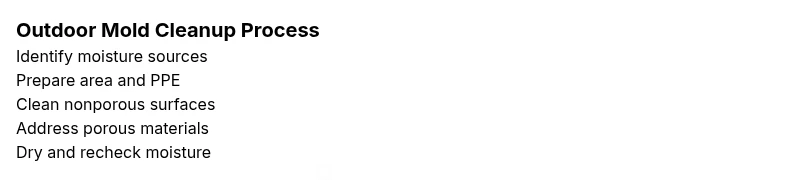
- Identify moisture sources (leaks, poor drainage, mulch proximity) and plan fixes.
- Gather PPE: gloves, mask, eye protection; prepare cleaning solutions appropriate for the surface.
- Clear debris and dry the area; use natural sunlight where possible to aid drying.
- Scrub nonporous surfaces; remove porous materials or treat with care and dispose.
- Reassess moisture after cleanup; implement drainage and sun exposure strategies to prevent recurrence.
- Schedule periodic inspections after rain and during seasonal changes to maintain outdoor mold control.
- Document findings and actions for future reference and safety.
Tools & Materials
- gloves (nitrile or similar)(Chemical-resistant; avoid latex if you have an allergy.)
- N95 respirator(Fit-tested if possible.)
- eye protection(Goggles or face shield.)
- disposable coveralls(Optional for heavy contamination.)
- disposable trash bags(For contaminated debris.)
- stiff-bristle scrub brush(For nonporous surfaces.)
- soft-bristle brush(For delicate surfaces.)
- bucket(Content for rinsing and cleaners.)
- spray bottle(For cleaners and water mixes.)
- garden hose with spray nozzle(Rinse area thoroughly.)
- mild detergent or exterior cleaner(Follow label directions.)
- pressure washer (optional)(Only on sturdy, non-porous surfaces; avoid loose surfaces.)
- plastic sheeting or tarps(Protect plants and direct runoff.)
- mulch barrier or distance tool(Keep mulch away from foundations.)
Steps
Estimated time: 2-6 hours
- 1
Gather safety gear and survey the area
Put on PPE (gloves, mask, eye protection) and do a quick walkaround to locate moisture sources, existing damage, and sensitive plants nearby. This helps plan steps to minimize spore disturbance while keeping you safe.
Tip: Ensure mask fit is snug; a loose seal reduces protection. - 2
Protect surrounding surfaces and plants
Cover nearby plants and vulnerable areas with plastic sheeting to catch runoff and prevent cross-contamination. This keeps cleanup contained and preserves landscaping.
Tip: Seal plastic edges with tape to keep wind from lifting it. - 3
Dry the area and remove loose debris
If possible, remove standing water and dry the surface using a squeegee or absorbent towels. Clear loose debris so you can scrub more effectively.
Tip: Drying first reduces spore release during cleaning. - 4
Scrub nonporous surfaces with detergent
Apply a mild detergent or exterior cleaner and scrub with a stiff-bristle brush. Rinse with clean water, ensuring all residue is removed before drying.
Tip: Rinse from top to bottom to prevent runoff back onto cleaned areas. - 5
Treat porous materials or remove contaminated debris
Porous materials (rotted wood, mulch) that show mold should be removed and disposed of safely. If reuse is necessary, clean and dry thoroughly or seal if appropriate.
Tip: Disposal in sealed bags prevents spore spread. - 6
Re-check moisture sources and dry thoroughly
After cleaning, re-evaluate moisture sources and fix drainage or leaks. Ensure surfaces are completely dry to prevent regrowth.
Tip: Time-weather permitting, allow 24–48 hours of sun and wind for drying. - 7
Prevent recurrence with moisture management
Implement drainage improvements, sun exposure, and routine inspections. Keep mulch away from walls and ensure gutters are clear.
Tip: Create a simple maintenance schedule to catch issues early. - 8
Document the cleanup and monitor
Take photos before/after and note moisture fixes. Revisit the area after heavy rain to confirm no fresh growth occurs.
Tip: Documentation helps track what works and when to recheck.
FAQ
Is outdoor mold dangerous to my health?
Outdoor mold is generally less hazardous than indoor mold, but spores can still trigger allergies or asthma in sensitive individuals. Always wear PPE during cleanup and avoid disturbing large growth near living areas.
Outdoor mold is usually less dangerous than indoor mold, but use protective gear during cleanup.
Can I use bleach to remove outdoor mold?
Bleach can be effective on some nonporous exterior surfaces, but it’s not ideal for porous materials and can harm plants. Always follow label directions and consider milder cleaners first.
Bleach isn’t always the best choice outdoors; use it only on nonporous surfaces and follow the label.
When should I hire a professional for outdoor mold?
If mold covers a large area, affects structural materials, or recurs after cleaning, consult a mold remediation professional to ensure thorough removal and injury-free handling.
Call a pro if the mold is widespread or keeps coming back.
How long does it take for outdoor mold to dry after cleanup?
Drying depends on weather; under sunny, windy conditions, expect drying within a day or two. In humid or shaded areas, it may take longer.
Drying outdoors varies with weather; usually a day or two with sun and wind.
Should I remove mulch near the home to prevent mold?
Yes, keep mulch away from foundations and replace it periodically. Damp mulch traps moisture and feeds mold growth, so maintain a dry mulch layer.
Keeping mulch away from the house helps reduce moisture and mold risk.
Watch Video
The Essentials
- Prioritize moisture control to prevent outdoor mold growth.
- Use surface-appropriate cleaners and protective gear during cleanup.
- Dispose of contaminated porous materials safely and contain debris.
- Address drainage and sun exposure to reduce recurrence.
- Document changes and monitor outdoor spaces after heavy rain.