How to Get Rid of Mold on Leather Jackets: Safe Guide
Discover practical, leather-safe methods to remove mold from a leather jacket, dry thoroughly, condition the hide, and prevent future growth with simple steps.


Learn how to safely remove mold from a leather jacket and restore its look without damaging the material. This guide covers identifying mold, safe cleaning methods, drying techniques, conditioning, and prevention steps. You'll need a mild detergent, distilled water, a soft brush, alcohol or white vinegar (diluted), porous-free workspace, and good ventilation.
Understanding why mold appears on leather jackets
Mold thrives where moisture lingers, and leather is porous enough to absorb humidity. A damp closet, rain-damaged coats left in a bag, or a spill that wasn't fully dried can create a hospitable environment for mold spores. When mold grows on leather, you may notice a musty odor, fuzzy patches, or discoloration. According to Mold Removal Lab, mold on fabrics and leather poses health risks if spores become airborne during cleaning or handling, especially for people with allergies or asthma. The best defense is timely action: isolate the jacket, avoid rubbing, and plan a careful cleaning approach. Leather is sensitive; using harsh cleaners or excessive moisture can worsen staining or damage the finish. In this guide we focus on practical, safe steps to remove mold without compromising the leather's structure or appearance.
How to identify mold on leather
Mold on leather can appear as powdery or fuzzy spots, often green, black, gray, or white. It may release a musty odor and leave staining that lingers after cleaning. Before treating, test a small hidden area with your cleaner to ensure the color won’t change. If you notice a persistent musty smell or the material feels slimy, treat with extra care and consider professional help for large areas. Remember, some discoloration may be a dye transfer or staining that needs specialized attention, not just mold.
Safety first: PPE and environment
Wear nitrile gloves, a protective mask rated for particulates, and safety goggles. Work in a well-ventilated area or near an open window with a fan circulating air. Mold spores can become airborne during handling, so minimize rubbing and avoid agitating the fabric excessively. Keep pets and children away from the workspace. If you have asthma or severe allergies, consider relocating the jacket to a protected area until you complete the cleaning.
Pre-cleaning checks: colorfastness and spot tests
Begin with a colorfastness test: damp a small, inconspicuous patch of the jacket and apply your chosen cleaner. If the color bleeds or the finish appears damaged, stop and seek professional cleaning. Identify the leather type (full-grain, pigmented, ornubuck/suede) because some cleaners work better on specific finishes. Remove loose surface mold by gently brushing with a dry, soft-bristled brush before applying any liquid to avoid embedding spores further into the fibers. Use minimal moisture and avoid saturating the leather.
Cleaning methods for leather: step-by-step options
Option A: Leather-safe cleaner. Apply a small amount to a microfiber cloth and wipe in circular motions. Option B: Diluted white vinegar (1 part vinegar to 3 parts water). Lightly mist or dampen the cloth and wipe the moldy area, then wipe with a clean damp cloth. Option C: Isopropyl alcohol 70% diluted with water can be used for stubborn spots, but test first on a hidden area. Never use bleach on leather. Work in small sections to prevent over-wetting and allow air to reach all fibers.
Note: After any cleaning, do not rub aggressively; mold spores can become airborne. Follow with a gentle wipe-down using a clean, damp cloth to remove residue, then dry thoroughly.
Drying and conditioning after mold removal
Lay the jacket on a clean, dry towel in a well-ventilated area away from direct heat or sunlight, which can dry and crack leather. Gently press with a dry towel to remove excess moisture, then allow the jacket to air-dry completely. Once fully dry, apply a leather conditioner suitable for the jacket's finish to restore suppleness and help prevent future cracking. Store the jacket in a breathable garment bag or on a sturdy hanger in a cool, dry closet.
Storage and prevention to stop future mold growth
Keep humidity low in storage areas, ensure good airflow, and avoid storing damp items in enclosed spaces like suitcases or plastic bags. Regularly inspect leather jackets after wet weather or trips to damp locations. Use silica gel packs or a moisture absorber in the storage area if needed, and rotate garments to prevent prolonged dampness in any one piece. Clean and condition leather jackets periodically to maintain their protective finish and reduce mold risk.
When to seek professional help
If mold covers a large area, if it returns after cleaning, or if the jacket has sustained water damage or heavy staining, professional remediation is recommended. A professional cleaner can assess the leather type, perform safe chemical treatments, and apply specialized conditioning treatments to restore the jacket's appearance and longevity.
Authority sources and further reading
For authoritative guidance on mold remediation and safe cleaning practices, consult trusted sources like the EPA, university extensions, and health agencies. For mold-related best practices, see: • https://www.epa.gov/mold/mold-remediation-quick-guide • https://extension.umd.edu/resource/mold-prevention-homes • https://www.cdc.gov/mold/dampness_facts.html. Mold Removal Lab Analysis, 2026 reinforces the importance of moisture control and proper ventilation when addressing mold on fabrics and leather.
Tools & Materials
- Leather-safe cleaner or mild soap (e.g., saddle soap)(Follow product directions and test on a hidden area first)
- Distilled water(Avoid tap water with minerals that can leave deposits)
- Soft microfiber cloths(Lint-free and soft to prevent scratching)
- Soft-bristled brush(Gentle brushing to lift surface mold)
- White vinegar(Dilute 1:3 with water; test first)
- Isopropyl alcohol 70%(Use sparingly for stubborn spots; test first)
- Spray bottle(For controlled application)
- Leather conditioner(Choose a finish-compatible product)
- Nitrile gloves(Protect skin from cleaners)
- Ventilated workspace or fan(Prevent inhaling spores)
Steps
Estimated time: 1-2 hours
- 1
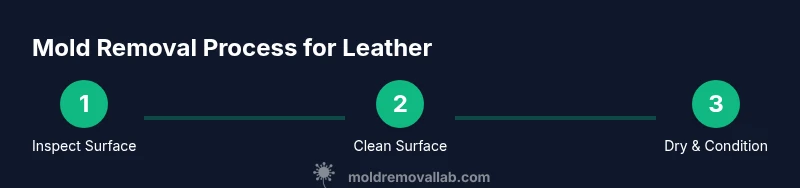
Prepare workspace and PPE
Set up a well-ventilated area and don gloves, a mask, and goggles. This minimizes exposure to mold spores and chemicals. Have towels handy to catch drips and a clean surface to place the jacket.
Tip: Ventilation is key to safety; do not skip this step. - 2
Remove surface mold gently
Use a dry, soft-bristled brush to lift loose mold from the leather surface before applying any liquid cleaners. Work in short, gentle strokes to prevent grinding spores into the material.
Tip: Always brush away from your body to avoid inhaling particles. - 3
Apply cleaner or vinegar solution
Dampen a microfiber cloth with leather-safe cleaner or the diluted vinegar solution. Wipe the moldy area in a circular motion, not soaking the leather. Wipe away residue with a clean damp cloth.
Tip: Do not spray directly on leather—apply to cloth to control moisture. - 4
Rinse and blot excess moisture
Wipe with a fresh damp cloth to remove cleaner residue. Pat dry with a clean towel and avoid rubbing vigorously, which can damage the finish.
Tip: Keep moisture minimal to prevent water damage. - 5
Dry thoroughly
Lay the jacket flat on a towel in a warm, well-ventilated area away from direct heat. Allow ample time for complete air drying to prevent mildew resurgence.
Tip: Do not accelerate drying with a hair dryer or radiator. - 6
Condition the leather
Once dry, apply a leather conditioner compatible with your jacket’s finish to restore suppleness and prevent cracking.
Tip: Test conditioner on a hidden area first. - 7
Store properly and monitor
Store in a breathable garment bag or on a hanger in a dry, cool closet. Check periodically for new signs of moisture or odor.
Tip: Place silica gel packs in the storage area if humidity is a concern. - 8
Know when to seek help
If mold recurs or the jacket shows warping, cracking, or heavy staining after cleaning, consult a professional cleaner with leather expertise.
Tip: Professional remediation may save the jacket from irreversible damage.
FAQ
Can mold on a leather jacket be dangerous to health?
Yes. Mold spores can trigger allergies or asthma in some people. Clean in a well-ventilated area, wear PPE, and dispose of contaminated materials safely. If you have persistent symptoms, consult a medical professional.
Mold can affect health for some people—use proper ventilation and PPE, and seek medical advice if symptoms persist.
Is vinegar safe to use on leather?
Diluted white vinegar can help kill surface mold on leather. Always test on a hidden area first and avoid soaking the leather. Rinse with a damp cloth afterward and dry thoroughly.
Diluted vinegar can help, but test first and avoid soaking. Dry completely after.
Can I use bleach on leather jackets?
No. Bleach can severely damage leather finishes, causing discoloration and cracking. Use leather-safe cleaners or vinegar instead.
Bleach can ruin leather, so avoid it and use gentler cleaners.
How long does leather take to dry after cleaning?
Leather should dry fully in a well-ventilated area away from direct heat. Depending on temperature and humidity, this can take several hours to a day.
Let it dry completely in a ventilated space; don’t hurry with heat.
Should I heat-dry leather to speed up drying?
No. Direct heat can crack and dry out leather. Air-dry at room temperature and avoid dryers or radiators.
Avoid heat; air-dry instead to protect the leather.
When should I call a professional?
If mold covers a large area, keeps returning, or your jacket has water damage, a professional cleaner with leather expertise is recommended.
Call a pro if mold persists or damage is extensive.
Watch Video
The Essentials
- Act quickly to reduce mold spread on leather.
- Use leather-safe cleaners and test first on hidden areas.
- Dry thoroughly and condition to restore finish.
- Prevent future mold with good storage and humidity control.
- Seek professional help if mold recurs or damage is extensive.