Harmless Black Mold in Attic: A Practical Guide
Learn how to assess, test, and safely remediate harmless black mold in attic spaces with practical, homeowner-friendly steps and safety guidance.


Determining whether attic mold is harmless starts with a cautious assessment: limited surface staining, no musty odor, and no ongoing water intrusion. Use a simple home screen to flag common toxins, then follow safe containment and cleaning steps. This quick guide provides homeowner-friendly steps to inspect, test, and safely remediate.
What is 'harmless black mold in attic'?\n\nThe phrase 'harmless black mold in attic' is often used by homeowners, but professionals caution that labeling mold as harmless without verification can be misleading. Attics are prone to moisture from roof gaps, bathroom exhausts, and seasonal humidity, which creates a favorable environment for mold growth on wood, insulation, and cardboard. According to Mold Removal Lab, attic molds vary widely in species, appearance, and potential health impact. A dark stain on rafters or sheathing does not automatically equate to a dangerous toxin; many species are non-toxic but still signal moisture problems that should be addressed. The goal of this guide is not to panic, but to empower you to assess the situation, perform safe, non-destructive checks, and decide when professional help is warranted. By understanding how attic mold forms and spreads, you can protect occupants with targeted, practical steps that minimize risk and costly damage.
How mold grows in attic spaces\n\nAttic mold thrives where moisture persists and ventilation is limited. Common pathways include roof leaks, attic hatch drafts, bathroom exhaust vents venting into the attic, and warm, humid air condensing on cold surfaces. Wood, insulation, and cardboard provide organic substrates that mold can feed on. Debris like dust and cellulose-heavy insulation fragments can serve as a food source, allowing tiny colonies to expand over weeks to months. Even if you don’t see large patches, tiny growths can release spores that circulate through ducts and living spaces. The result is a cycle of dampness and visible staining that reinforces a musty odor. Effective management starts with controlling moisture, improving airflow, and removing contaminated materials when safe to do so.
How to tell if it's harmless or hazardous\n\nNot every attic growth signals a health hazard, but risk rises with area, moisture sources, and occupant sensitivity. Limited surface staining on non-porous surfaces with no ongoing leaks is less alarming than extensive colonies on porous materials; persistent dampness and a strong musty odor increase concern. The Mold Removal Lab analysis shows that health risk depends largely on exposure and growth extent, not just the species. Use practical checks: confirm recent water intrusion, assess whether mold growth is expanding, and note any allergic or respiratory symptoms in household members. If growth seems limited and moisture can be stopped, a conservative cleanup may be appropriate; otherwise, schedule professional testing and guidance.
Testing options: DIY kits vs professional testing\n\nDIY mold tests can screen for the presence of mold and give you a preliminary indication, but they often require laboratory confirmation for accurate species identification and health risk assessment. For a reliable verdict, consider sending samples to a certified lab or arranging an indoor air quality assessment through a licensed contractor. Based on Mold Removal Lab research, home kits are best used as screening tools rather than final determinants. If results are inconclusive or show potential toxins, pursue professional testing before any substantial remediation.
Safe containment and cleanup for DIY remediation\n\nContainment is essential to prevent mold spores from spreading to other areas. Start by sealing off the area with plastic sheeting and tape, turning off HVAC to limit airflow, and wearing appropriate PPE (N95 mask, gloves, and eye protection). Gently clean hard, non-porous surfaces with a mild detergent solution or a non-ammonia cleaner; avoid dry brushing, which can aerosolize spores. Porous materials with visible mold, such as certain insulation or drywall, may need to be sealed or removed. Bag waste securely in heavy-duty bags, then double-bag and dispose of it according to local regulations. After cleaning, dry the area thoroughly using fans or a dehumidifier and re-check for moisture sources that might spark regrowth.
When to call a professional for attic mold\n\nIf you notice extensive growth, moisture problems that persist after initial cleaning, or health symptoms among occupants, it’s time to call a professional. Structural materials showing rot or significant water damage require a licensed contractor. A pro can perform targeted testing, containment, and remediation with industry-standard methods, minimizing spread and ensuring proper drying. The Mold Removal Lab Team recommends erring on the side of caution when uncertainty remains and moisture risk is evident.
Preventing attic mold: best practices\n\nPrevention is the most effective mold strategy. Focus on moisture control, ventilation improvements, and regular attic inspections. Repair roof leaks promptly, seal penetrations, and ensure proper attic ventilation to reduce humidity buildup. Insulation should be dry and undamaged, with vapor barriers in place where needed. Keep gutters clear, fix condensation points, and monitor for any signs of staining or odors after storms. Routine checks—seasonally or after heavy rain—help catch problems early and reduce the chance of recurring mold growth.
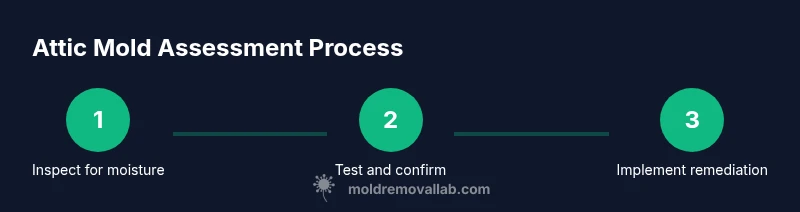
The Mold Removal Lab approach to attic mold remediation\n\nThe Mold Removal Lab Team advocates a risk-based, conservative approach to attic mold. Start with a clear moisture source assessment, then implement containment to prevent spread, followed by careful cleaning of non-porous surfaces. Contaminated materials should be removed or sealed, and all affected spaces must be thoroughly dried and dehumidified. Post-remediation verification, including moisture readings, helps confirm that the problem is resolved. Throughout the process, homeowners are advised to document steps taken and to consult professionals for any large-scale issues or uncertainties.
Quick-start checklist for homeowners\n\n- Confirm and repair moisture sources (roof leaks, condensation, ventilation).\n- Gather PPE and cleanup supplies before starting.\n- Isolate the area with plastic sheeting and shut off HVAC during cleanup.\n- Inspect for mold growth and test if unsure; pursue professional testing if results are inconclusive.\n- Clean non-porous surfaces with mild cleaners; avoid abrasive methods.\n- Decide on insulation or drywall replacement if contaminated.\n- Dry the area thoroughly and monitor humidity to prevent recurrence.\n- Schedule a follow-up inspection to verify remediation success.
Tools & Materials
- N95 respirator(Fit-tested if possible; replace if damp)
- Disposable gloves(Latex-free preferred)
- Safety goggles(Wraparound style recommended)
- Plastic sheeting (6 mil or thicker)(To seal off the area)
- Painter's tape(For securing plastic sheeting)
- Microfiber cloths(For damp wiping)
- Non-ammonia cleaner or mild detergent(Avoid mixing with bleach)
- Household bleach (optional, diluted)(Only if surface-safe and ventilation is good)
- Spray bottle(For cleaning solutions)
- Dehumidifier or fans(Promote thorough drying)
- Garbage bags (heavy-duty)(Double-bag contaminated materials)
- HEPA vacuum (optional)(Use with caution to avoid dispersal)
Steps
Estimated time: 2-6 hours
- 1
Gather PPE and materials
Collect all safety gear and cleanup supplies before entering the attic. This minimizes repeated trips and reduces exposure. Put gloves and the respirator on first, then set up plastic containment.
Tip: Test fit the respirator and ensure a secure seal; a loose mask reduces protection. - 2
Inspect moisture sources
Look for roof leaks, condensation points, or ventilation issues. Document any wet areas and plan repairs before or during cleanup to prevent regrowth.
Tip: Take photos of mold patches to track progress after repairs. - 3
Contain the work area
Seal off the attic space with plastic sheeting to prevent spores from drifting to living areas. Turn off the HVAC system to avoid cross-ventilation.
Tip: Seal all gaps around doors and access points; the goal is minimal air movement. - 4
Clean and remove affected materials
Wipe non-porous surfaces with a mild cleaner; avoid dry brushing. Contaminated porous materials may need removal and proper disposal.
Tip: Always clean from top down to reduce spreading debris. - 5
Dry and monitor
Use a dehumidifier and fans to dry the area thoroughly. Check humidity and surface dryness over 24–48 hours to ensure safe conditions before reoccupying.
Tip: Keep treated areas dry; moisture encourages rapid mold recurrence. - 6
Restore and reassess
Replace removed materials (insulation or drywall) as needed once dry. Re-check after a few days to confirm no new growth appears and moisture remains controlled.
Tip: Plan preventive upgrades (ventilation, sealing) during restoration.
FAQ
Is all attic mold dangerous?
No, not all attic mold is dangerous, but exposure and growth extent determine health risk. Always assess moisture, test if needed, and escalate remediation if necessary.
Not all attic mold is dangerous, but you should assess growth and exposure and test if uncertain.
Can attic mold be harmless?
Some attic mold may be non-toxic or limited in scope. Verification and moisture control are still important to prevent recurrence.
Some attic mold can be non-toxic, but you should verify and fix moisture to prevent it returning.
Are DIY mold tests reliable?
DIY tests can screen for mold presence, but lab analysis is more reliable for identifying species and health risk.
DIY tests help screen, but lab analysis is usually needed for accurate results.
Should I remove insulation myself?
If insulation is damp or moldy, disposal may be necessary. In many cases, insulation removal and replacement should be done by a professional.
If insulation is damp or moldy, it’s usually best to have a pro handle removal.
How long does attic mold remediation take?
Duration depends on extent and moisture control; simple cases can be completed in hours, while larger problems may take days.
Time varies; small jobs can be done in hours, larger ones take days.
Will homeowners insurance cover attic mold remediation?
Insurance decisions vary by policy and cause; many policies cover mold related to sudden damage, but gradual moisture often isn’t.
Insurance may cover sudden damage, but moisture-related issues often aren’t.
Watch Video
The Essentials
- Assess moisture sources before cleaning.
- Not all attic mold is hazardous; verify with testing when in doubt.
- Contain and clean safely; dry thoroughly to prevent regrowth.
- Address root causes to minimize recurrence.