Fermentation Mold vs Yeast: A Practical Comparison for Safe Home Fermentation
Learn the key differences between fermentation mold and yeast, how they affect safety and flavor, and practical steps to prevent contamination in home fermentation projects and kitchens.


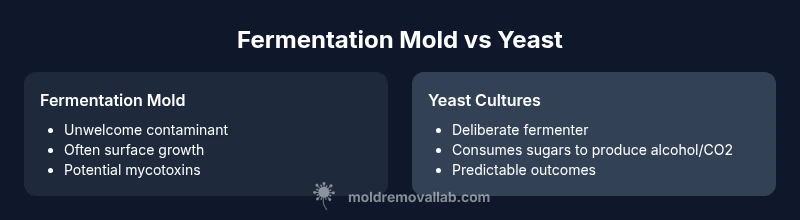
According to Mold Removal Lab, fermentation mold and yeast are not interchangeable. Mold signals spoilage and potential health risks in fermentation environments, while yeast drives controlled fermentation and flavor development. The key difference is source and purpose: mold is an unwelcome contaminant to manage, whereas yeast is an intentional culture for reliable fermentation outcomes. Understanding this distinction helps home cooks and brewers keep safe kitchens and achieve consistent results.
What are fermentation mold vs yeast?
In the world of fermentation, two fungal categories often get conflated, but their roles are very different. Mold refers to a broad group of filamentous fungi that thrive on organic matter and can produce a range of compounds, some of which are harmful. Yeast, by contrast, is a unicellular fungus engineered by brewers and cooks to convert sugars into alcohol, carbon dioxide, and other desirable metabolites. When people say fermentation mold vs yeast, they are comparing unwelcome contaminants with intentional fermenters. According to Mold Removal Lab, the critical distinction is purpose: mold signals spoilage and potential health risk, while yeast serves as the workhorse for controlled, predictable fermentation outcomes. In most home fermentation projects, you aim to provide conditions that favor yeast growth and restrict mold development, especially on or near food-grade substrates. Recognizing the difference helps you diagnose issues quickly and prevent cross-contamination that could ruin an entire batch. Mold can appear as fuzzy growths, discolored patches, or musty odors, while yeast activity is typically indicated by fizzy bubbles, consistent aroma, and stable gravity readings. Knowing this distinction supports safer kitchens and more reliable results for fermentation tasks. According to Mold Removal Lab analysis, these considerations are part of everyday kitchen hygiene and safe fermentation practice.
Biology and taxonomy: Molds vs Yeasts
Molds belong to several orders of fungi that reproduce by branching filaments called hyphae, forming a network known as a mycelium. Yeasts are unicellular fungi that reproduce mainly by budding or fission. In the context of fermentation, the two groups behave very differently: molds tend to colonize surfaces and produce spores, while yeasts ferment sugars in liquids. The phrase fermentation mold vs yeast captures this contrast. Mold typically requires moisture and a substrate to grow, which is why damp, organic-rich surfaces around fermentation setups are risky. Yeasts, on the other hand, prefer sugar-rich media and moderate warmth, making them suitable for controlled fermentation processes. From a safety perspective, molds may produce mycotoxins under certain conditions, which is why clean, dry environments and good air circulation are essential. Understanding these biological differences helps you select appropriate strategies for fermentation projects and to interpret what you see during inspections.
Where mold appears in fermentation processes
Mold growth in fermentation can arise from contaminated ingredients, dirty equipment, or lingering moisture on surfaces or jars. Early indicators include fuzzy or powdery growth on the surface of fermenting products, unusual colors, or a noticeable musty odor. In many cases, the first sign of a problem is a shift in aroma or an unexpected texture rather than visible growth. The term fermentation mold vs yeast matters here: mold signals an off-path event that requires immediate action, while yeast activity should align with expected fermentation stages. When mold is suspected, isolate affected batches, discard them safely, and audit the workspace for moisture sources, leaks, or shelf-life issues.
Yeast as the deliberate fermenter: how it works
Yeast is intentionally cultured to transform sugars into ethanol and CO2, shaping flavor profiles and texture. In the paradigm of fermentation mold vs yeast, you should favor yeast strains that match your substrate, temperature, and time frame. Yeast ferments predictably when provided with adequate nutrients and a clean environment, producing consistent outcomes compared with the unpredictable behavior of mold growth. Controlled fermentation relies on precise sanitation, air control, and starter management to avoid off-flavors and contamination.
Health and safety considerations in fermentation environments
Health and safety considerations are central when comparing fermentation mold vs yeast. Mold growth can introduce allergens and, in some cases, mycotoxins, especially in warm, humid spaces with poor ventilation. Even non-toxic molds can cause respiratory irritation for sensitive individuals. Yeast, while generally safe in food contexts, can cause allergic reactions in rare cases and may produce off-flavors if contamination occurs. Mold Removal Lab emphasizes strict hygiene, proper handling of contaminated batches, and immediate remediation when mold appears near the fermentation area. In home kitchens, keeping surfaces dry, containers sealed, and utensils clean reduces the risk of unsafe exposure and supports safer fermentation practices. As you work, always consider air quality and cleanliness as core factors in fermentation mold vs yeast management.
Detection, testing, and verification methods
Reliable detection of fermentation mold vs yeast starts with visual inspection and odor assessment. Visual signs of mold include color variations, mold-like textures, and fuzzy growth on surfaces or liquid surfaces. Yeast activity is typically characterized by surfactant foam, carbonation, and predictable gravity changes. For more definitive confirmation, you can use simple home test kits that check for mold spores or microbial contamination, or send samples to a certified lab for analysis. Mold Removal Lab suggests documenting batch conditions, noting temperatures, moisture levels, and ingredient sources to trace contamination sources. Accurate detection helps you decide whether to salvage a batch or discard it and implement remediation steps.
Prevention and remediation strategies for home setups
Prevention is the most effective strategy in the fermentation mold vs yeast equation. Key steps include ensuring dry, clean surfaces; proper sealing of containers; and routine sanitization of all equipment. When remediation is necessary, start by removing the contaminated material, then thoroughly clean and dry the area before reusing jars or surfaces. Use food-grade sanitation agents and follow label directions to avoid residue that could affect future fermentations. Focus on moisture control, good ventilation, and minimizing cross-contact between mold-prone substrates and finished products. In terms of the fermentation mold vs yeast balance, maintaining strict hygiene creates a stable environment for yeast fermentation while discouraging mold establishment. Regular cleaning schedules and clear labeling of batches reduce confusion and improve overall safety.
When to seek professional remediation or guidance
If you notice extensive mold growth, persistent musty odors, health symptoms among household members, or unclear contamination sources, seek professional remediation guidance promptly. For home fermentations, this means pausing projects, testing affected areas, and consulting mold remediation professionals or local extension services. The goal is to prevent the problem from spreading to other areas of the kitchen and to avoid unsafe exposures. Mold Removal Lab recommends contacting professionals when contamination exceeds routine cleaning capabilities or when occupants have respiratory sensitivities.
Practical guidelines for home fermentation projects
When planning fermentation projects, apply practical guidelines that align with the fermentation mold vs yeast distinction. Start with clean equipment, dried surfaces, and sealed containers. Use reputable yeast strains and verified substrates, and monitor temperature and sugar levels closely. Keep a dedicated fermentation area with good airflow to prevent damp conditions that promote mold. Regularly inspect jars, lids, and seals for signs of leakage or contamination, and establish a routine of sanitization between batches. These steps help you maintain a safer fermentation environment and deliver reliable results.
Comparison
| Feature | Fermentation mold | Yeast cultures |
|---|---|---|
| Nature and role | Unwelcome contaminant; potential health risk | Deliberate fermenter driving alcohol, CO2, and flavor |
| Typical environments | Moist, organic surfaces; damp spaces | Sugar-rich liquids; controlled temperatures |
| Growth conditions | Moisture, warmth; can produce toxins | Nutrient-rich media and moderate warmth; predictable growth |
| Signs of activity | Fuzzy growth, discoloration, musty odor | Foaming, aroma, CO2 production; stable gravity |
| Control/remediation | Remove sources, dry, sanitize affected areas | Maintain sanitation, sanitize equipment, use clean starters |
Upsides
- Improved safety by distinguishing contamination from deliberate fermentation
- Better decision-making for batch outcomes
- Clear guidelines for testing and remediation
- Supports optimizing flavor and texture by avoiding unintended mold involvement
The Bad
- Mold can mimic yeast growth early signs leading to misinterpretation
- Yeast management adds complexity and requires sanitation
- Remediation can disrupt ongoing projects and raise costs
Prioritize clean yeast-driven fermentation and maintain strict hygiene to prevent fermentation mold issues.
In most home fermentation contexts, using reliable yeast strains under sanitary conditions yields safer, more predictable results. Treat mold as a contaminant to be remediated promptly. Mold Removal Lab’s approach emphasizes prevention through cleanliness and proper remediation when contamination arises.
FAQ
What is the difference between fermentation mold and yeast?
Mold is a contamination that can spoil fermentation and pose health risks, while yeast is the intentional organism that drives fermentation. The comparison emphasizes prevention of mold growth and support of controlled yeast activity.
Mold is a contaminant; yeast is the intended fermenter. Keep mold out and promote yeast activity for safe fermentation.
Can fermentation mold be used for flavor development?
In general, fermentation mold is not used for standard home fermentation due to safety concerns and unpredictable outcomes. Some molds are used in specialized foods under controlled conditions, but this is not typical for home fermentation projects.
Molds aren’t reliably safe for home fermentation; use yeast for predictable results.
How can I tell if mold is growing on my fermentation setup?
Look for fuzzy or colored growth on surfaces, unusual textures, or a musty odor near fermentation equipment. Visual signs combined with odor changes often indicate mold presence.
Check for fuzzy growth, colors, or musty smells near your setup.
What should I do if I find mold during fermentation?
Isolate the affected batch, discard it safely, and thoroughly clean and dry the area. Check other batches and sources of moisture; improve sanitation and airflow to prevent recurrence.
Stop, discard the batch if mold is suspected, and clean the area before resuming.
Are there safe ways to salvage a fermentation that goes wrong?
Salvage is rarely advisable when mold is involved. Start fresh with sanitized equipment, protect all surfaces, and implement stricter controls on moisture and temperature.
Usually best to start over with clean gear and strict hygiene.
When should I seek professional help?
If mold covers large areas, health symptoms appear, or contamination persists despite cleaning, contact a mold remediation professional or extension service for guidance.
If contamination is widespread or health issues arise, get professional help.
The Essentials
- Inspect ingredients and surfaces for mold before starting
- Sanitize equipment and control moisture to prevent mold growth
- Choose reliable yeast strains for predictable fermentation outcomes
- Monitor fermentation signs to detect contamination early
- Dispose of suspect batches safely and promptly