Mold versus Yeast: A Practical Comparison for Home Health
Compare mold and yeast, two fungi with different indoor impacts, health considerations, and remediation approaches to help homeowners prevent moisture problems and maintain safe living spaces.


Mold and yeast are both fungi, but they differ in biology, growth, and remediation needs. Mold often forms visible, fuzzy colonies on damp building materials and can trigger allergies, while yeast tends to appear in food contexts and is typically less hazardous indoors. For homeowners, prioritizing moisture reduction addresses mold best, while yeast concerns usually involve food safety.
What mold versus yeast mean for homes
Mold versus yeast are both fungi, but they occupy different niches in indoor environments and demand different responses from homeowners. Understanding how they differ helps you prioritize moisture control, cleaning, and when to seek professional remediation. In everyday language, mold is the damp, surface-visible troublemaker, while yeast is more commonly associated with food contexts and fermentation. The Mold Removal Lab team emphasizes that distinguishing these two groups is not about naming a single organism, but about recognizing distinct growth patterns, risks, and remediation pathways. According to Mold Removal Lab, moisture control is the single most important factor in preventing mold growth indoors. These distinctions guide practical steps you can take today to protect your home.
Core biological differences between mold and yeast
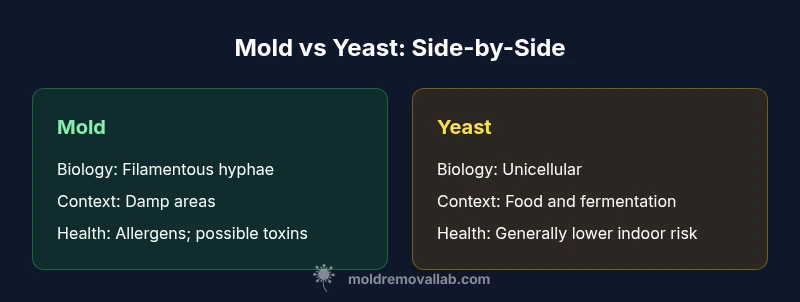
Mold and yeast belong to the same fungal kingdom, but their bodies grow in very different ways. Mold is filamentous, forming hyphae that weave into a visible mycelium. Yeast is unicellular and reproduces mainly by budding. These structural differences translate into distinct behaviors: mold rapidly colonizes damp surfaces, while yeast tends to proliferate where sugars and moisture are present. These differences have practical implications: mold requires moisture management and, often, professional assessment, whereas yeast concerns usually involve food storage hygiene and kitchen sanitation.
Growth conditions and visible signals
Indoor mold thrives where moisture lingers—leaky walls, damp basements, bathrooms, or poorly ventilated crawl spaces. It often presents as fuzzy, colored patches on walls, wood, or insulation, sometimes accompanied by a musty odor. Yeast, by contrast, is commonly seen in kitchens and food zones—on bread dough, fruit, beer, or fermentation vessels—where sugars are plentiful. Yeast colonies tend to be smooth and cream-colored, not the fuzzy growth typical of mold. Recognizing these cues helps you triage situations quickly.
Health implications and exposure considerations
Mold exposure is widely associated with allergic reactions, respiratory irritation, and, in some species, mycotoxins. People with asthma or sensitivities may notice symptoms when mold is present, especially in poorly ventilated spaces. Yeast indoors is generally less hazardous to the general population, though contaminated food or unclean surfaces can cause gastrointestinal discomfort in sensitive individuals. For most households, addressing ongoing dampness reduces mold-related health risks more effectively than focusing on yeast alone.
Common indoor contexts where each occurs
Mold is a common concern in basements, attics, bathrooms, and any area with chronic moisture intrusion, such as a leaky pipe or a roof leak. Yeast finds its way indoors primarily through food-related contexts—leftover dishes, spoiled fruit, pantry items with moisture, or kitchen surfaces where sugars accumulate. Understanding where each is likely to appear helps you tailor a cleaning plan that prioritizes moisture control for mold and proper food hygiene for yeast.
Testing and confirmation: how to tell mold from yeast
Visual inspection can raise suspicion, but laboratory confirmation provides certainty. For mold, air sampling and surface tests are common, but moisture meters and humidity tracking are also essential tools to identify ongoing moisture problems. Yeast identification is often relevant in food safety contexts; in a home setting, you’ll typically rely on the source—spoiled food or kitchen residues—and confirm with basic microbiology tests only if there is persistent, unexplained contamination. Keep in mind that lab analyses are guided by moisture context and exposure history.
Remediation and prevention strategies
Remediation for mold focuses first on moisture control: fix leaks, dry out affected areas, improve ventilation, and consider professional remediation for extensive growth. Cleaning non-porous surfaces with appropriate products can be effective, but porous materials like drywall or insulation may require removal and replacement. For yeast-related issues, thorough cleaning of food-preparation areas, proper refrigeration, and prompt disposal of spoiled items are crucial. Sanitize counters, sanitize sponges, and maintain clean disposal practices to prevent yeast proliferation.
DIY vs professional remediation: when to call in experts
Small, isolated mold spots on non-porous surfaces can often be handled by homeowners after moisture control and surface cleaning, but larger or recurring growth, mold in porous materials, or signs of moisture damage usually calls for a professional remediation service. Yeast-related problems tied to food spoilage rarely need remediation professionals and are typically resolved through proper food handling and sanitation. If symptoms persist or mold reappears after cleaning, consult a qualified mold remediation specialist and consider moisture risk assessment as a next step.
Comparison
| Feature | Mold | Yeast |
|---|---|---|
| Biology | Filamentous fungi with hyphae forming a mycelium | Unicellular fungi reproducing by budding |
| Common indoor contexts | Damp walls, basements, bathrooms | Food preparation areas, spoiled fruit, bread dough |
| Visible signs | Fuzzy patches; may have colors like green, black, or white | Smooth, creamy colonies on sugary surfaces |
| Health considerations | Allergenicity; potential mycotoxins in certain species | Generally lower indoor health risk; foodborne yeast concerns in spoiled items |
| Detection methods | Visual inspection, moisture meters, lab testing for confirmation | Kitchen sanitation checks; microbiological testing mainly for food contexts |
| Remediation implications | Moisture control; may require professional remediation for large areas | Food safety hygiene; less invasive containment typically needed |
Upsides
- Clarifies indoor risk by separating mold from yeast contexts
- Guides moisture-based remediation strategies
- Supports safer food handling and storage practices
The Bad
- Terminology can confuse homeowners new to microbiology
- Some species blur distinctions between mold and yeast
- Misinterpretation without professional testing can delay proper action
Prioritize moisture control for mold-related risk; yeast concerns are typically food-safety issues.
Mold presents greater health and structural risks indoors, while yeast is usually linked to food contexts. The recommended approach is moisture management, thorough cleaning of affected areas, and professional help if mold persists.
FAQ
What is the essential difference between mold and yeast?
Mold is a filamentous fungus that grows as colonies on damp surfaces, whereas yeast is unicellular and often associated with fermentation and food contexts. The practical effect is that mold requires moisture control, while yeast concerns usually involve food hygiene.
Mold is a fuzzy growth on damp surfaces; yeast is the type of fungus used in baking and brewing. The key is where they appear indoors.
Is indoor mold always dangerous?
Not all molds produce harmful effects, but many can trigger allergies or asthma, especially in sensitive individuals. If you notice persistent growth or symptoms, test and address moisture sources.
Mold can trigger allergies; if you notice growth and symptoms, check moisture and consider testing.
Can yeast grow indoors, and should I worry?
Yes, yeast can grow on spoiled food and in kitchens, but indoor health risks are typically lower than mold. Focus on proper storage and sanitation to minimize yeast growth.
Yeast indoors usually means food is spoiled; clean it up and store foods properly.
How do I test for mold versus yeast?
For mold, rely on lab-verified tests and moisture assessment to confirm growth and risk. Yeast-related concerns are usually addressed through source control—food handling and sanitation.
Mold testing is best done by labs; for yeast, keep kitchen areas clean.
When should I hire a professional?
If you see widespread or recurring mold, dampness, or you have respiratory symptoms, hire a certified mold remediation professional. Yeast problems tied to food spoilage rarely need remediation professionals and are typically resolved through proper food handling and sanitation.
Call a pro if mold keeps coming back or you have health symptoms.
Are there any common myths about mold and yeast?
A common myth is that all mold is deadly; most molds are not fatal but can affect health. Yeast is not inherently dangerous indoors unless linked to spoiled food or contaminated surfaces.
Molds aren’t automatically dangerous, but some can cause health issues; yeast is usually safe unless tied to spoiled food.
The Essentials
- Act on moisture first to curb mold growth
- Differentiate mold from yeast for targeted remediation
- Use professional tests when in doubt about mold
- Prioritize food safety hygiene to control indoor yeast