Does Clorox Kill Mold? A Practical Guide for Mold Remediation
Discover whether Clorox bleach kills mold, when it works, safety steps, and effective alternatives. A data-driven guide from Mold Removal Lab for homeowners and renters.


Does Clorox kill mold? On non-porous surfaces, household bleach (like Clorox) can kill surface mold when used properly and left to sit for several minutes, but it won't eradicate mold that's embedded in porous materials. The Mold Removal Lab Team emphasizes moisture control and full-area cleaning for lasting remediation. Bleach must be used with ventilation, PPE, and never mixed with ammonia.
Does Clorox Kill Mold: What It Can and Cannot
Mold growth is a moisture-driven problem. Bleach, including popular brands like Clorox, can sterilize and kill surface molds on non-porous surfaces when used correctly. However, the mold roots in porous materials such as drywall, wood, and fabrics are often beneath the surface and may not be fully eliminated by a chlorine-based cleaner alone. From the perspective of the Mold Removal Lab Team, addressing moisture sources and implementing a full remediation plan are essential for long‑term results. This means not only cleaning but drying out the area, fixing leaks, and controlling humidity. While does clorox kill mold in some cases, it is not a universal remedy and should be integrated into a broader strategy that targets the moisture problem behind the growth.
Effectiveness by Surface Type: Non-porous vs Porous
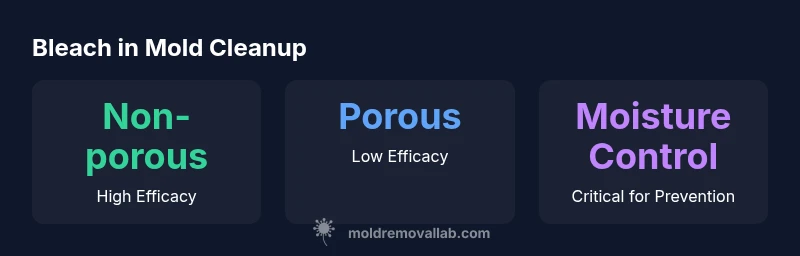
The core limitation of Clorox bleach is its inability to penetrate porous substrates. On non-porous materials like tile, glass, or epoxy-coated surfaces, mold may be visually removed and the surface disinfected with proper dwell time. In contrast, on porous materials, mold often colonizes within the material itself, where bleach may only sanitize the surface. This distinction is critical for homeowners who want to know whether a cleanup will be permanent or temporary. If the contaminated material is porous and damaged, replacement or professional remediation is usually required. The goal is to stop moisture problems and prevent regrowth, not just wipe away the visible mold.
The Role of Moisture and Drying in Mold Remediation
Mold growth correlates strongly with moisture. Even with bleach, if the underlying dampness remains, mold can return within days or weeks. Climate, humidity, and visible water intrusion can undermine cleaning efforts. A successful approach combines surface cleaning with rapid moisture remediation: dehumidification, fixing leaks, and ensuring good airflow. The Mold Removal Lab Team emphasizes that treating only the mold while ignoring the moisture source yields limited, temporary relief. This is why moisture assessment is a non-negotiable step in any mold cleanup plan.
Safety and Safety Protocols When Using Bleach
Bleach use requires careful safety planning. Work in a well-ventilated space, wear gloves and eye protection, and never mix bleach with ammonia or acidic cleaners, which can release toxic gases. Store bleach away from children and pets. Maintain a safe distance from porous materials that could off‑gas or irritate the air. If you notice persistent symptoms or extensive growth, stop cleaning and seek professional guidance. Safety first helps prevent exposure risks during does clorox kill mold scenarios.
Step-by-Step: Using Bleach on Non-Porous Surfaces (Practical Guide)
- Identify non-porous surfaces with visible mold. 2. Ventilate the area fully and wear PPE. 3. Dilute household bleach to about 1 part bleach to 10 parts water. 4. Apply the solution and let it sit for 5–10 minutes to allow disinfection. 5. Scrub with a stiff brush, then rinse with clean water. 6. Dry completely to prevent regrowth. 7. Monitor the area for new moisture intrusion and address it promptly. Note that this approach is most appropriate for non-porous surfaces and does not substitute for moisture control or professional remediation when needed.
Alternatives to Bleach for Mold Removal
Safer alternatives exist for certain situations. White vinegar can help reduce surface mold on some surfaces, and hydrogen peroxide may be useful for specific mold species on non-porous surfaces. However, neither vinegar nor hydrogen peroxide should be assumed to replace a full remediation plan, especially for porous materials or large infestations. Always test a small area first and consider the long-term goal of moisture control and structural safety. When dealing with extensive growth or growth behind walls, professional remediation remains the most reliable option.
DIY vs Professional Remediation: Decision Points
For small, surface-level mold on non-porous surfaces, a targeted bleach cleaning with proper safety measures can be satisfactory. For larger areas, recurring growth, or growth in porous materials, DIY efforts are unlikely to address the underlying moisture problem or mold colonization. In such cases, professional remediation is recommended to ensure complete removal and to prevent health risks associated with mold exposure. The Mold Removal Lab Team consistently advises homeowners to evaluate moisture sources, the material affected, and the extent of growth when deciding between DIY cleanup and professional help.
Summary of bleach efficacy by surface type
| Surface Type | Clorox Efficacy | Notes |
|---|---|---|
| Non-porous surfaces (tile, glass) | High on surface mold | Bleach can disinfect and kill surface mold with proper dwell time |
| Porous surfaces (drywall, wood, fabric) | Low to ineffective | Mold embedded; bleach often does not reach roots |
| Hidden mold behind walls | Not effective | Requires professional inspection and moisture management |
FAQ
Can I use Clorox on painted walls?
Yes, on painted, non-porous walls, bleach can help remove surface mold when used with ventilation and a proper dwell time. Test a small area first and ensure the surface tolerates the solution. For porous substrates, bleach is unlikely to fully remove mold.
Bleach can work on painted, non-porous walls if you ventilate and test a small area first, but it may not remove mold from porous materials.
Is vinegar a safer alternative to bleach?
Vinegar can reduce some mold on non-porous surfaces, but it does not have the same disinfectant strength as bleach and may not work for all species. It is not a universal solution and should be part of a broader remediation plan.
Vinegar can help on some surfaces, but it isn’t a guaranteed mold fix like bleach on non-porous surfaces.
What about fumes and safety when using bleach?
Bleach fumes can irritate the eyes, throat, and lungs. Always ventilate, wear PPE, and never mix with ammonia or acidic cleaners. If irritation occurs, leave the area and consult a professional if mold persists.
Bleach fumes can irritate you; ventilate and wear protection, and never mix with ammonia.
Should I remove moldy drywall myself?
For extensive mold on porous materials like drywall, removal and replacement are often necessary. DIY removal without addressing moisture can lead to regrowth and health risks. Consider professional remediation for larger areas or hidden growth.
If drywall is moldy, removal and moisture control are usually needed; big infestations should be handled by pros.
How long before I see results after cleaning?
Mold cleanup is not instantaneous. Visible mold may disappear quickly, but hidden spores can persist. Drying the area and controlling moisture are ongoing processes, and monitor for return.
You won’t necessarily see instant results; drying and moisture control matter most.
When should I call a professional?
If growth is behind walls, covers a large area, or recurs after cleaning, professional remediation is recommended. Professionals can identify moisture sources and ensure complete mold removal and safe restoration.
Call a professional if growth is behind walls or keeps returning.
“Bleach can help with surface mold on non-porous materials, but it does not address mold inside porous materials. For lasting results, pair cleaning with moisture control and a comprehensive remediation plan.”
The Essentials
- Bleach can eliminate surface mold on non-porous surfaces when used correctly.
- Bleach is not a cure-all; it cannot reach mold inside porous materials.
- Moisture control is essential to prevent mold recurrence.
- Ventilate space and wear PPE; never mix bleach with ammonia.
- For porous materials or large infestations, seek professional remediation.