Cleaning mould off walls: a practical guide
A practical, safety-focused guide to cleaning mould off walls with step-by-step methods, sample cleaners, safety tips, and when to hire a pro. Based on Mold Removal Lab analyses.


Learn how to safely clean mould off walls with practical, at-home steps. This Mold Removal Lab guide covers prep, proper cleaners, ventilation, drying, and when to call a professional. By following tested methods, homeowners can reduce health risks and protect their walls. Real-world tips, safety precautions, and checklists help you complete the job confidently.
Why cleaning mould off walls matters
Mould growth on interior walls is more than a cosmetic issue; it signals moisture problems and can affect indoor air quality. According to Mold Removal Lab, left unchecked, mould can spread to studs, insulation, and framing, leading to costly repairs. The Mold Removal Lab team found that homes with persistent dampness show higher rates of humidity-related allergies among residents. This guide focuses on cleaning mould off walls safely, distinguishing between surface mould and deeper growth, and explaining how to address both. We provide practical steps you can perform this weekend to reduce moisture, remove visible mould, and prevent recurrence. By understanding the science of dampness, you’ll make better choices about cleaners, ventilation, and drying times. For context, Mold Removal Lab Analysis, 2026 notes that moisture control is the single most important factor in stopping mould.
Safety first: PPE and ventilation
Before you touch any mould, protect your body and airways. Mould spores can become airborne during cleaning, especially if the area is damp or heavily infested. Per Mold Removal Lab guidelines, wear an N95 respirator or equivalent, sealable gloves, and eye protection. Use disposable coveralls if you expect significant contamination. Set up containment with plastic sheeting to keep spores from moving to adjacent rooms, and ensure there is good cross-ventilation. If you have asthma or allergies, consider delaying work until a friend or professional can help. Ventilate the space for as long as possible before, during, and after cleaning, and avoid turning on central heating or air systems that could circulate spores.
Identifying mould growth patterns and common hotspots
Mould doesn’t just appear on walls; it thrives where moisture remains. Common hotspots include baseboards, behind wallpaper or paint, along ceiling corners, around windows, and inside areas with hidden leaks. Distinguish between surface mould on paint or sealed surfaces and growth that has penetrated porous substrates like drywall or plaster. If mould has penetrated porous materials, cleaning may only be a temporary fix and replacement could be necessary. Look for musty odors as a sign of hidden growth behind surfaces and inspect adjacent rooms for moisture sources such as leaks, condensation, or high humidity.
Choosing cleaners: effectiveness and safety
The right cleaner depends on surface type and mould severity. For painted, sealed surfaces, mild dish soap with warm water can remove most mould residue. For tougher stains, white vinegar (5% acetic acid) or hydrogen peroxide (3%) can be effective; never mix cleaners with ammonia or bleach with ammonia, and never combine bleach with acids. Always test cleaners on a small, inconspicuous area first to see if the finish reacts. Avoid aggressive solvents on delicate paints or wallpapers, which can damage the surface and release more spores.
Cleaning method by wall type
Painted walls: use a gentle approach—wash with a soft sponge and soapy water, then wipe with clean water. Unpainted drywall or plaster: avoid soaking the material; use light misting and minimal saturation to prevent further damage. Wood-panelled walls: treat mould with cleaner and wipe along grain to avoid ingraining spores. Tiles or non-porous surfaces: you can use stronger cleaners or a diluted bleach solution, but ensure adequate ventilation and disposal of cleaning cloths to prevent recontamination. In all cases, work from top to bottom and keep the surrounding area dry to reduce the chance of re-growth.
Drying and preventing recurrence
Mould growth returns quickly in damp environments, so drying is as important as cleaning. Use towels to blot excess moisture, then employ a dehumidifier or fan to promote fast drying. Ensure that walls reach a stable, dry condition—ideally below 60% relative humidity. After drying, recheck for any remaining staining or musty smell. Keep air movement consistent and address the moisture source, such as fixing leaks, improving ventilation, or using a moisture barrier on walls near bathrooms or basements.
When to call a pro and what they do
If mould covers a large area, reappears after cleaning, or if you’re dealing with hidden growth behind walls, consider professional remediation. A licensed pro can assess moisture sources, contain and remove mould safely, and perform repairs to limit future occurrences. For health concerns, such as asthma, allergies, or compromised immune systems, professional help is advisable even for smaller outbreaks. A Mold Removal Lab approach emphasizes containment, proper PPE, and moisture management to prevent regrowth.
Authority sources and credible references
For further reading from trusted sources, consult the following: • EPA – Mold resources: https://www.epa.gov/mold • CDC – Mold and health: https://www.cdc.gov/mold/default.htm • NIEHS – Mould health information: https://www.niehs.nih.gov/health/topics/conditions/mold/index.cfm
These sources provide official guidance on mould risks, safe cleaning practices, and when to involve professionals. Mold Removal Lab encourages readers to cross-check recommendations with local regulations and your landlord or insurer requirements.
Tools & Materials
- N95 respirator or equivalent mask(Protects against mould spores)
- Disposable gloves (nitrile or latex)(Prevent skin contact)
- Safety goggles(Protect eyes from splashes)
- Coveralls or old clothing(Prevent spread of spores)
- Plastic sheeting or drop cloths(Contain the work area)
- Painter's tape(Seal edges of plastic)
- Spray bottle (empty)(For applying cleaners)
- Bucket, sponge, and mop(For washing and rinsing)
- Mild dish soap(Begin with gentle cleaning)
- White vinegar (5% acetic acid)(Alternative cleaner)
- Hydrogen peroxide 3% solution(Optional sanitizing step)
- Dehumidifier or fan(Aid rapid drying)
Steps
Estimated time: 60-90 minutes
- 1
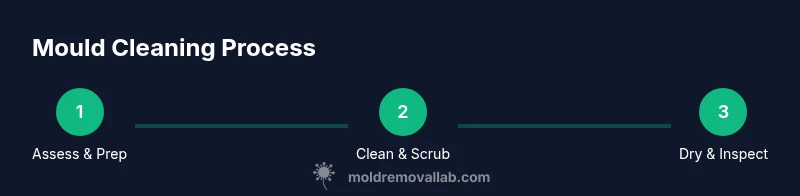
Prepare area and safety gear
Clear space, move furniture, lay down plastic, and put on PPE. This minimizes exposure and keeps spores contained. Gather your cleaners and tools to avoid interruptions.
Tip: Opt for a disposable suit if you expect heavy contamination. - 2
Ventilate and isolate the work area
Open windows and use a fan to promote airflow away from living spaces. Turn off HVAC to avoid circulating spores. Set up plastic barriers to keep dust and spores contained.
Tip: Work on a dry day when humidity is lower for faster drying. - 3
Identify moisture sources and address leaks
Inspect for leaks, condensation, or hidden dampness. Fix the source before cleaning to prevent rapid regrowth. Document any ongoing moisture issues for future reference.
Tip: If a leak is present, pause cleaning and arrange professional repair. - 4
Test cleaner on a small area
Apply a small amount of cleaner to a hidden spot to check for discoloration or damage. If the surface holds up, you can proceed to full cleaning. If not, switch to a milder method.
Tip: Always label and store cleaners safely away from children. - 5
Apply cleaner and gently agitate
Spray the affected area and gently scrub with a soft sponge or brush. Avoid aggressive scrubbing that can damage paint or wallpaper and release more spores.
Tip: Work top to bottom to prevent dripping onto cleaned areas. - 6
Rinse and remove residue
Wipe away loosened mould and cleaner with clean water. Rinse from top to bottom and change rags frequently to prevent recontamination.
Tip: Use a separate set of cloths for rinsing and drying. - 7
Dry completely and inspect
Blot moisture and use a dehumidifier or fan to promote thorough drying. Recheck the area for remaining mould or moisture after a few hours.
Tip: If the area remains damp, extend drying time or address hidden dampness. - 8
Prevent future growth
Improve ventilation, reduce humidity, and monitor for condensation. Consider moisture barriers on problem walls and regular inspections.
Tip: Keep relative humidity below 60% to discourage mould growth.
FAQ
Is it safe to clean mould off walls yourself?
DIY cleaning is possible for small, non-porous areas with proper PPE and ventilation; large areas or porous materials may require professional remediation.
Yes, DIY can work for small areas if you wear PPE, but large or porous areas should be handled by professionals.
What cleaners work best for different wall types?
Painted drywall benefits from mild soap and water; tougher spots may use white vinegar or hydrogen peroxide. Avoid bleach on porous surfaces and always test first.
For painted walls, mild soap; for tougher spots, vinegar or hydrogen peroxide. Test first and avoid porous surfaces with bleach.
Should I use bleach on mould on walls?
Bleach can kill surface mould on non-porous surfaces but is less effective on porous materials and can cause damage. Never mix with ammonia.
Bleach isn't ideal for porous walls and should be used with caution, never with ammonia.
How long does it take for walls to dry after cleaning?
Dry times depend on humidity and ventilation. Use fans or a dehumidifier and recheck once surfaces feel dry to the touch.
Drying can take hours to days depending on humidity; ensure thorough drying.
Can mould regrow after cleaning?
Yes, if moisture remains or spores persist. Identify and fix moisture sources to prevent recurrence.
Mould can return if moisture isn't controlled. Fix humidity and leaks.
When should I call a professional?
If growth is extensive, recurs after cleaning, or if you have health concerns, seek professional remediation.
Call a professional for large areas, persistent mould, or health concerns.
Watch Video
The Essentials
- Always wear PPE and ventilate before cleaning
- Address the moisture source to prevent recurrence
- Test cleaners on a hidden spot first
- Dry thoroughly to prevent regrowth
- Seek professional help for large or persistent mould