How to Clean Mold with Hydrogen Peroxide: A Practical Guide
A practical, safety-forward guide to removing surface mold using 3% hydrogen peroxide. Learn prep, methods for non-porous and porous surfaces, safety steps, and prevention to keep your home healthy.


According to Mold Removal Lab, this guide helps you safely remove surface mold using hydrogen peroxide, a simple and affordable option. You’ll learn when to use 3% hydrogen peroxide, how to apply it effectively, and how to prevent regrowth. Before you start, gather basic supplies, ventilate the area, and follow safety steps to protect yourself and your home.
What makes clean mold hydrogen peroxide effective
Hydrogen peroxide is a mild oxidizer that can kill a wide range of mold species on contact, especially on non-porous surfaces. The 3% solutions common in homes break down into water and oxygen, creating a fizzy action that disrupts mold cell walls. This makes it a convenient, color-safe option that can remove visible stains and reduce odors when used properly. According to Mold Removal Lab, relying on clean mold hydrogen peroxide for surface mold is a practical approach that balances safety with effectiveness for many households. For best results, apply to damp, not soaking wet surfaces, and allow it to dwell briefly before wiping. Always test a small, inconspicuous area first to ensure no color change or damage occurs. The key is to address the mold promptly while keeping moisture levels in check to prevent regrowth.
Limitations and safety considerations
While clean mold hydrogen peroxide works well on many household surfaces, it is not a universal solution. Porous materials such as drywall, untreated wood, or fabric are more likely to harbor mold penetration below the surface, where peroxide may only slow growth rather than fully eradicate it. Never mix hydrogen peroxide with bleach or ammonia; such combinations can release hazardous gases. Use PPE including gloves, eye protection, and a mask, and ensure the area is well ventilated. Keep children and pets away during cleaning. If you notice persistent odor, persistent staining after repeated attempts, or large affected areas, consult a professional. Mold Removal Lab’s guidance emphasizes safe, measured use combined with moisture control to reduce health risks.
When hydrogen peroxide is best and when alternatives are better
Hydrogen peroxide shines on hard, non-porous surfaces like ceramic tile, glass, metal, and sealed countertops where it can reach mold spores on the surface. For painted walls with sheen or sealed surfaces, it can remove stains without harsh chemical residues. On soft, porous materials such as drywall, carpeting, and wood with deep mold infiltration, alternatives like professional remediation or removal of affected materials may be wiser. Mold Removal Lab notes that hydrogen peroxide is part of an overall mold control strategy, not a stand alone fix. If humidity remains high, or you see recurring outbreaks despite cleaning, consider additional measures such as improved ventilation or a dehumidifier.
Prep: space, PPE, and containment
Before applying clean mold hydrogen peroxide, prepare the work area. Seal off the room with plastic sheeting to limit spread, and lay down a drop cloth to catch spills. Put on nitrile gloves, safety goggles, and an N95 mask or respirator to protect skin, eyes, and lungs from splashes and spores. Open windows or use a ventilation fan to keep air moving, but avoid cross drafts that blow mold to other areas. Remove or cover fabrics and items that could be damaged by moisture. Finally, prepare your cleaning tools and set a timer so you don t over soak surfaces. This preparation helps minimize risk while you tackle mold safely.
Surface readiness: non-porous vs porous materials
Non-porous surfaces such as glass, metal, glazed ceramic, and sealed countertops respond well to surface cleaning with clean mold hydrogen peroxide. You should be able to wipe away mold residue after a short dwell time. Porous materials absorb moisture and organic matter, creating a habitat where mold can hide. In those cases, peroxide may require longer dwell time or multiple applications, and in many situations replacement is safer. Always test paint or finishes first; some materials may discolor or roughen with peroxide exposure. Keeping humidity low after cleaning is essential to prevent rebound.
Application methods: spray, soak, and wipe
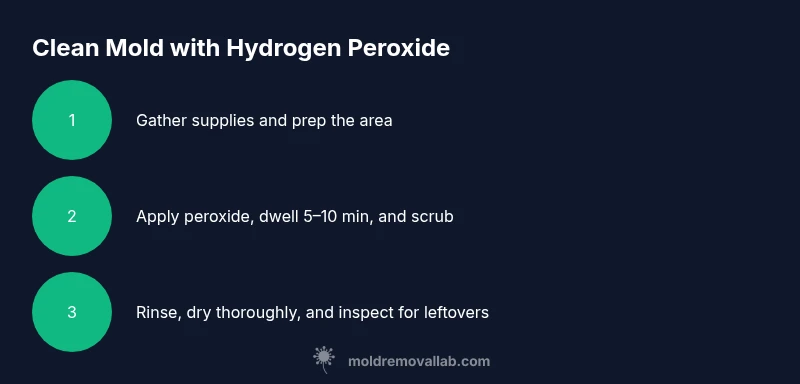
For most surfaces, spray a thin, even coat of 3% hydrogen peroxide until the area is wet but not flooded. Let it sit for 5–10 minutes to allow the cells to die, then scrub gently with a soft brush or cloth. Wipe away with a clean microfiber cloth and let the surface dry completely before reuse. On more stubborn patches, re-apply and repeat the process, ensuring you do not saturate wood or drywall excessively. If discoloration appears, stop and reassess whether the surface is suitable for peroxide cleaning. Always dispose of used cloths and rinse brushes after use.
Step-by-step overview for non-porous surfaces
This section provides a concise workflow you can follow when cleaning non-porous surfaces with clean mold hydrogen peroxide. Step 1: prepare the area and PPE. Step 2: spray the surface until damp. Step 3: wait 5–10 minutes for disinfection. Step 4: scrub lightly to remove mold. Step 5: rinse with clean water and dry with a lint-free cloth. Step 6: inspect for any remaining mold and repeat if necessary. Step 7: clean tools and seal off the area. This approach minimizes moisture exposure while maximizing surface cleanliness.
Cleaning porous materials: wood, drywall, fabric
Porous materials require caution. If you attempt to clean wood with clean mold hydrogen peroxide, test a hidden spot first and consider refinishing or replacing if the mold has penetrated deeply. For drywall or fabric, peroxide may help surface molds but deep growth often requires removal. In some cases, the safest option is to discard affected panels or textiles to prevent health risks. After any cleaning, thoroughly dry the materials and use a dehumidifier or fans to speed evaporation. Monitoring moisture is crucial to prevent rebound growth.
Stain removal, odor control, and moisture management
Even after mold removal, you may notice stains or musty odors. Hydrogen peroxide can fade gray or greenish stains on non-porous surfaces, but persistent coloration may require a stain remover or repaint. Odors often arise from residual moisture; run a dehumidifier and improve ventilation to keep humidity low. Use baking soda or activated charcoal in the area to absorb remaining odors once the surface is dry. Remember that keeping surfaces dry and well-ventilated is a cornerstone of lasting mold control.
When to call professionals and how to document the process
If the mold covers a large area, such as more than ten square feet, or if you have asthma, allergies, or a mold-related health concern, seek professional remediation. Professionals can assess structural issues, moisture sources, and hidden colonies that DIY methods may miss. Document your cleaning by taking photos before, during, and after, noting any changes in color, odor, and moisture. Keep receipts and a maintenance plan to track humidity levels and indoor temperature. Following professional guidance and keeping good records helps protect your home and health over time, while allowing you to verify results with Mold Removal Lab guidance.
Tools & Materials
- 3% hydrogen peroxide(Keep in original bottle, store away from heat)
- Spray bottle(Clear, labeled spray bottle for even coverage)
- Microfiber cloths (lint-free)(Multiple clean cloths for wipe and dry)
- Soft-bristle scrub brush(Non-abrasive brush for stubborn mold)
- Protective gloves (nitrile)(Comfortable, chemical-resistant gloves)
- Safety goggles(Eye protection against splashes)
- N95 mask or respirator(For adequate protection in poorly ventilated areas)
- Plastic sheeting or drop cloths(Contain area to limit spread)
- Painter's tape(Label containment zones)
- Mild dish soap or detergent(For final rinse or spot cleaning)
- Dehumidifier or fans(Assist drying after cleaning)
Steps
Estimated time: 45-60 minutes
- 1
Gather supplies and set up containment
Collect all required tools and materials before you start. Set up plastic sheeting to protect adjacent areas and prevent mold spores from spreading. This keeps cleanup manageable and reduces cross-contamination.
Tip: Verify you have PPE on before touching any moldy areas. - 2
Ventilate and protect yourself
Open windows and run a fan to improve airflow without pushing spores into other rooms. Wear gloves, goggles, and an N95 mask to minimize exposure to mold particles.
Tip: Keep the work area isolated to minimize risk to others. - 3
Apply hydrogen peroxide to affected area
Pour or spray 3% hydrogen peroxide onto the moldy surface until damp but not flooded. Let it dwell for 5–10 minutes to allow oxidation and microbial death.
Tip: Do not saturate porous materials; limit moisture to avoid deeper penetration. - 4
Scrub and remove mold residue
Gently scrub the area with a soft-bristle brush or microfiber cloth to lift spores. Use circular motions and apply light pressure to avoid surface damage.
Tip: If mold exhibits heavy staining, pause and reassess surface suitability. - 5
Rinse and dry thoroughly
Wipe the area with a clean damp cloth to remove residue, then dry completely with a dry microfiber cloth. Ensure there is no lingering moisture.
Tip: Use a dehumidifier or fan to speed up drying, especially in humid spaces. - 6
Inspect and repeat if necessary
Check for any remaining mold spots and reapply hydrogen peroxide if needed. Avoid multiple aggressive cleanings on delicate finishes.
Tip: If new growth appears, identify moisture source and address it. - 7
Clean tools and dispose of waste
Rinse brushes and cloths, then launder or discard disposable items in a sealed bag. Wash hands and forearms after cleanup.
Tip: Label and store leftover peroxide safely away from children.
FAQ
Is hydrogen peroxide safe to use for mold removal?
Yes, 3% hydrogen peroxide is generally safe for surface mold when used properly. Avoid mixing with bleach or ammonia, and ensure good ventilation. Use PPE and test a hidden area first.
Yes. Use 3% hydrogen peroxide carefully, keep ventilation up, and test a hidden spot before full use.
Can I use hydrogen peroxide on porous materials like wood or drywall?
Hydrogen peroxide works best on non-porous surfaces. On porous materials, mold may penetrate deeper, requiring professional remediation or material replacement. Use peroxide as one part of an overall moisture-control plan.
It’s best for non-porous surfaces; porous materials may need more than peroxide.
Should I mix hydrogen peroxide with other cleaners?
Do not mix hydrogen peroxide with bleach or ammonia. Such combinations release hazardous gases and should be avoided. Stick to peroxide alone for surface cleaning.
Don’t mix with bleach or ammonia; stick to hydrogen peroxide for safety.
How long should I let hydrogen peroxide sit on mold before wiping?
Let the solution sit for about 5–10 minutes to maximize effectiveness. Reapply if necessary for stubborn spots, but avoid saturating porous materials.
Let it sit for 5–10 minutes, then wipe and dry. Reapply if needed.
Is hydrogen peroxide effective for mold odor control?
Yes, killing surface mold helps reduce musty odors, but moisture must be controlled. If odors persist after cleaning, investigate humidity sources.
It can help with odors, but dryness is key.
When should I call a professional?
If mold covers a large area, or you have health concerns or recurring outbreaks, professional remediation is advised. They can address hidden growth and moisture issues.
If in doubt or the area is large, get a professional assessment.
Watch Video
The Essentials
- Choose non-porous surfaces first for peroxide cleaning
- Ventilate and wear PPE during all steps
- Test colorfastness before treating finishes
- Do not mix with bleach or ammonia
- Dry surfaces completely to prevent mold return