How to Remove Mold From Leather Safely
Learn safe, proven methods to remove mold from leather, test colorfastness, choose the right cleaners, and prevent regrowth with proper drying and conditioning. Expert tips from Mold Removal Lab.


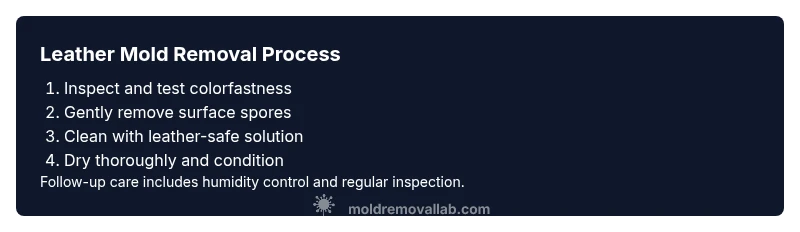
Leather mold can be removed with a careful, test-first approach using gentle cleaners, proper drying, and conditioning. Begin by assessing mold severity, then treat surface spores, stains, and odor. Always test a hidden area first and avoid soaking leather.
Leather mold: why it forms and what to know
Leather is naturally porous and can hold moisture, making it an inviting home for mold when humidity stays high or spills aren’t dried promptly. Mold can discolor finishes, weaken fibers, and leave a musty odor. According to Mold Removal Lab, leather mold often starts on the surface and spreads when spores are disturbed or the item is stored in damp conditions. The good news is that many leather pieces respond well to careful cleaning and conditioning instead of replacement. Start by inspecting the item for surface mold, staining, and odor, then decide if you can safely proceed at home or if professional remediation is warranted. Always wear gloves and a mask, work in a well-ventilated space, and keep the area dry during treatment. If the item is valuable or historically significant, document its condition with photos before you begin. Avoid soaking leather, as moisture can push mold deeper into pores and warp the material. Test any cleaner on a hidden spot first to ensure colorfastness.
Safety and protection: prep before you clean
Before you touch mold, guard yourself and your belongings. Wear a disposable mask or respirator, nitrile gloves, and eye protection. Work in a ventilated area, ideally with a dehumidifier running to reduce humidity. Remove other fabrics from the room to prevent cross-contamination of spores. Place the leather item on a clean, dry surface covered by a protective cloth. If you have allergies or asthma, consider postponing cleaning until air quality improves. Keep cleaning tools separate from household items to avoid spreading mold. Finally, test a small hidden area with your chosen cleaner before broader use to confirm it won’t discolor or damage the leather.
Assessing the leather type and mold severity
Different leathers respond differently to cleaners. Aniline or semi-aniline leathers absorb moisture more quickly than pigmented hides, while suede and nubuck require extra care to avoid texture damage. Start by inspecting stitching, seams, and any coatings. Surface mold that wipes away with gentle pressure is usually easier to treat than embedded growth that softens or stiffens the leather. If the mold penetrates the surface deeply or sustains a musty odor after drying, the item may require professional remediation to avoid long-term damage and health risks. Always perform a colorfastness test on a hidden area and stop if you notice color bleeding or finish lift.
Cleaning methods by leather type
- Pigmented leather: Use a mild pH-neutral soap solution and a soft cloth. Wipe gently, then remove soap with a damp cloth and dry thoroughly. Avoid saturating.
- Aniline/semi-aniline: Cleaner should be gentle and sparing; moisture should be limited to surface-area cleaning, followed by thorough drying.
- Suede/nubuck: Avoid water; use a suede-safe cleaner or a dry brush to remove surface spores, then apply a leather conditioner to restore nap.
- General rule: Never soak leather. Apply cleaners with a lint-free cloth, patted rather than rubbed, and always finish with drying and conditioning to prevent stiffness. If colorfastness tests fail, stop and seek professional help.
Treating stains, odors, and spores without over-wetting
Spot-clean mold stains by dabbing a tiny amount of cleaner on a microfiber cloth and lifting the stain rather than scrubbing. For odor, ventilate the area and allow time for air-drying; consider a closet with dehumidification to prevent regrowth. If you mix cleaners, keep them mild and compatible with leather to avoid residue that could irritate skin. After cleaning, wipe with a damp cloth (distilled water) to remove cleaner traces, then dry in a well-ventilated area away from direct heat.
Drying, conditioning, and storage to prevent recurrence
Dry leather slowly in a ventilated space. Avoid direct sunlight and heat sources that can dry and crack the material. Once dry, apply a leather conditioner to restore moisture and flexibility, following product directions. Store leather items in a cool, dry place with good air circulation and, if possible, use moisture absorbers to keep humidity low. Regularly inspect and brush suede or nubuck items to maintain nap and prevent future mold buildup.
When to call a professional and what to expect
If mold returns after home treatment, if the item is valuable, antique, or has deep staining, or if you experience persistent odors or health symptoms, consult a professional. Remediation may involve specialized cleaning, disinfection, and sealants that protect the leather. A pro will typically assess moisture sources, perform targeted cleaning, and provide guidance on storage and ongoing maintenance to prevent recurrence.
Prevention: keep leather mold-free long-term
- Control humidity in storage areas with dehumidifiers or moisture absorbers.
- Wipe down leather after exposure to rain or sweat, and dry promptly.
- Use breathable storage containers and avoid plastic bags that trap moisture.
- Schedule regular conditioning to maintain moisture balance and reduce vulnerability to mold.
- Inspect items seasonally, especially after humid seasons, and address stains or damp spots quickly.
What to expect after cleaning: results and care tips
Most leather items show improved color and texture after proper cleaning and conditioning. Expect a slight difference if pigmented finishes or unique patinas exist; conditioning helps restore flexibility. If odors linger, repeated venting and conditioning cycles may be necessary. Continue to monitor humidity and moisture exposure to minimize future mold risk.
Tools & Materials
- microfiber cloths(Lint-free, 2–3 cloths for cleaning and blotting)
- soft-bristle brush(For uneven surfaces and nap without damage)
- isopropyl alcohol 70% or leather-safe cleaner(Use sparingly for surface mold; follow product instructions)
- distilled water(For rinsing and dilution to avoid mineral deposits)
- pH-neutral leather cleaner or mild saddle soap(Test on hidden area first)
- spray bottle(To apply cleaner evenly)
- leather conditioner(Repair moisture and restore suppleness after cleaning)
- nitrile gloves(Protect hands from mold and cleaners)
- mask with respirator or disposable mask(Reduce inhalation of spores)
- vacuum with brush attachment(Optional for dry removal of surface spores)
- dehumidifier or fan(Helps maintain low humidity during the process)
Steps
Estimated time: Total time: 60-90 minutes
- 1
Prepare and protect
Put on gloves and a mask, set up a clean workspace, and gather all tools. Ensure the area is well-ventilated and humidity is controlled. This minimizes exposure and avoids spreading spores during cleaning.
Tip: Protect your workspace with a drop cloth or old sheet to catch drips and spores. - 2
Assess mold and test colorfastness
Inspect the leather to determine surface vs. embedded mold. Perform a colorfastness test on a hidden area using a damp cloth with cleaner. Stop if color transfers or finishes lift.
Tip: Always test before broad application to prevent color damage. - 3
Dry remove loose spores
Gently brush or vacuum the surface to remove loose spores before applying liquids. This lowers the amount of moisture needed later.
Tip: Use a brush with soft bristles to avoid scratching or lifting the finish. - 4
Apply mild cleaner to surface
Dampen a microfiber cloth with a mild cleaner or leather-safe solution and blot the moldy area. Do not saturate; work in small sections.
Tip: Pat rather than rub to minimize abrasion and spread. - 5
Rinse and wipe
Wipe away cleaner with a damp cloth using distilled water to remove residue. Avoid soaking the leather, which can force moisture into the fibers.
Tip: Rinse cloth frequently to prevent reapplication of soiled cleaner. - 6
Dry thoroughly
Let the leather air-dry in a warm, airy space away from direct heat. Use a fan if needed to speed evaporation but avoid hot air that dries or cracks the leather.
Tip: Ensure complete dryness before conditioning. - 7
Condition and restore moisture
Apply a quality leather conditioner to restore flexibility and help seal the surface after cleaning. Follow product directions for amount and method.
Tip: Conditioning helps prevent future cracking and re-tightens fibers. - 8
Address odor and storage
Ventilate the area to dissipate any remaining smell. Store leather items in dry spaces with good airflow and consider humidity control to deter future mold growth.
Tip: Keep items off the floor and away from damp walls. - 9
Evaluate need for professional help
If mold recurs, if stains remain, or if the item is valuable, consult a professional. They can assess moisture sources and provide specialized remediation.
Tip: Document the item’s condition and your cleaning steps for reference.
FAQ
Can mold return after cleaning leather?
Yes. If moisture returns or the leather isn’t dried completely, spores can regrow. Ongoing humidity control and regular inspection are key.
Yes, mold can come back if moisture returns; keep humidity low and inspect regularly.
Is it safe to use bleach on leather?
Bleach is generally not recommended; it can damage the leather finish and cause discoloration. Use leather-safe cleaners instead.
Bleach can harm leather and cause color changes, so avoid it.
Can antique or valuable leather be treated at home?
It depends on the value and condition. For delicate or high-value pieces, seek professional remediation to assess finish and patina.
For valuable items, consider professional help to protect the finish and value.
How long does leather take to dry after cleaning?
Drying times vary with thickness and environment, but most items dry within 24-48 hours if kept in a ventilated space. Do not rush with heat.
Most leathers dry in about a day or two in a ventilated space.
Should I wear a mask while cleaning mold on leather?
Yes. A mask helps reduce inhalation of spores, especially in poorly ventilated areas.
Wearing a mask reduces exposure to mold spores while you clean.
Can I use essential oils to combat odor after mold removal?
Essential oils can mask odor but do not treat mold. Focus on drying, ventilating, and conditioning for lasting results.
Oils may mask smells, but don’t treat the mold itself; prioritize drying and conditioning.
Watch Video
The Essentials
- Test colorfastness before cleaning
- Avoid saturating leather with moisture
- Use leather-safe cleaners and conditioners
- Dry thoroughly to prevent regrowth
- Regular humidity control prevents mold recurrence