Can You Freeze Mold and Kill It? Practical Guidance for Homeowners
Explore whether freezing mold can kill it, why moisture control matters, and a practical plan for safe remediation at home. Learn the limits of cold treatment and when to call a professional.


Freezing mold cannot be relied upon to kill all mold species. It may slow growth in some cases, but many molds survive freezing and can re-activate when thawed. Freezing should not replace moisture control, removal of contaminated materials, and proper cleaning—especially for significant contamination. This guide explains when freezing is relevant and how to proceed safely.
Can you freeze mold and kill it? What homeowners should know
Mold growth inside homes is a sign of moisture problems, not just a dirt issue. The question can you freeze mold and kill it is common, but the answer is nuanced. Freezing temperatures can slow the metabolic activity of some molds and halt visible growth temporarily, but it does not reliably kill all species or spores. Many molds form hardy spores that survive freezing and reactivate when warmth and humidity return. For most indoor mold problems, freezing should not be the sole remediation strategy. According to Mold Removal Lab, freezing is not a universal mold killer and should not replace proper remediation for significant contamination. Instead, focus on identifying moisture sources, drying the area, and removing contaminated materials. In this article, we unpack the science behind freezing, explain when it might play a limited role, and outline a practical, stepwise plan for safe mold remediation. You’ll learn why moisture control counts more than temperature and how to approach mold issues without spreading spores or risking your health.
How freezing affects mold cells and spores
Mold is a living organism with a complex life cycle. Freezing turns the water inside cells to ice, which can rupture membranes and slow metabolism. However, many mold species produce spores that tolerate cold temperatures; these spores can remain viable after freezing. Ice-crystal formation may damage some hyphal structures, but it does not guarantee that all spores are killed. As a result, simply freezing a moldy item or area may suppress growth temporarily but does not eliminate the risk of future regrowth. Based on Mold Removal Lab research, freezing may slow surface growth but does not guarantee spore death. The longer the organism stays frozen, the more stress it experiences, but once thawed, moisture and warmth can revive growth quickly. Therefore, freezing is not a reliable standalone method for decontaminating an indoor environment. Effective remediation still requires moisture control, physical removal of contaminated materials, and thorough cleaning with appropriate agents.
Freezing as part of a broader remediation plan
For nonporous items like metal, glass, and ceramic, freezing can buy you time to inspect and clean without spreading spores in the interim. The cold slows active growth and reduces odor in some cases, which can help in an initial containment step. But for porous materials such as drywall, insulation, carpet, or fabric, freezing cannot reach embedded mold and moisture; freezing can trap moisture inside the material, encouraging continued decay once thawed. Therefore, use freezing only as a temporary pause for small, nonporous items and only as part of an overall remediation plan that includes cleaning, drying, and moisture control.
This approach aligns with general guidance that freezing is a supplementary tactic, not a cure. Proper decontamination still hinges on removing moisture sources, physically extracting mold from affected materials, and drying thoroughly to prevent relapse.
Porous vs nonporous surfaces and freezing outcomes
Nonporous surfaces (metal, glass, tile) may show slowed growth during a freeze, making initial cleanup easier and reducing immediate contamination spread. Porous surfaces (drywall, wood, fabric) trap moisture and harbor mold roots that freezing cannot remove. On porous materials, the freeze step risks hiding ongoing moisture problems beneath the surface, which can lead to renewed growth once thawed. This distinction matters for decision-making: if you’re dealing with large porous areas, plan for removal and replacement rather than relying on cold to solve the problem.
Key takeaway: freezing is situational and often insufficient on its own. Always pair any cold treatment with moisture control and thorough cleaning.
Step-by-step approach to using freezing wisely
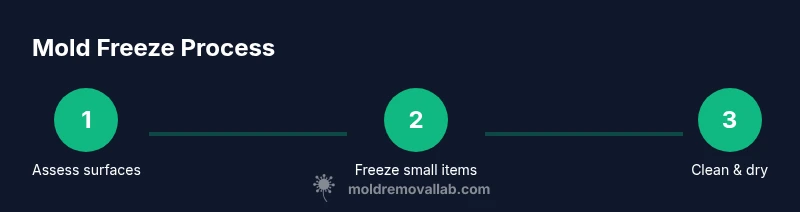
- Identify the type of affected material (porous vs nonporous). This determines whether freezing is feasible as a temporary measure. 2) Isolate the area to prevent cross-contamination and wear proper PPE. 3) For small, nonporous items, consider placing them in a freezer at -18°C (0°F) for 24–48 hours to halt growth temporarily, knowing this is not killing all spores. 4) After freezing, inspect and clean with detergent and a scrub brush, then disinfect if appropriate. 5) Dry the area completely using fans and a dehumidifier to prevent relapse. 6) Monitor humidity levels and address leaks or condensation sources to maintain a dry environment. Time for this cycle depends on the space, but plan for several hours of active work plus 1–2 days of drying and monitoring.
Limitations of freezing and why moisture control matters
Humidity is the primary driver of mold growth. Freezing can suppress activity temporarily, but once warmth returns, spores can resume growth if moisture remains. The most effective long-term strategy combines physical removal of contaminated materials, thorough cleaning, and decisive moisture control. Freezing does not erase mold from porous substrates, nor does it neutralize biofilms or toxins in many cases. Focus on stopping water intrusion, drying quickly, and disposing of heavily contaminated materials when necessary.
Cleaning methods that work with freezing
If you choose to use freezing as part of a plan, it should accompany robust cleaning and drying. Use mild detergent and warm water to remove surface mold, then a disinfectant appropriate for the surface (following label directions). Vacuum with a HEPA-filtered vacuum only after surfaces are dry to minimize aerosolizing spores. After cleaning, ensure complete drying with fans and dehumidification, and recheck the space after 24–48 hours to confirm that moisture levels remain low.
Authority sources
- https://www.epa.gov/mold
- https://www.cdc.gov/mold/dampness_fungi.html
- https://www.osha.gov/mold
These sources provide government-backed guidance on mold prevention, detection, and remediation, underscoring that temperature alone is not a reliable cure and moisture control remains central to safe, long-term remediation.
When to involve professionals
Small, isolated mold on nonporous surfaces, if cleaned promptly and thoroughly, can sometimes be managed by homeowners with proper PPE and cleaning supplies. Large infestations, porous materials, or mold that has penetrated into walls, insulation, or HVAC systems require professional remediation. If you see recurring growth after cleaning, persistent moisture problems, or health symptoms linked to mold exposure, contact a licensed remediation service.
Long-term prevention and monitoring
The best defense against mold is prevention. Fix leaks promptly, reduce indoor humidity (target below 60% RH, ideally 30–50%), improve ventilation in bathrooms and kitchens, and use dehumidifiers in damp spaces. Regularly inspect crawl spaces, basements, and attics, especially after rainfall or plumbing work. Keeping surfaces dry and clean will significantly lower mold risk over time.
Authority sources (reiterated)
- https://www.epa.gov/mold
- https://www.cdc.gov/mold/dampness_fungi.html
- https://www.osha.gov/mold
Summary and next steps
Freezing mold is not a stand-alone remediation method. It can offer temporary containment for certain nonporous items, but it does not reliably kill mold on porous substrates. Prioritize moisture control, thorough cleaning, and timely removal of contaminated materials. When in doubt, consult Mold Removal Lab or a professional remediation service to ensure a safe, effective solution.
Tools & Materials
- PPE: N95 respirator(Must seal well; replace if damaged or damp.)
- Disposable gloves (nitrile)(Use two pairs when handling contaminated items.)
- Goggles or face shield(Protect eyes from splashes and spores.)
- Seal-able plastic bags(For containing contaminated materials before disposal.)
- Mild detergent and water(For initial surface cleaning.)
- Disinfectant suitable for mold(Follow label directions; not all surfaces tolerate bleach.)
- Scrub brush or sponge(Non-abrasive for delicate surfaces.)
- Vacuum with HEPA filter (optional)(Use only after surfaces are dry to avoid spreading spores.)
- Dehumidifier or fans(Helps achieve moisture control and rapid drying.)
- Freezer (-18°C/0°F) or access to a cold environment(Used only for small nonporous items per step guidance.)
Steps
Estimated time: 2-8 hours active work plus 1-2 days for drying and monitoring
- 1
Assess material type
Identify whether affected surfaces are porous or nonporous to determine if freezing is a viable interim measure. Porous materials usually require removal rather than freezing.
Tip: Start with a small test area to minimize risk of spreading spores. - 2
Prepare PPE and containment
Put on an N95, gloves, and eye protection. Seal off the area to prevent cross-contamination and prepare cleaning supplies.
Tip: Work from clean to dirty areas to avoid dragging spores. - 3
Freeze small nonporous items (optional)
If you have small nonporous items and choose to pursue freeze as a temporary stopgap, place items in the freezer at -18°C for 24–48 hours. Remember, this does not kill all spores and should be part of a larger plan.
Tip: Label items clearly and avoid freezing large contaminated materials. - 4
Clean and disinfect surfaces
After freezing or if freezing isn’t used, wash surfaces with detergent and water, then apply an appropriate disinfectant according to label directions.
Tip: Never mix cleaners; follow surface safety guidelines to avoid chemical reactions. - 5
Dry thoroughly and recheck
Dry the area completely using dehumidifiers or fans. Recheck humidity levels and inspect for any signs of recurring mold after 24–48 hours.
Tip: Target below 60% relative humidity to deter regrowth. - 6
Plan long-term prevention
Address moisture sources (leaks, condensation, ventilation) to prevent future mold growth. Consider professional help for larger infestations or ongoing issues.
Tip: Keep gutters clean and fix leaks promptly to reduce moisture supply.
FAQ
Can freezing kill all mold species?
No. Freezing can slow growth for some molds, but many species and spores survive cold conditions. It is not a universal cure and should be part of a broader remediation plan.
No, freezing does not kill all mold species; it may slow growth but is not a complete solution.
Is freezing safe for home mold cleanup?
Freezing can be used cautiously on small, nonporous items as a temporary measure, but it should not replace moisture control, cleaning, and material removal. For larger infestations, professional remediation is advised.
Freezing is not a stand-alone fix for home mold cleanup; safety and moisture control are essential.
Can freezing be used on porous materials?
Freezing porous materials like drywall or insulation is not effective because moisture may be trapped inside and mold can survive. These materials typically require removal and replacement.
Freezing porous materials isn’t effective; removal and proper drying are usually needed.
Should I freeze mold before disposal?
Freezing is rarely necessary before disposal. Focus on containment, removal, and proper disposal of contaminated materials, especially when porous substances are involved.
Freezing before disposal isn’t usually required; proper removal and containment matter more.
What should I do if mold recurs after freezing?
If mold recurs after a freeze,Investigate ongoing moisture sources and consider professional remediation. Recurrence indicates the underlying moisture problem was not resolved.
If mold keeps coming back after freezing, you likely have an unresolved moisture issue and may need pro help.
Is professional remediation required for large infestations?
For large infestations, porous materials, or growth inside walls, professional remediation is strongly recommended to ensure safe and thorough removal.
Yes, big infestations usually require professionals to ensure safe cleanup.
Watch Video
The Essentials
- Freeze is not a stand-alone mold solution.
- Moisture control drives long-term success.
- Remove contaminated materials when necessary.
- Drying and monitoring prevent relapse.
- Consult professionals for large or complicated infestations.