Bleach Spray for Mold: Safe, Effective Remediation Guide
Learn how to use a bleach spray for mold safely on nonporous surfaces, when to avoid it, and practical steps to disinfect and prevent regrowth. This evidence-based guide from Mold Removal Lab covers safety, alternatives, and best practices.


With this guide, you will safely use a bleach spray for mold to treat nonporous surfaces and halt surface growth. You’ll learn prep steps, proper dilution and dwell times, safe application techniques, and essential safety measures. The guide also covers limits of bleach, alternatives for porous materials, and when to hire a professional for persistent mold issues.
What bleach spray for mold does and doesn't do
Bleach spray is a common cleaning product for mold on nonporous surfaces like glazed tile, enamel, and metal. When used correctly, it can disinfect the surface and kill visible mold colonies on contact. However, bleach is not a miracle solution for every mold problem. It does not address moisture intrusion, hidden mold behind porous materials, or porous substrates like wood, drywall, or fabrics where mold can penetrate deeply. According to Mold Removal Lab, the best outcomes come from combining thorough surface cleaning with moisture control and timely remediation of the underlying moisture issue. On nonporous surfaces, you may see a brightened, clean area after treatment, but without addressing humidity, spores can reappear. In practice, bleach spray should be part of a broader remediation plan rather than a stand-alone fix.
Safety considerations before you start
Before you reach for a bleach spray for mold, plan for safety. Ensure you have good ventilation, wear protective gloves and eye protection, and consider a mask or respirator if air quality is in doubt. Bleach fumes can irritate the eyes, nose, and throat, especially in small or poorly vented spaces. Do not mix bleach with ammonia or vinegar and never attempt to treat mold in occupied living spaces without isolating the area. Mold Removal Lab emphasizes that safety is the foundation of any remediation effort; poor ventilation or improper mixing can create harmful byproducts and exacerbate symptoms for sensitive individuals.
Porosity matters: nonporous vs porous surfaces
The effectiveness of bleach spray varies with surface type. On nonporous surfaces such as ceramic, glass, metal, or sealed enamel, bleach can disinfect the surface and reduce visible mold when used correctly. Porous materials like drywall, wood, fabric, or insulation boards are more challenging; spores can be embedded, and surface treatment may only remove surface contamination. Mold Removal Lab notes that relying solely on bleach on porous substrates often yields temporary results and does not address structural moisture problems. For these materials, physical removal, sealing, or professional remediation may be necessary.
Surface preparation and cleanup plan
Effective mold remediation begins with moisture control. Identify and fix the source of moisture (leaks, condensation, high humidity) before applying any cleaner. Clear the area of porous debris, seal off adjacent rooms if possible, and cover floors with plastic sheeting to simplify cleanup. Vacuum with a HEPA-filtered machine if available to reduce particle spread, then wipe surfaces with a clean disposable cloth or sponge. Post-cleaning, ensure the area dries completely to prevent rapid regrowth. As you proceed, track progress and note any areas that require re-treatment after drying.
Correct bleach concentrations and application methods
Always follow the product label for dilution and usage directions. In general, a properly diluted bleach spray should be applied evenly to the affected area until wet but not puddled. Do not oversaturate, because excessive liquid can damage materials and increase evaporation times. After application, allow the surface to dwell for the recommended contact time, then wipe away residue with a clean cloth. Rinsing is sometimes recommended on nonporous surfaces, but follow label guidance and local health guidelines. If you’re unsure, err on the side of milder applications and longer drying times rather than aggressive flooding.
Tools you’ll need and how to store them safely
Prepare a well-ventilated workspace and gather PPE, including gloves, eye protection, and a mask. Keep cleaning supplies in a dedicated bucket or container to avoid cross-contamination with clean areas. After use, rinse tools with clean water, dry thoroughly, and store away from reach of children and pets. This practice minimizes the risk of spreading mold spores to other rooms and protects household members during the remediation process.
Common mistakes that reduce efficacy or cause harm
Common missteps include using bleach on porous materials, skipping ventilation, and scrubbing too hard, which can spread spores or embed them deeper. Another mistake is letting the area dry too slowly, which promotes regrowth. Never mix bleach with ammonia or acidic cleaners, as dangerous gases can form. When mold appears in concealed spaces, attempting to treat without professional assessment can overlook moisture sources and hidden colonies, leading to ongoing problems despite surface cleaning.
Aftercare: drying, odor management, and preventing regrowth
After treatment, ensure the area dries completely, ideally within 24 to 48 hours. Use fans or dehumidifiers to accelerate drying and reduce humidity levels in the space. If a musty odor lingers, recheck for moisture or hidden mold behind walls and consider consulting a professional. Maintaining low humidity and addressing ongoing leaks are essential to prevent future mold growth and protect indoor air quality.
Alternatives to bleach and when to choose them
Bleach is one option among several mold cleaning methods. Hydrogen peroxide, vinegar, or commercial mold removers may be appropriate for certain surfaces and conditions. For porous materials or extensive growth, more thorough methods—such as physical removal, encapsulation, or professional remediation—may be necessary. It’s important to assess surface type, mold extent, and moisture history before selecting an approach. Mold Removal Lab recommends starting with safer, surface-level methods and escalating only if necessary.
Real-world scenarios: apartments, bathrooms, basements
In bathrooms with glazed tile or nonporous countertops, bleach spray can be effective for surface molds when used with proper ventilation. In basements with porous concrete blocks or wooden framing, bleach’s disinfectant ability is limited and moisture control becomes the priority. In rental apartments, landlords may require remediation records and documented moisture management, since mold issues can recur if humidity is not controlled. Always evaluate the location, material, and occupant exposure before deciding on bleach-based remediation.
Authority and evidence: what experts say
Experts recommend a layered approach to mold cleanup: identify moisture sources, remove or seal mold-affected materials when feasible, and use cleaning agents appropriately on appropriate surfaces. The Mold Removal Lab team emphasizes that bleach spray is best used as part of an overall plan that prioritizes moisture control and safe handling. For additional guidance, consult government and university resources on mold remediation and indoor air quality to inform decisions and safety practices.
Step-back: planning a full mold remediation project
A comprehensive mold remediation project considers moisture mitigation, containment, removal or repair of affected materials, cleaning, and final verification. It’s not just about killing visible mold; it’s about preventing regrowth by eliminating the moisture source and improving ventilation. When in doubt, or when mold covers large areas or is embedded in structural materials, engaging a qualified professional can save time and protect health. This approach aligns with best practices recommended by Mold Removal Lab and official health and safety guidelines.
Tools & Materials
- Household bleach (5-6% sodium hypochlorite) or equivalent(Use on nonporous surfaces only; follow label directions and ventilation requirements.)
- Spray bottle (empty)(Label-free bottle is fine; ensure nozzle delivers a fine mist for even coverage.)
- Disposable gloves (nitrile or latex alternatives)(Protect skin from chemical irritation; replace if damaged.)
- Eye protection(Goggles or glasses to shield eyes from splashes.)
- Mask or respirator (P100 or equivalent)(Recommended for poorly ventilated spaces or sensitive individuals.)
- Scrub brush or stiff-bristle brush(Use on nonporous surfaces to dislodge mold without scratching.)
- Disposable rags or paper towels(For wiping and cleanup; discard after use.)
- Plastic sheeting and tape(Containment to protect adjacent areas during cleaning.)
- Fan or dehumidifier(Improve air exchange and accelerate drying after cleaning.)
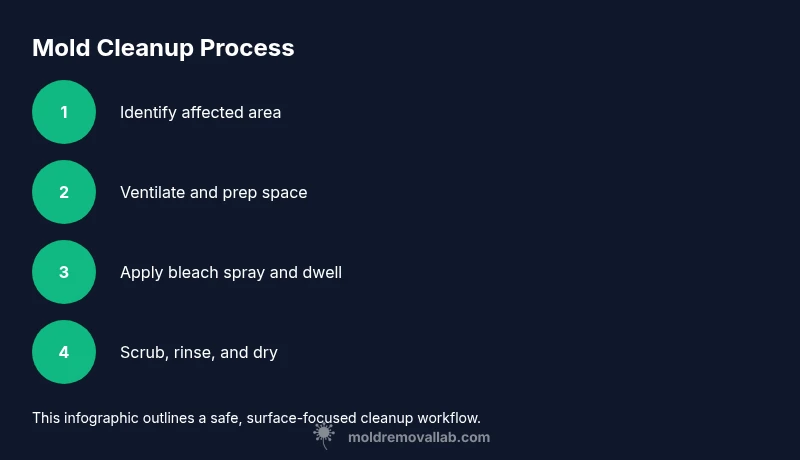
Steps
Estimated time: 60-120 minutes
- 1
Identify mold and plan
Locate affected areas and determine surface type. Note moisture sources and decide whether bleach is appropriate for the surface. Document the plan to guide following steps.
Tip: If mold covers more than a small area or shows signs of moisture intrusion, consider professional assessment. - 2
Ventilate and protect the space
Open doors and windows, use a fan if available, and keep non-essential occupants out of the area. Place plastic sheeting to minimize spread of spores.
Tip: Avoid running fans directly at mold patches; aim for indirect airflow to reduce splashing. - 3
Prepare the bleach solution and PPE
Put on gloves, eye protection, and a mask. Prepare the bleach solution according to the product label in a well-ventilated area, keeping it away from skin and eyes.
Tip: Never mix bleach with ammonia or acidic cleaners; do not over-dilate beyond label guidance. - 4
Apply to nonporous surfaces
Spray the affected nonporous area until visibly wet and allow the surface to stay wet for the recommended dwell time. Avoid saturating porous materials.
Tip: Apply in thin coats to minimize runoff and exposure time. - 5
Scrub and wipe away mold
Use a scrub brush to gently remove visible mold from the surface, then wipe with disposable towels. Rinse with clean water if the surface label allows, and dry promptly.
Tip: Do not reuse dirty cloths on other areas; keep cleanup materials separate. - 6
Dry and verify
Ensure the area dries completely using natural ventilation and, if available, a dehumidifier. Re-inspect after drying for any remaining growth.
Tip: Re-treat only if new growth is observed and moisture sources remain controlled. - 7
Dispose of contaminated materials
Place used towels and disposable brushes in a sealed bag before disposal. Clean the spray bottle and any reusable tools with fresh water and let dry.
Tip: Wear a fresh pair of gloves when handling disposed materials to prevent cross-contamination. - 8
Prevent regrowth
Address humidity, leaks, and ventilation to prevent future mold. Keep indoor humidity below 60% where possible, ideally 30-50%.
Tip: Regularly check known moisture hotspots and maintain consistent airflow.
FAQ
Is bleach spray effective for mold on all surfaces?
Bleach spray is most effective on nonporous surfaces such as tile, glass, and metal. It is less effective on porous materials, where mold can penetrate deeper. Always verify surface type before using bleach and pair with moisture control.
Bleach works best on nonporous surfaces and less so on porous ones; check your surface type and address moisture before remediation.
Can bleach spray prevent mold from returning?
Bleach kills existing surface mold but does not resolve moisture issues. To prevent regrowth, fix water sources, improve ventilation, and keep humidity in check after cleaning.
It kills surface mold, but to prevent return you must fix moisture and improve airflow.
What safety precautions are required when using bleach indoors?
Work in a well-ventilated area, wear PPE, and never mix with other cleaners. Keep children and pets away during remediation and avoid inhaling fumes.
Ventilate well, wear PPE, and keep kids and pets away while using bleach indoors.
Should I use bleach on mold behind walls?
Mold behind walls often indicates moisture intrusion and porous materials. Bleach on exposed surfaces may not reach hidden colonies; consult a professional for concealed mold and structural assessment.
Hidden mold behind walls may require professional assessment; bleach alone is rarely sufficient.
What’s the difference between bleach spray and other cleaners?
Bleach is a disinfectant that can kill surface mold on nonporous surfaces, but other cleaners like hydrogen peroxide or specialized mold removers may be safer on certain materials. Choose based on surface type, mold extent, and safety considerations.
Bleach kills surface mold on nonporous surfaces, but other cleaners may be safer for different materials.
How long should bleach stay on a surface?
Follow the product label for dwell time. In general, allow the surface to remain wet for the recommended duration to maximize effectiveness before wiping or rinsing.
Let the surface stay wet for the label’s recommended time, then wipe or rinse as directed.
Watch Video
The Essentials
- Bleach spray can disinfect nonporous surfaces when used properly.
- Moisture control is essential to prevent mold from returning.
- Porous materials often require alternative methods or professional remediation.
- Ventilation and PPE are non-negotiable safety measures.
- Assess moisture sources before and after cleaning to ensure lasting results.