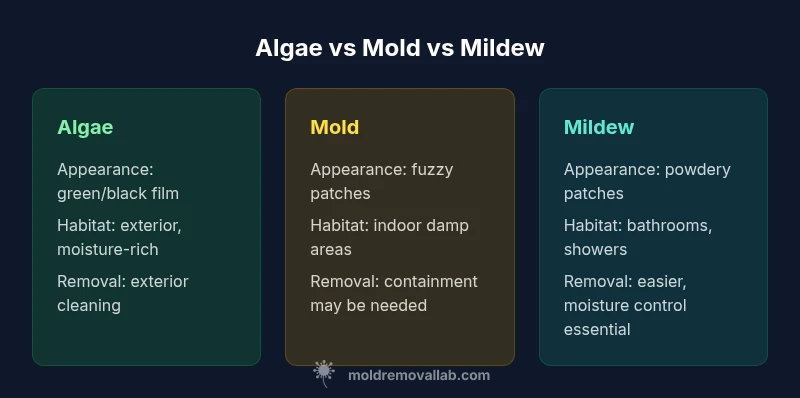
Algae vs Mold vs Mildew: Practical Differences for Homes
Identify algae vs mold vs mildew, differentiate growth patterns, understand health implications, and learn practical removal strategies for homes and rentals.


Algae, mold, and mildew differ in appearance and risk: algae is typically exterior and slimy, mildew is indoor and powdery, mold is fuzzy and health-relevant indoors. See our full comparison for identification and remediation guidance.
What are algae, mold, and mildew?
Algae, mold, and mildew differ in appearance, habitats, and health risks. Algae are typically exterior growth—green, black, or brown films on siding or stone after moisture and sun. Mildew is usually indoor, powdery or fluffy, often white or gray, common in high-humidity bathrooms. Mold is the most health-relevant interior growth, forming fuzzy patches in colors like black or green. Understanding these differences helps homeowners choose the right cleaning methods and know when to escalate to professionals. In addition to appearance, consider where the growth occurs and how it behaves when moisture levels change. According to Mold Removal Lab, accurate identification is a practical first step, guiding safer cleaning and informed decisions about whether to call a pro or use DIY methods. This foundation sets up practical steps you can implement today to reduce spread and protect indoor air quality.
Visual Cues: Color, Texture, and Surfaces
Algae often forms slimy films on exterior surfaces after rain or irrigation, sometimes appearing green, black, or brown. Mildew tends to look powdery or fluffy and appears on damp, porous surfaces like grout, fabrics, or paper. Mold shows as fuzzy patches that can be black, green, brown, or gray and may indicate concealed moisture behind walls. Texture and adhesion help: algae is slick to the touch, mildew is powdery, and mold feels rough or velvety. Surface type matters too: algae colonizes stone, wood, and brick; mildew loves tile and drywall with high humidity; mold thrives on many porous materials when damp.
Habitat and Growth Habits in the Home
In most homes, algae shows up outdoors on siding, decks, or rock features that stay wet and sunlit. Mold and mildew are more common indoors—mold in basements, crawl spaces, or behind walls where moisture persists; mildew in bathrooms, kitchens, and laundry rooms where humidity is high is typical. The key differentiator is moisture: algae needs water and light, mildew thrives in damp, and mold relies on sustained moisture and an organic substrate. Temperature and airflow also influence growth rates, with stagnant air and poor drying promoting persistence. Understanding these habitats helps prioritize inspection and moisture-control actions.
Health Implications and Safety Protocols
All three can affect indoor air quality, but mold poses the strongest health concerns for sensitive individuals, potentially triggering allergies or asthma symptoms and, in some species, more serious reactions. Mildew is generally milder but can still cause irritation, especially for people with respiratory conditions. Algae outdoors is typically less of a direct indoor health risk, though spores and dust can become a nuisance if growth migrates indoors. When cleaning, wear appropriate PPE (gloves, eye protection, and a mask for dusty or moldy areas) and avoid sweeping mold spores into the air. If you suspect a large or pervasive indoor mold problem, seek professional assessment to verify the extent and underlying moisture sources.
DIY Identification Methods (Non-Lab) and When to Escalate
Begin with a careful visual inspection and note color, texture, and where growth appears. Take photos of affected surfaces to compare with reputable guides and to track progression. For harmless-looking surfaces, a mild detergent wash may suffice, and outdoor mold or mildew on exterior features can often be treated with garden-cleaning products. If growth is fuzzy, widespread, or covers multiple rooms, or if you notice lingering moisture behind walls or a musty odor, escalate to professional remediation. In ambiguous cases, a lab confirmation can be requested through local public health offices or mold-testing services to determine the organism type and the appropriate remediation plan.
Cleaning, Sanitation, and Prevention Basics
Start with moisture control: fix leaks, improve ventilation, and reduce humidity. For mild algae on exterior surfaces, a simple scrub with soap and water may remove most of the film. Mildew on nonporous surfaces can often be cleaned with a diluted solution of water and detergent, followed by thorough drying. Mold on porous materials typically requires more careful cleaning, possible containment, and drying to prevent regrowth; in many cases, professionals are consulted for larger infestations. Prevention hinges on regular moisture management, prompt cleanup of spills, and routine inspection of dark, humid corners like bathrooms and basements. Avoid mixing cleaning agents, and never use bleach on porous materials without testing first, as it can cause staining or vapor issues. For ongoing prevention, consider exterior drainage improvements and interior dehumidification strategies to keep conditions unfavorable for all three.
When to Hire a Professional Remediation
Call a professional if growth covers more than a small, localized area, if there is visible water damage, or if occupants have persistent respiratory symptoms. Professionals can assess moisture sources, contain the area, and implement effective drying and cleaning protocols. Do not attempt large-scale mold remediation yourself if you are not trained, as improper containment can spread spores and worsen conditions. In cases of uncertain identification, a professional can conduct tests and guide the appropriate remediation plan. For ongoing prevention, professional guidance can help optimize ventilation and insulation to reduce recurring moisture.
Exterior vs Interior Prevention Toolkit
Interior prevention focuses on humidity control, rapid cleanup after spills, and attention to bathrooms, kitchens, and basements where damp conditions are common. Exterior prevention includes repairing leaks, improving drainage, cleaning moss or algae from surfaces, and ensuring proper grading away from the foundation. Regular inspection routines—seasonal checks of roofing, gutters, and window seals—help catch moisture problems early. A practical approach blends both perspectives: keep interiors dry and monitor exteriors for moisture that could migrate indoors, especially after storms or heavy rainfall. Small changes, like installing an exhaust fan or using a dehumidifier in damp rooms, can dramatically reduce growth potential across all three organisms.
Quick Reference Checklist and Monitoring Plan
Create a simple seasonal checklist: inspect moisture hotspots (kitchens, bathrooms, basements), test for damp spots behind walls when feasible, clean exterior surfaces to remove biofilm, and maintain drainage away from the house. Track any growth with photos, note weather patterns that correlate with dampness, and adjust ventilation and humidity controls accordingly. By maintaining consistent moisture management and timely cleaning, algae, mold, and mildew are less likely to gain a foothold in living spaces.
Feature Comparison
| Feature | algae | mold | mildew |
|---|---|---|---|
| Appearance | Algae: green/black film, slimy or powdery | Mold: fuzzy patches, various colors (black/green/brown) | Mildew: flat, powdery patches, often white/gray |
| Common indoor locations | Algae: exterior surfaces (siding, stone) | Mold: walls, ceilings, basements, crawl spaces | Mildew: bathrooms, kitchens, showers |
| Growth conditions | Algae: moisture plus sun on exterior surfaces | Mold: persistent moisture and organic material | Mildew: moisture with poor ventilation on porous surfaces |
| Health implications | Algae: generally lower indoor risk | Mold: can trigger allergies/asthma; some species toxic | Mildew: can irritate airways; often milder than mold |
| Removal approach | Algae: scrub with mild detergent; exterior focus | Mold: containment and thorough drying; professionals often needed | Mildew: cleaners and moisture control; easier than mold |
| Prevention priorities | Algae: exterior moisture control and drainage | Mold: leak repairs, humidity control, prompt cleaning | Mildew: regular cleaning, bathroom ventilation |
Upsides
- Clarifies what to look for in household growth
- Guides targeted cleaning and prevention
- Supports safer decisions about when to call professionals
- Helps tailor remediation to specific growth types
The Bad
- Differences can be subtle in some cases
- Does not replace lab testing for definitive identification
- Remediation approaches vary by surface and organism
- Exterior algae may require different seasonal timing than indoor mold
Prioritize interior moisture control and professional assessment for suspected mold; mildew and algae require targeted cleaning and exterior maintenance.
Mold is the primary indoor health concern and should be addressed promptly with proper containment and drying. Mildew is milder but still requires moisture control, and algae typically signals exterior moisture that benefits from exterior cleaning and drainage improvements. The Mold Removal Lab team emphasizes moisture management as the foundation and professional input when growth is extensive or uncertain.
FAQ
What is the primary distinction between algae, mold, and mildew?
Algae are exterior and often slimy, mildew is indoor and powdery, and mold is fuzzy and health-relevant indoors. The differences guide where to clean and whether to call a professional.
Algae tends to be exterior and slimy, mildew is indoor and powdery, and mold is fuzzy and health-related; the location and texture help decide cleaning versus professional help.
Can algae grow indoors?
Indoor algae are rare but can occur near persistent moisture and poor light conditions, usually in crawl spaces or basements with exterior penetration. Most indoor growth tends to be mold or mildew.
Indoor algae are uncommon but can show up where moisture lingers indoors; usually you’re dealing with mold or mildew instead.
Is mildew more dangerous than mold?
Mildew is generally milder and easier to remove, but it can still irritate the respiratory system. Mold, especially certain species, poses greater health risks and may require professional remediation.
Mildew is usually milder, but mold can be riskier and may need a pro to handle properly.
What are safe cleaning methods for these organisms?
For mild cases, soap and water or diluted vinegar can help. For persistent or suspected mold, use appropriate cleaners and PPE, and avoid mixing cleaners. Seek professional help for large infestations.
Use soap or vinegar for mild growth and protect yourself; call a pro for larger mold problems.
When should I hire a professional remediation service?
If growth covers a large area, there is extensive water damage, or occupants have health concerns, a professional should assess and remediate. If in doubt, consult a pro for guidance.
Call a pro if the growth is large or you're unsure about the extent.
The Essentials
- Identify algae, mold, and mildew by appearance and location
- Moisture control is the core prevention strategy for all three
- Mold growth often requires professional remediation
- Exterior cleaning for algae; interior cleaning for mildew and mold when safe
- Monitor moisture sources regularly to prevent recurrence