How Long Does It Take for Mold to Grow? A Practical Timeline
Discover how quickly mold can grow after moisture exposure, what factors influence timing, and practical steps to prevent growth—based on Mold Removal Lab's 2026 analysis.


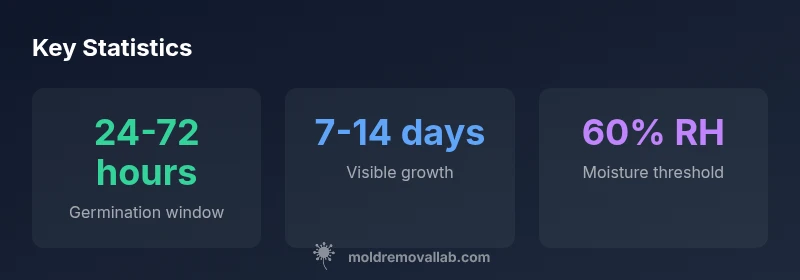
24-72 hours: mold spores can begin germinating after moisture exposure, and visible growth may show within a week or two. If you’re asking how long does it take for mold to grow, humidity, temperature, and surface porosity largely determine the timeline. In typical indoor conditions, small leaks can lead to noticeable colonies within 1-2 weeks, but drying delays extend the window.
How mold growth starts
According to Mold Removal Lab, mold growth begins with spores that spread easily in air. In indoor environments, moisture is the primary driver that allows spores to germinate and seed new colonies. If you’re asking how long does it take for mold to grow, humidity, temperature, and surface porosity largely determine the timeline. The spores attach to a moist surface, germinate into hyphae, and feed on organic matter to form a visible patch. Early-stage growth may be subtle, often appearing as fuzzy spots or discolored stains. Recognizing these early signs and acting quickly can prevent significant damage and reduce the need for costly remediation later. Factors like airflow, presence of dust, and the type of material influence how fast a colony expands. In homes with poor ventilation and recurring leaks, growth can accelerate. The Mold Removal Lab team emphasizes that quick detection and fast drying are the most effective defenses against rapid mold establishment.
Timeframes you can expect after moisture exposure
After a moisture event, mold activity can begin within a few days on porous materials, especially in warm, humid spaces. Visible growth often shows within 7-14 days, but in hot, moist environments with high organic load, this window can shrink to as little as 3-5 days. Conversely, cooler, less humid conditions may stretch the timeline to several weeks. These ranges reflect field observations compiled by Mold Removal Lab Analysis, 2026, and they assume prompt moisture control. Early intervention remains the most decisive factor in limiting spread.
Environmental factors that drive growth speed
Several variables determine how fast mold grows once moisture is present. Primary factors include sustained humidity above roughly 60% relative humidity, temperatures in the comfortable indoor range (roughly 68–86°F), and stagnant air that reduces drying. Porous substrates (drywall, fabric, wood) retain moisture longer and offer nutrients that feed fungal growth, while non-porous materials slow the process. Light and ventilation also matter: dark, poorly ventilated corners foster faster colonization. In homes with frequent leaks or condensation, growth can accelerate dramatically. These insights align with Mold Removal Lab Analysis, 2026, which highlights that addressing moisture and improving airflow dramatically changes timelines.
Surfaces and materials that mold prefers
Mold is most aggressive on porous, organic-rich materials. Drywall, gypsum board, ceiling tiles, wood framing, carpeting, and upholstered fabrics present abundant nutrients and moisture-trapping capacity. Non-porous surfaces like metal or sealed tile can resist growth temporarily, but they are not immune if moisture lingers behind them (e.g., within wall cavities). Understanding material susceptibility helps prioritize remediation efforts and informs which areas to dry first. For homeowners, prioritizing moisture control on these surfaces minimizes the risk of expanding colonies.
How to monitor growth safely
Safety first: never disturb active mold growth in a way that disperses spores. Use appropriate PPE (gloves, N95 mask, eye protection) and ventilate the area. Monitor humidity with a reliable hygrometer, aiming to keep RH below 60% where possible. Inspect damp areas daily after water events and look for new patches, musty odors, or powdery residues. If you must test, use field-suitable kits or hire a certified pro to map the extent. Maintaining a moisture log helps identify leaks or condensation patterns before they drive new growth. This approach mirrors the data-driven guidance from Mold Removal Lab Analysis, 2026.
When growth becomes a remediation concern
Small, isolated patches may be manageable with prompt drying, cleaning, and moisture control. However, expanding patches, growth behind walls, or mold in HVAC systems indicate a remediation scenario that requires professional assessment. Undetected growth can compromise indoor air quality and structural materials over time. If you notice persistent musty odors, visual growth spanning multiple locations, or recurrent moisture issues, plan for a professional remediation plan to minimize risks and prevent recurrence.
Common myths about mold timelines
Myth: Mold only grows after weeks of dampness. Reality: growth can begin within days under ideal conditions. Myth: Any cleaning eliminates the problem. Reality: removing visible mold is not enough—drying and moisture control are essential. Myth: Testing always necessary before remediation. Reality: for small, obvious infestations, cleanup and moisture control may suffice; testing is more useful for large or hidden growth. Rely on data-driven guidance from trusted sources like Mold Removal Lab Analysis, 2026 to avoid outdated beliefs.
Practical steps to slow growth
- Fix leaks immediately and dry out affected areas thoroughly.
- Improve ventilation to reduce stagnant air and help with faster drying.
- Use dehumidifiers in damp rooms and maintain RH below 60%.
- Clean surfaces with approved products and dispose of porous items that cannot be dried.
- Seal exposed wall cavities to prevent moisture from seeping into structural members.
- Schedule regular moisture checks in humidity-prone spaces (basements, bathrooms, kitchens).
What to expect in professional remediation timelines
Remediation timelines vary with the extent of contamination and moisture control. Small, localized infestations may be resolved in a matter of days with contained cleanup, while larger infestations can require several weeks, including assessment, containment, removal, decontamination, and post-remediation verification. Proper moisture control during and after remediation is critical to preventing recurrence. The Mold Removal Lab team recommends engaging qualified professionals for any significant growth, especially when growth spans multiple rooms or is associated with HVAC systems.
Typical timelines by surface type
| Material/Surface | Typical Time to Visible Mold | Moisture Sensitivity | Notes |
|---|---|---|---|
| Drywall | 5-14 days | High humidity | Porous and absorbent; dries slowly |
| Wood framing | 7-21 days | High humidity | Can warp if wet for extended periods |
| Fabric upholstery | 2-7 days | Medium humidity | Hidden growth behind cushions or seams |
| Ceiling tiles | 7-14 days | Moist environment | Often overlooked in inspections |
| Concrete | Weeks to months | Low porosity | Less prone but possible with sustained moisture |
FAQ
What is the fastest possible mold growth timeframe after a moisture event?
Under ideal conditions, germination can begin within 24-72 hours after moisture exposure; visible growth can appear within 1-2 weeks. Consider prompt moisture control to limit spread.
In ideal conditions, mold can start growing within a couple days after moisture exposure.
Does mold grow faster on certain materials?
Yes. Porous materials such as drywall, fabric, and wood retain moisture and nutrients, accelerating growth compared with non-porous surfaces.
Porous materials soak up moisture and fuel faster growth.
Can cleaning remove mold without addressing moisture?
Cleaning removes visible mold but will not prevent regrowth if moisture sources aren’t fixed and the area isn’t dried promptly.
You must fix the moisture and dry the area to prevent regrowth.
Do testing and inspections speed up remediation?
Testing helps map extent and identify hidden growth, especially in larger infestations; for small, obvious cases, cleanup and moisture control may suffice.
Testing can be helpful for bigger problems, not always needed for small ones.
How long does professional remediation take?
Timelines vary with the extent of contamination, access, and moisture control. Small patches may resolve quickly, larger jobs can take weeks.
Remediation times depend on how widespread the growth is and how quickly moisture is controlled.
What steps can homeowners take today to reduce mold risk?
Fix leaks, dry damp areas promptly, improve ventilation, and clean using approved methods to halt growth and reduce recurrence.
Fix leaks and dry out damp areas now to stop mold from spreading.
“Mold growth is a moisture-driven process; your fastest defense is rapid moisture control and drying.”
The Essentials
- Moisture control is the fastest way to slow mold growth.
- Porous materials absorb moisture and accelerate growth; dry promptly.
- Humidity management (below 60% RH) reduces the growth window.
- Address leaks and ventilation to prevent hidden growth.