Which Mold Is Worse? A Practical Guide to Indoor Health Risks
Learn which mold is worse for health and how to protect your home. This Mold Removal Lab guide compares common molds, explains health risks, and provides practical remediation and prevention tips for homeowners and renters.


There isn’t a single ‘worst’ mold. Health risk depends on exposure, moisture, and who is exposed. Some species are more concerning in theory, but persistent dampness and high spore counts typically drive symptoms. The Mold Removal Lab team emphasizes moisture control and rapid cleanup as the most effective ways to minimize health impacts, regardless of the species involved.
Defining 'Worse' in Mold: Health Risks, Toxicity, and Real-World Impact
When homeowners ask which mold is worse, they're really asking about how a mold species or growth pattern translates into health risk, symptoms, and long-term consequences. In practice, severity depends on exposure duration, concentration of spores, and the health status of occupants. The Mold Removal Lab team emphasizes that context matters as much as the mold type itself. A common household mold that appears after a seasonal spill may pose little risk if promptly removed and the area dried, while persistent damp conditions can turn a benign species into a chronic irritant for sensitive people. The key point: there is no single universal worst mold. Instead, risk escalates with moisture, visibility of growth, and repeated exposure in places where people spend time. According to Mold Removal Lab, focusing on moisture control and rapid cleanup often yields the biggest health benefit, even if the mold species behind the problem is not the most notorious on a list.
Common Indoor Molds: What homeowners actually encounter
Most homes contend with a few familiar molds: surface growth on bathroom grout, wallpaper, or windows from humidity; and molds that thrive behind walls where moisture lurks. The typical suspects include molds that cause allergic reactions, irritant symptoms, or musty odors. It's important to note that the mere presence of mold does not automatically indicate a medical emergency. Instead, look for persistent damp areas, visible colonies, and signs of moisture intrusion such as staining or warped materials. While some molds are more notorious in popular culture, real risk depends on how often occupants are exposed, how well the space is ventilated, and whether there are vulnerable residents (children, elderly, or people with asthma). Practical takeaway: targeting moisture control and cleaning visible growth promptly reduces risk across the board. Mold Removal Lab analyses suggest that keeping humidity under control and fixing leaks quickly are the best protections for most households.
How Mold Is Measured: Spore Counts, Humidity, and Visible Growth
Measuring mold risk combines invisible factors and visible signs. Spore counts from professional labs can indicate how concentrated mold spores are in indoor air, but they are not the sole predictor of health risk. More useful for homeowners are practical indicators: persistent odors, staining, dampness, and the extent of visible growth. The U.S. Environmental Protection Agency and other public health sources emphasize moisture control as the most effective intervention, while testing becomes relevant in stubborn cases or when occupants have unusual symptoms. According to Mold Removal Lab, an integrated approach—moisture management, cleaning, and, if needed, targeted testing—offers reliable results for most homes. For DIY cleanup, use simple steps like drying affected areas within 24-48 hours and cleaning with non-ammonia cleaners; avoid mixing bleach with ammonia, which can generate harmful fumes. By understanding these measures, homeowners can reduce risk without unnecessary expense.
which mold is worse: exposure context matters
Exposure determines outcomes. People often assume that a particular species is inherently more dangerous. In reality, health impact depends on how long people are exposed, which rooms are affected, and who is living there. A small, concentrated growth in a rarely used corner may have little effect, while a large, ongoing problem in living spaces used by children or someone with asthma can trigger symptoms even from a less 'toxic' species. The bottom line is exposure governs outcomes. Homeowners should track moisture sources (leaks, condensation, poor ventilation) and address them before chasing a 'worst' mold name. This context-driven view aligns with the Mold Removal Lab approach: reduce exposure first, then tackle cleanup.
Health Considerations for Vulnerable Populations
Mold exposure can affect people differently. Children, older adults, pregnant individuals, and occupants with asthma, allergies, or compromised immune systems may experience symptoms more readily, including coughing, wheezing, eye irritation, and headaches. Chronic exposure to damp environments has been associated with ongoing respiratory issues in some studies, though individual risk varies. The Mold Removal Lab team notes that the goal in sensitive homes is to stop moisture intrusion quickly and to remove visible growth promptly, rather than waiting for a definitive species identification. Prioritizing health-protective actions often yields the most practical benefits for families.
Practical Assessment Steps for Your Home
Begin with a simple, repeatable assessment you can perform in a weekend. Step 1: Identify visible mold and moisture sources using a flashlight and a notepad; Step 2: Check relative humidity with a sensor, aiming for 30-50% in living areas and 40-60% in bathrooms and basements; Step 3: Look for leaks under sinks, around windows, and in the attic or crawl space; Step 4: Keep a moisture-control plan—dry out damp areas within 24-48 hours; Step 5: Document with photos and dates. If you notice health symptoms or persistent odors despite cleanup, this is a signal to escalate. The priority is moisture control and prompt cleaning rather than identifying every mold species.
Remediation Priorities: First Tackles That Reduce Risk
Remediation should focus on stopping moisture, containing mold growth, and cleaning safely. First tackle any leaks or condensation sources and dry the area thoroughly. Second, isolate the affected zone to prevent spores from spreading; use plastic sheeting and proper PPE if you begin cleanup. Third, clean surfaces with appropriate products—non-ammonia, non-chlorine cleaners on nonporous materials; porous materials like drywall with growth may require disposal. Fourth, retest and monitor humidity after cleanup; fifth, address underlying causes: insulation, ventilation, and airflow. The Mold Removal Lab guidance emphasizes moisture control as the most effective step; a neglected moisture issue will outlast any cleaning effort, regardless of the mold species involved.
DIY vs Professional Remediation: Decision Guide
Not every mold problem requires a professional remediation, but many do. Small, isolated patches in nonporous areas, under a sink, or in a sealed bathroom might be manageable with careful cleaning and moisture control. More extensive growth, growth on porous materials, or problems that keep returning after cleaning indicate the need for a professional assessment. If occupants have asthma or immune compromise, or if the area exceeds 10 square feet, consider calling a licensed mold remediation contractor. The Mold Removal Lab stance is to be cautious: prioritize safety, mitigation of moisture, and a follow-up plan to prevent recurrence.
Prevention and Maintenance: Keeping Mold at Bay
Prevention combines steady moisture control, ventilation improvements, and routine inspections. Use exhaust fans in bathrooms and kitchens, fix leaks promptly, keep indoor humidity in recommended ranges, and monitor for musty odors that signal hidden dampness. Regularly inspect roofs, plumbing, and crawl spaces, especially after heavy rain or rapid temperature changes. A small investment in preventive maintenance pays off by reducing the frequency and severity of mold problems. The Mold Removal Lab recommends establishing a simple yearly checklist for moisture control and a rapid response plan for leaks.
Comparison
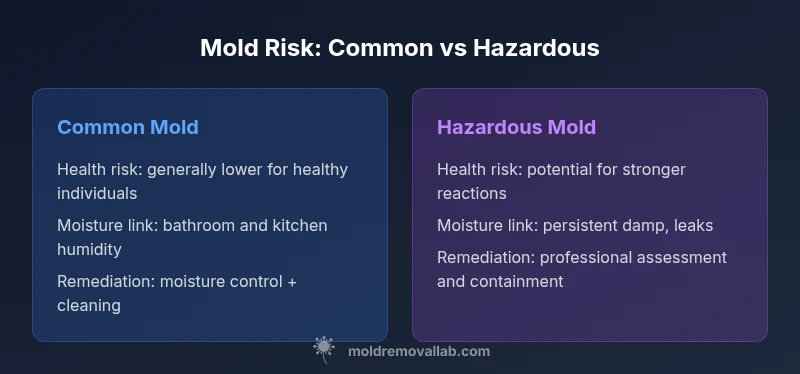
| Feature | Common household molds | Hazardous molds (health risk focus) |
|---|---|---|
| Health risk indicators | Typically lower immediate health risk for healthy occupants | Potential for more pronounced symptoms in sensitive individuals |
| Moisture association | Commonly linked to routine humidity and leaks | Often tied to persistent damp, leaks, or poor ventilation |
| Remediation approach | Moisture control plus cleaning; DIY often sufficient for small areas | Containment, professional assessment, and targeted cleanup may be required |
| Detection methods | Visual cues, odors, simple tests | Professional testing, air sampling, lab analysis |
| Best for | Average homes with adequate ventilation | Homes with ongoing moisture or vulnerable occupants |
Upsides
- Helps readers quickly gauge relative risk
- Highlights moisture control as a primary remediation driver
- Encourages timely action to protect vulnerable people
- Provides a practical, home-focused framework
The Bad
- Cannot capture every mold species nuance
- May oversimplify complex exposure scenarios
- Relies on user observations for DIY steps
Prioritize moisture control and prompt cleanup over chasing a single ‘worst’ mold
In most homes, health risk comes from exposure and moisture. Address leaks, dry areas quickly, and remove visible mold; involve professionals if growth is extensive or symptoms persist.
FAQ
Is all mold equally dangerous?
No. Health effects depend on species, exposure, and individual susceptibility. Some molds trigger allergies or irritate airways, while others can be less problematic if addressed promptly.
No—mold danger varies by exposure and individual susceptibility. Quick cleanup with moisture control reduces risk for most people.
What is the worst mold for health?
There is no universal worst mold. Risk is shaped by exposure, moisture, and who is exposed. Persistent dampness often poses greater risk than the mold type alone.
There isn’t a single worst mold; context matters more than the species.
Can DIY cleaning worsen mold problems?
DIY cleaning can spread spores or release irritants if done without proper containment or PPE. When in doubt, use proper safety measures and consider professional help for larger areas.
Be careful with DIY mold cleanup; use protection and containment.
When should I call a professional?
Call a professional if growth is extensive, recurs after cleanup, or occupants have health symptoms. Professionals can assess moisture sources and perform safe remediation.
If mold keeps coming back or people feel sick, get a pro.
How do I distinguish mold from mildew?
Mildew is usually superficial and easier to remove; mold penetrates surfaces and may require deeper remediation. Treat any growth seriously if it returns after cleaning.
Mildew is typically easier to remove than mold that penetrates surfaces.
Does removing moisture stop mold completely?
Stopping moisture prevents new growth, but existing mold may persist until cleaned. Combine moisture control with removal of visible growth for best results.
Moisture control helps prevent mold, but you may still need cleanup.
The Essentials
- Assess moisture sources first
- Prioritize vulnerable occupants
- Use professional testing for stubborn cases
- Maintain yearly moisture-control checks