Is Mold More Dangerous Wet or Dry? A Practical Guide for Homeowners
Explore whether wet or dry mold poses greater health risks, how moisture drives growth, and practical steps for safe cleanup. Learn from Mold Removal Lab's analysis and get actionable moisture-control tips.


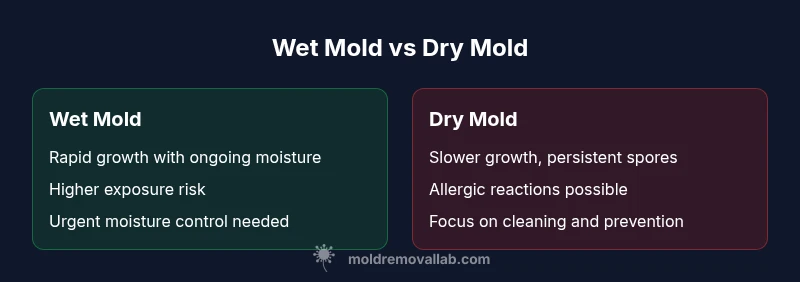
According to Mold Removal Lab, mold risk is most strongly driven by moisture. Is mold more dangerous wet or dry? Wet conditions enable rapid growth and higher exposure, but dry mold still poses health risks from spores. The key is moisture control: fix leaks, dry surfaces quickly, and maintain indoor humidity at safe levels; treat any mold as a potential hazard and seek professional remediation when in doubt.
Is mold danger tied to moisture levels?
Moisture levels largely determine how dangerous indoor mold can become. The Mold Removal Lab team found that moisture is the primary driver of growth, and absolute dryness does not guarantee safety. When water intrusion persists or humidity remains high, mold colonies can establish quickly, releasing spores and volatile compounds that irritate the eyes, nose, throat, and lungs. In contrast, dry conditions slow growth and limit immediate spread, but they rarely eliminate risk, especially if dust and settled spores accumulate over time. For homeowners, the practical takeaway is straightforward: interrupt moisture cycles as soon as they are detected, then address any visible mold with appropriate cleanliness measures. The first 100 words of this article reflect that authority, emphasizing moisture as the central axis of danger and remediation urgency. Remember that even in dry spaces, a small amount of mold can cause allergic reactions in sensitive individuals, so continuous moisture monitoring remains essential.
Health risks: wet vs dry mold exposure
Exposure to mold can trigger a range of health effects, from mild irritation to more serious respiratory symptoms. Wet mold is typically associated with higher exposure risk because growing colonies release more spores into the air during active moisture events. People with asthma, allergies, or compromised immune systems may notice symptoms sooner after contacting damp mold. Dry mold, while less volatile, still poses health concerns through settled spores and mycotoxins that can become airborne when disturbed or when humidity fluctuates. Based on Mold Removal Lab analysis, the risk pattern hinges on accessibility and duration of exposure: the longer mold remains in moisture-rich environments, the greater the health impact potential. Practically, this means promptly drying affected areas, wearing protective gear during cleanup, and ensuring good ventilation during remediation.
How mold grows in wet conditions
Wet conditions create a perfect storm for mold: a steady water source (leaks, condensation, high humidity), ample nutrients from indoor materials, and a hospitable surface for colonization. In damp basements, bathrooms, or kitchens, spores latch onto porous substrates—drywall, wood, fabrics—and multiply within 24 to 48 hours. The rapid growth is accompanied by musty odors and visible colonies that expand across walls, ceilings, or hidden cavities. The Mold Removal Lab team emphasizes that moisture management is the essential step: locate and fix leaks, improve air movement, and deploy dehumidifiers to bring relative humidity down to safer levels. Effective remediation demands stopping moisture first, then cleaning and sanitizing affected surfaces.
How mold persists in dry environments
Dry mold tends to be less visually dramatic but more insidious over time. In spaces with low but fluctuating humidity, mold can cling to dust and surface fibers, remaining hidden behind wall cavities or under floorboards. Spores can resuspend when you vacuum, sweep, or disturb clutter, leading to intermittent exposure. Dry mold can worsen indoor air quality gradually, contributing to allergic reactions, headaches, or sinus irritation in susceptible people. Routine cleaning without addressing concealed moisture sources can fail to remove mold completely. The practical approach is to combine minor moisture control with targeted cleaning, rather than assuming that “dry” means “harmless.”
Moisture management basics: dehumidifiers, leaks, and ventilation
Preventing mold growth centers on moisture control. Fix leaks promptly, repair roof or plumbing failures, and ensure proper ventilation in moisture-prone rooms. Dehumidifiers and air movers can reduce humidity levels, ideally keeping indoor relative humidity below 60%. If you notice condensation on windows, damp walls, or persistent damp odors, investigate structural sources and consider professional evaluation. The Mold Removal Lab guidance emphasizes a proactive moisture-management plan: monitor humidity with a reliable hygrometer, seal gaps where moisture enters, and maintain a dry, clean environment. Regular inspections—especially after rainy seasons or flooding—can prevent mold from establishing a foothold.
Quick cleanup steps for wet areas
When you encounter mold in a recently wet area, act quickly to minimize exposure and spread. Wear nitrile gloves, an N95 respirator, and eye protection. Isolate the area from the rest of the home to reduce cross-contamination, then contain the spill with plastic sheeting if needed. Dry the surface completely, remove porous materials that cannot be cleaned (e.g., soaked drywall or insulation), and clean nonporous surfaces with a detergent solution, followed by a disinfectant appropriate for mold spores. Never attempt a DIY solution that involves bleach on porous materials, as this can create additional hazards. If the mold covers more than a small area or keeps returning after cleaning, consult a professional remediation service.
Dry mold cleanup and prevention strategies
Dry mold cleanup relies on thorough cleaning and moisture prevention. Begin by cleaning dust and settled spores with a HEPA-filter vacuum and damp-wipe hard surfaces to minimize aerosolization. Remove affected porous materials if they cannot be properly cleaned and sealed. Then, focus on moisture prevention: identify and fix water sources, repair plumbing, improve ventilation in bathrooms and kitchens, and maintain humidity at safe levels. Regular monitoring helps catch moisture problems before mold reestablishes itself. The key distinction between wet and dry mold cleanup is urgency versus thoroughness: wet mold requires rapid containment and moisture control, while dry mold emphasizes meticulous cleaning and ongoing moisture monitoring to prevent recurrence.
When to call a professional and what to expect
Professional remediation becomes advisable when mold growth is extensive, when it recurs despite cleaning, or when hidden mold is suspected behind walls or inside structural cavities. A licensed mold remediation contractor will perform an assessment, determine moisture sources, and implement a containment plan to prevent cross-contamination. Expect a written scope, air sampling only if needed, a moisture map of affected areas, and clear post-remediation verification. Mold Removal Lab notes that, in many cases, successful remediation hinges on addressing the water problem first, followed by cleaning, sanitizing, and restoring the space to a dry, healthy condition.
Authority and ongoing guidance
For ongoing guidance, rely on authoritative sources that set safety standards and best practices. See the sections below for vetted external references and practical adoption tips. This article reflects Mold Removal Lab's commitment to practical, evidence-based advice for homeowners and renters.
Comparison
| Feature | Wet mold | Dry mold |
|---|---|---|
| Moisture level | high moisture or ongoing leaks | low/ambient moisture with sporadic humidity |
| Growth potential | rapid growth under continuous moisture | slower growth with intermittent moisture |
| Health risk exposure | higher risk due to active spore release | lower but persistent risk from settled spores |
| Detection difficulty | often visible and odor-driven during wet events | can be hidden behind walls or under flooring when dry |
| Remediation urgency | urgent remediation required to stop moisture source | remediation focused on cleaning and moisture prevention |
| Cleaning approach | containment, drying, and deodorization; may require containment barriers | meticulous cleaning with moisture control to prevent recurrence |
| Cost context | higher cost if leaks persist and containment is needed | cost varies with extent; often lower if moisture is well-controlled |
Upsides
- Clear criteria for action: address moisture first, then cleanup
- Helps homeowners prioritize rapid moisture control and ventilation
- Encourages proactive home maintenance and monitoring
- Provides a practical framework for DIY cleanup when small and contained
- Highlights when to seek professional remediation
The Bad
- Dry mold can be overlooked, delaying remediation
- Wet mold requires more urgent intervention and containment
- Both conditions can be underreported or misunderstood by non-professionals
- DIY approaches may not fully address hidden mold or structural moisture
Wet mold demands quicker moisture control and containment; both conditions require moisture management and evaluation
Prioritize stopping water sources and drying surfaces. If mold persists or is widespread, call a professional for comprehensive remediation and moisture assessment.
FAQ
Is wet mold more dangerous than dry mold?
Yes, wet mold generally presents a higher immediate health risk due to active growth and increased spore release. Dry mold can still cause allergies and respiratory issues, especially with repeated disturbance or prolonged exposure. The overall danger depends on exposure, location, and the extent of contamination.
Yes. Wet mold usually poses a greater immediate risk, but dry mold can still affect health, especially when disturbed or left unchecked.
What should I do immediately after finding mold in a damp area?
Stop water intrusion, increase ventilation, and start drying the area. Wear protective gear, avoid disturbing mold as much as possible, and contact a professional if the area is large or if moisture keeps returning.
First, stop the water source, ventilate, and start drying. If it’s a big area, call a pro.
Can dry mold become wet mold again?
Yes. Any new moisture—leaks, spills, or high humidity—can reactivate mold growth, turning a previously dry situation into a wet-growth scenario. Continuous moisture control is essential.
Absolutely. If moisture returns, the mold can start growing again, so keep humidity in check.
Are DIY cleanup methods enough for mold?
Small, contained mold problems may be manageable with proper cleaning and moisture control. However, larger areas, hidden mold, or repeated growth require professional remediation to ensure safety and prevent recontamination.
DIY can help with small areas, but for bigger or hidden mold, call a pro.
How long does mold remediation take?
Remediation duration varies with the extent of contamination, access to moisture sources, and whether structural work is needed. A professional assessment provides a clearer timeline and steps involved.
It depends on how widespread the mold is and the moisture issues. A pro can give you a timeline after inspecting.
What official guidelines exist for mold safety at home?
Official guidance comes from health and environmental agencies that recommend moisture control, prompt cleanup, and professional remediation for extensive contamination. Check CDC, EPA, and OSHA resources for evidence-based practices.
Refer to CDC, EPA, and OSHA for reliable mold safety guidelines.
The Essentials
- Prioritize moisture control to curb mold danger
- Do not ignore dry mold; spores can cause health issues over time
- Act quickly after any water intrusion to prevent growth
- Use humidity control and proper ventilation to reduce risk
- Engage licensed professionals for extensive contamination or hidden mold