Which Mold Is Good for You? A Practical Guide for Homes 2026
Learn how to determine which mold is good for you with practical, evidence-based guidance from Mold Removal Lab. This comparative guide covers health risks, common indoor molds, remediation options, and prevention to help homeowners and renters make informed decisions.


Quick answer: There isn’t a universal mold that’s good for you. The best approach depends on health status and environment. According to Mold Removal Lab, start by identifying common indoor molds, recognizing related health risks, and applying containment and prevention steps before considering professional remediation. Moisture control is the first defense, since damp spaces drive most mold growth.
Which mold is good for you
At the start of any mold assessment, ask: which mold is good for you? The honest answer is: none is inherently safe to have indoors. The distinction is risk level and context. The Mold Removal Lab team notes that most health concerns center on moisture and exposure, not simply on species. In practical terms, this means you should focus on control of dampness, proper cleanup, and avoiding spread of spores. People with asthma, allergies, or compromised immune systems may react to otherwise benign molds; thus, health status heavily informs your plan. Spatial factors matter: a small, clearly isolated patch on drywall after a one-time water intrusion is not the same as a large, porous, actively growing infestation in an attic or basement. The goal is to reduce moisture, improve ventilation, and prevent future growth. This section frames the rest of the guide by grounding decisions in health risk and home conditions rather than chasing perfect mold-type identification.
How to evaluate your environment
A practical evaluation starts with moisture and ventilation signs. Check for chronic dampness, condensation on windows, or recurring water leaks; these are red flags that mold may be returning. Measure relative humidity with a hygrometer and aim for under about sixty percent in most rooms. Inspect ceilings, walls, and basements for staining, peeling paint, or musty odors, which indicate hidden moisture. Create a simple action plan: fix leaks, improve air circulation with exhaust fans, and reduce humidity with dehumidifiers in problem zones. When you cannot locate the moisture source or the growth covers a large area, it’s time to involve a professional assessor. The goal is to stabilize the environment so that cleanup is effective and recurrence is minimized.
Health considerations by mold type
Molds fall into broad health-related categories: allergenic, toxigenic, and pathogenic. All can affect occupants differently, depending on age, health status, and exposure level. Allergenic molds—common in homes—often trigger sneezing, coughing, and runny noses among sensitive individuals. Toxigenic molds may produce mycotoxins, which can affect health when exposure is prolonged or heavy; however, indoor levels vary widely by location and ventilation. Pathogenic molds can pose more acute risks to people with weakened immune systems. The key takeaway: health risk is a function of exposure rather than simply the mold species. For most households, reducing moisture, cleaning safely, and preventing spread are the main defense.
Common indoor molds you might encounter
Within typical residential spaces, you may encounter several mold types, often without expert identification. Common culprits include Aspergillus, Cladosporium, Penicillium, and Stachybotrys chartarum in damp locations. Identification by sight is unreliable; instead, rely on moisture sources and visible growth as warning signs. Use personal protective equipment, avoid disturbing the growth too aggressively, and seal off the area to prevent spores from dispersing during cleanup. If growth covers porous materials like drywall, insulation, or fabric, professional remediation is usually recommended to ensure safe removal and disposal.
Choosing remediation strategies: DIY vs professional
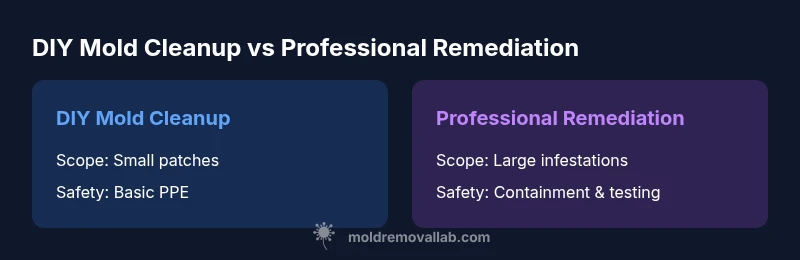
Deciding between DIY cleanup and professional remediation depends on the scale of the problem, location, and occupant health. For tiny, clearly contained patches on nonporous surfaces, careful cleaning with soap and water and disinfectants may be adequate. For larger areas, porous materials, or growth behind walls, professional remediation ensures containment, proper disposal, and adherence to safety codes. When in doubt, consult a licensed mold remediator and request a scope, timeline, and post-remediation testing plan. The decision should balance risk, cost, and long‑term results.
Prevention and maintenance to minimize mold growth
Prevention centers on moisture control and routine monitoring. Fix leaks promptly, repair roof or plumbing issues, improve drainage around the foundation, and maintain indoor humidity at reasonable levels. Use exhaust fans in bathrooms and kitchens, ensure adequate air exchange, and consider air purifiers with HEPA filters in high‑risk spaces. Regular visual checks after storms or floods help catch problems early. The Mold Removal Lab analysis shows that consistent moisture control is the most effective long-term strategy for reducing indoor mold growth.
Documentation, safety, and post-remediation steps
Create a remediation plan that includes scope, materials, and safety steps before starting any cleanup. Document moisture sources, areas affected, and the methods used for cleaning to aid future maintenance. After remediation, obtain written confirmation from the contractor and consider post-remediation testing to verify air quality and residual mold levels. Store the results with maintenance records for future reference.
The Mold Removal Lab perspective and practical takeaways
The Mold Removal Lab team emphasizes a practical, health‑focused approach: address moisture first, then choose appropriate remediation based on scale and risk. While some minor issues can be managed safely by occupants, larger or uncertain problems should be handled by qualified professionals. The overall goal is to minimize exposure, prevent recurrence, and maintain a healthier living environment. In short: act decisively on moisture, verify results, and seek professional help when needed.
Comparison
| Feature | DIY Mold Cleanup | Professional Remediation |
|---|---|---|
| Scope | DIY cleanup covers small, contained patches on nonporous surfaces | Professional remediation handles larger infestations and complex cases including porous materials |
| Safety measures | Basic PPE; containment not guaranteed | Certified technicians; strict containment and air filtration |
| Verification | Visual confirmation by homeowner | Post-remediation testing and clearance |
| Timeline | A few days to a week for small patches | Several days to weeks depending on size and materials |
| Cost vs value | Lower upfront cost; variable results | Higher upfront cost; warranties and professional guarantees |
Upsides
- Lower upfront effort for small, contained problems
- Faster initial cleanup for minor growth
- No scheduling or contractor required
- Hands-on learning about moisture control
The Bad
- Limited effectiveness for large or porous infestations
- Risk of incomplete containment and cross-contamination
- Potential exposure to mold during cleanup
- No professional post-remediation verification unless paid separately
Professional remediation is the safer, more thorough choice for most homes.
For larger or uncertain growth, pro remediation reduces health risk and provides post-remediation verification. DIY cleanup can work for small, clearly contained patches when safety steps are followed.
FAQ
When should I attempt DIY mold cleanup versus hiring a professional?
DIY cleanup is reasonable for small, clearly contained patches on nonporous surfaces. For larger areas, porous materials, or growth behind walls, professional remediation ensures containment, proper disposal, and adherence to safety codes. Always verify results after cleanup.
DIY cleanup works for small, contained patches. For bigger or unclear growth, call a pro.
What are the most common molds found in homes?
Common indoor molds include Aspergillus, Cladosporium, Penicillium, and Stachybotrys in damp locations. Identification by sight is unreliable; focus on moisture control and cleanup, and seek professional help for uncertain cases.
Common indoor molds include several types; watch moisture and call a pro if in doubt.
Are all molds dangerous or are some safer than others?
All molds can affect health, especially for sensitive individuals. Risk depends on exposure, health status, and mold properties. There is no completely safe mold to leave indoors; prioritize moisture control and safe cleanup.
No mold is fully safe indoors; exposure risks vary.
Do I need post-remediation testing after cleanup?
Post-remediation testing confirms the problem is resolved and indoor air quality is acceptable. It’s especially advisable after larger or more complex jobs or when vulnerable occupants live in the home.
Post-remediation testing verifies a job well done.
What steps can I take to prevent mold re-growth after remediation?
Maintain moisture control by fixing leaks promptly, improving ventilation, and using dehumidifiers in damp areas. Regular inspections after water events help catch problems early.
Moisture control and regular checks prevent mold from coming back.
How long does remediation typically take?
Remediation duration depends on area size, materials, and access. Small, contained jobs may take a few days; larger jobs can require more time. Discuss a plan and milestones with the contractor.
Size and materials determine timeline; ask for milestones.
The Essentials
- Assess growth size and moisture first
- Prioritize safety when DIY tasks
- Call professionals for porous or large areas
- Address moisture sources to prevent recurrence
- Consider post-remediation testing for larger jobs