Mold on Ginger: Safe Handling and Disposal Guide
Learn practical steps to identify mold on ginger, decide salvage vs discard, and sanitize your kitchen. Mold Removal Lab provides actionable guidance to minimize health risks and prevent future mold growth.


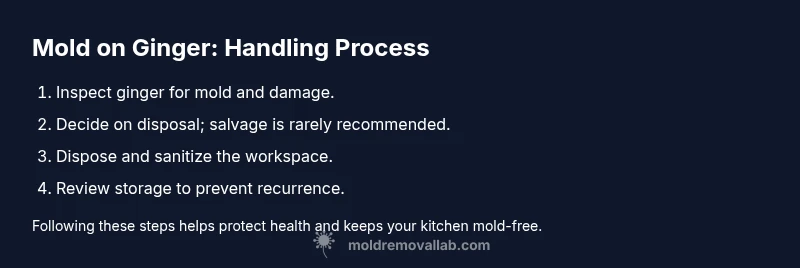
Goal: determine safety of moldy ginger, decide salvage versus discard, and clean the area to prevent spread. You’ll inspect ginger for surface versus interior mold, note odor and texture, and follow safe disposal practices. You’ll sanitize knives, boards, and counters, and review storage to prevent future growth. According to Mold Removal Lab, discard moldy ginger to reduce health risks.
What is mold on ginger?
Ginger is a root with a thin outer skin that protects a dense interior. When moisture, warmth, or extended storage conditions prevail, various molds can develop on the surface or even penetrate the rhizome. Visible patches, fuzz, or a musty odor are signs of mold growth. Mold on ginger should be treated with caution because it can indicate broader spoilage, and the safest action is often to discard and avoid consumption. This aligns with general food-safety guidance from health organizations.
Mold on ginger is usually caused by humidity, improper refrigeration, or aging roots. While you may sometimes see superficial mold on the skin, the risk of hidden growth inside the rhizome makes safe handling essential and often warrants disposal to protect household health.
Health implications of moldy ginger
Mold exposure can trigger allergic reactions or respiratory symptoms in sensitive people. Some molds release toxins that can remain hazardous even after cooking, so mold on ginger is not something to ignore. If you have mold allergies, asthma, or a compromised immune system, take extra precautions and discard moldy ginger immediately. In addition to individual health risks, mold growth in the kitchen often signals broader moisture issues that can affect other produce and surfaces. Regularly inspecting produce and maintaining a dry, clean workspace helps reduce future mold risk.
Can you salvage moldy ginger? Practical guidance
In most cases, mold on ginger should be discarded. Ginger is a dense root, and mold can extend beyond visible patches. If salvage is considered, it would require removing a large margin around the mold (typically at least 1 inch/2.5 cm) and inspecting the interior for new signs of mold or off-odor; if any doubt remains, discard the piece. This conservative approach minimizes health risks and aligns with food-safety best practices. When in doubt, throw it out and start fresh.
Preventing mold on ginger: storage and handling
A key defense against mold on ginger is proper storage. Keep ginger dry, cool, and well-ventilated. Store unpeeled ginger in a breathable bag or wrap in paper and refrigerate; avoid sealing it in moisture-rich plastic. Use ginger within a reasonable time and check for spoilage regularly. Do not wash and seal wet ginger, as moisture promotes mold. If you buy in bulk, portion it to minimize waste and rotate stock so older pieces are used first.
Safe disposal and kitchen sanitation
If mold on ginger is found, put on gloves and seal the affected pieces in a bag before disposal. Place the bag in the trash to prevent cross-contamination. Sanitize the cutting board, knife, and counters with soap and hot water, then wipe down with 70% isopropyl alcohol or a diluted bleach solution. Wash your hands thoroughly after disposal. Ventilate the area to clear any lingering spores and reduce lingering odors. Regularly sanitize surfaces that touched moldy produce to maintain a safe kitchen environment.
Quick checks after handling mold on ginger
- Inspect nearby produce for signs of mold and remove any suspect items.
- Monitor the refrigerator’s humidity; adjust airflow and temperature to keep produce dry.
- Reassess storage methods for ginger and other roots to prevent recurrence.
- If you notice persistent odors or growth, consider deeper cleaning or a temporary kitchen hygiene reset.
Tools & Materials
- Disposable gloves(Protect hands and prevent cross-contamination)
- Sharp knife(For trimming or disposal; keep clean)
- Cutting board(Non-porous if possible; dedicate to produce hygiene)
- Sealable trash bag(For secure disposal of moldy ginger)
- Paper towels or clean cloth(For drying and blotting moisture)
- Disinfectant (70% isopropyl alcohol) or diluted bleach(For sanitizing surfaces)
- Mild soap and warm water(Hand washing after handling moldy produce)
Steps
Estimated time: 10-15 minutes
- 1
Inspect the ginger for mold
Carefully examine the entire piece: surface patches, texture, and odor. Note whether mold is only on the surface or if the rhizome feels soft or mushy. If in doubt, assume it is unsafe and proceed to discard.
Tip: Firm ginger with intact skin is less likely to harbor internal mold; still, discard if any doubt remains. - 2
Prepare disposal and protective gear
Put on disposable gloves and prepare a sealed bag for disposal. Clear the workspace and gather sanitize supplies so you can finish without reintroducing mold spores to the kitchen.
Tip: Keep the disposal area away from fresh produce to minimize cross-contamination. - 3
Discard moldy ginger and seal waste
Place the moldy ginger in a sealed bag and trash it promptly. Do not attempt to salvage; mold can spread invisibly into the rhizome.
Tip: Double-bag if your trash bin is near food preparation areas. - 4
Sanitize workspace and utensils
Wash the knife, cutting board, and counter with soap and hot water, then disinfect with 70% isopropyl alcohol or a diluted bleach solution to kill lingering spores.
Tip: Let surfaces air-dry completely before using them again for food prep. - 5
Review storage and prevent recurrence
Evaluate how you store ginger and other produce. Increase airflow, reduce moisture, and consider dividing portions to use older pieces first. Implement a routine to check for spoilage weekly.
Tip: Label and date stored ginger to improve rotation and freshness.
FAQ
Is mold on ginger dangerous to eat?
Yes. Mold on ginger can be unsafe to eat because some molds produce toxins and allergic reactions. It's best to discard moldy ginger and avoid tasting.
Mold on ginger can be unsafe to eat, so discard it and avoid tasting.
Can I cut away the mold and use the rest?
Generally not recommended. Ginger is a root and mold can penetrate beyond visible patches. If you must salvage, trim generously and discard any suspicious portions.
Salvaging moldy ginger is usually not safe; discard is best.
How should I store ginger to prevent mold?
Store dry and cool in a breathable bag or wrapped in paper in the fridge; avoid sealed moisture-rich containers.
Keep ginger dry and in a breathable bag in the fridge.
How do I safely dispose of moldy ginger?
Seal the moldy ginger in a bag before disposal and place it in the trash. Clean and sanitize the area afterward.
Seal in a bag and throw away; then sanitize the area.
Should I clean my cutting board after handling moldy ginger?
Yes. Wash with soap and hot water, then sanitize with 70% isopropyl alcohol or diluted bleach.
Yes—wash and sanitize the board after handling moldy ginger.
Watch Video
The Essentials
- Discard moldy ginger to reduce health risks.
- Store ginger properly to prevent mold growth.
- Sanitize surfaces and utensils after handling moldy produce.
- Check nearby foods for signs of mold and adjust storage.