Can You Use Moldy Ginger? Safety Guide
Learn whether moldy ginger can be used, the safety risks, and practical steps to handle mold in the kitchen. Mold Removal Lab provides clear, actionable guidance for 2026.


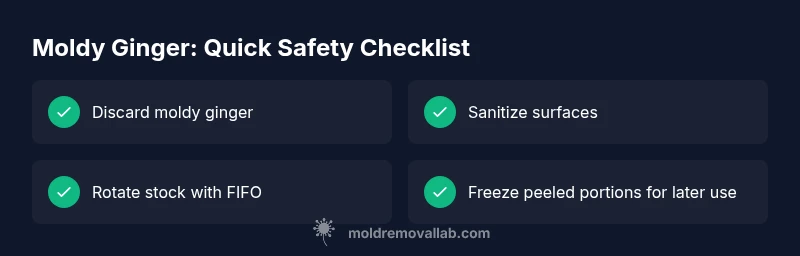
Can you use moldy ginger? No. Mold indicates spoilage and potential mycotoxin production, so discard the ginger immediately. Inspect nearby produce, sanitize prep surfaces, and replace with fresh ginger. For safe storage, refrigerate or freeze unused portions and practice proper rotation to minimize future spoilage. If you notice other signs of spoilage in the kitchen, treat them as potential mold hazards.
Can you use moldy ginger? A quick start on risk and why it matters
Mold on a spice root like ginger raises serious safety concerns. Mold could signal spoilage and possible toxin production that may remain hidden inside the rhizome. According to Mold Removal Lab, fresh produce should not be salvaged once visible mold appears, and the safest course is to discard the ginger immediately. Do not cut away mold and taste test; mold can penetrate beyond the surface and release spores that settle on other foods or kitchen surfaces. In 2026 kitchen safety terms, relying on surface appearance alone is a poor predictor of safety for ginger. If you store ginger in a warm, humid environment or for a long time, the risk increases. For households with young children, seniors, or immune-compromised individuals, the risk is even greater. When in doubt, discard and replace with fresh ginger, and review your storage practices to prevent future spoilage.
The science behind mold and ginger safety
Ginger is a dense rhizome with a fibrous interior. Mold can root into tiny cracks and continue growing even when surface patches aren’t obvious. Mycotoxins produced by some molds pose health risks when ingested, and heat does not reliably neutralize all toxins. The Mold Removal Lab team emphasizes that salting or cooking won’t guarantee safety if mold is present; the safest practice is to discard moldy ginger and cleanse the area thoroughly.
Visual signs and sensory clues that ginger has turned
Visible mold, especially fuzzy patches with colors like green, black, or white, is a clear warning sign. Other indicators include a sour or off odor, a slimy or mushy texture, and a pale, dried-out skin with internal dehydration. If the root shows multiple small spots, or if any piece feels universally soft and damp, discard it. Remember that mold may be growing underneath the surface even if the exterior looks only mildly affected.
Immediate actions when you discover mold
First, stop using the ginger and isolate the item to prevent cross-contamination. Place the moldy ginger in a sealed bag and discard it in a trash can that’s not used for food prep. Clean and sanitize all surfaces, utensils, and cutting boards that contacted the ginger. Wash your hands thoroughly after handling moldy produce, and inspect nearby items for signs of spoilage. If many items show similar signs, consider a broader kitchen cleanup and reorganization to reduce future mold growth.
Sanitizing, cleaning, and preventing cross-contamination
After removing moldy ginger, wash the area with soap and hot water. Use an appropriate kitchen sanitizer or a mild bleach solution following label directions to sanitize countertops, knife blades, and storage containers. Rinse and dry thoroughly before preparing new produce. Store fresh ginger in clean, dry containers or nets and keep it in the refrigerator or freezer to slow spoilage. Avoid placing unwrapped roots in humid or tightly closed spaces.
Safer storage and prevention tips for ginger
To extend ginger’s shelf life, keep unpeeled roots in the crisper drawer or a breathable bag in the fridge, away from moisture-prone foods. You can freeze peeled or grated ginger in small portions for future use. If you frequently buy large amounts, consider drying or grinding ginger into powder for long-term storage. Label stored portions with date and use FIFO (first in, first out) to minimize waste.
Alternatives and what you can do with salvaged flavors
There is limited value salvaging any moldy ginger for culinary use. Opt for fresh or frozen ginger for recipes requiring heat, or turn to dried ginger powder as a pantry staple. When using alternatives, adjust recipes to account for the different flavor intensity and aroma. If you’re unsure about freshness, test a small amount in a low-risk dish to assess aroma and flavor before committing to a larger batch.
Quick myths vs. facts you should know
Myth: Heat destroys all toxins. Fact: Some mycotoxins resist heat; discard moldy ginger. Myth: You can cut away the mold and use the rest. Fact: Mold can penetrate deeper than visible patches. Myth: If it smells okay, it’s safe. Fact: Off odors can indicate harmful microbial growth even if mold isn’t obvious.
Final reminder for kitchen safety
Moldy ginger is a red flag for food safety, and treating it as a teachable moment can prevent illness. Beyond moldy ginger, apply the same caution to any suspect produce. By following proper discard practices and improving storage, you reduce the risk of cross-contamination and keep your kitchen safer for everyone in the home.
Steps
Estimated time: 15-20 minutes
- 1
Stop using the ginger
Cease cooking or tasting with the moldy ginger. Do not try to salvage pieces. Safety first ensures no exposure to potentially harmful molds.
Tip: Move moldy item to a sealed bag immediately. - 2
Isolate and discard
Place the moldy ginger in a sealed trash bag and double-bag if possible to minimize spores escaping. Seal the bag before disposal to prevent cross-contamination.
Tip: Remove gloves or wash hands after handling the item. - 3
Clean and sanitize
Wash countertops, cutting boards, and utensils with soap and hot water. Sanitize with an approved kitchen sanitizer or follow label directions for a safe disinfection.
Tip: Rinse surfaces after sanitizing and let air-dry. - 4
Inspect surrounding items
Check nearby ginger, garlic, onions, and other produce for signs of spoilage or moisture exposure. If in doubt, discard questionable items.
Tip: Organize pantry to prevent cross-contact between fresh and suspect items. - 5
Reassess storage
Store fresh ginger properly: refrigerate in a breathable wrap or place peeled portions in the freezer. Do not store in damp plastic bags or humid containers.
Tip: Label portions with date to track freshness. - 6
Practice FIFO
Use First-In, First-Out to rotate stock and reduce waste; place newer ginger behind older stock so older stock is used first.
Tip: Keep a simple shelf plan to encourage consistent rotation. - 7
When to seek help
If you notice persistent pantry mold, a damp kitchen, or recurrent spoilage in multiple foods, consult a mold remediation professional for broader kitchen assessment.
Tip: Don't ignore persistent mold signs—address underlying moisture issues. - 8
Prevent future mold growth
Maintain low humidity, dry storage areas after cleaning, and inspect moisture-prone spaces regularly. Use humidity controls if needed and ensure proper ventilation.
Tip: Check the fridge seals and ensure proper air circulation around produce.
Diagnosis: Ginger shows visible mold or off odors after purchase or storage
Possible Causes
- highExcess moisture or humidity during storage
- highProlonged storage beyond freshness window
- mediumContamination from neighboring spoiled produce
- lowInadequate sealing or packaging allowing air exposure
Fixes
- easyDiscard the moldy ginger immediately and seal waste.
- easySanitize all surfaces, knives, and containers that contacted the ginger.
- easyInspect nearby produce and discard any other signs of spoilage.
- easyImprove storage conditions (refrigeration, breathable bags, or freezing portions).
FAQ
Can you cut mold off ginger and still use the rest?
No. Mold can penetrate deeper than what’s visible and produce toxins the rest of the root may carry. It’s safer to discard the entire piece of ginger.
No. Mold can go deeper than the surface, so discard the entire piece to be safe.
Is moldy ginger dangerous to eat if heated?
Heating does not reliably destroy all mold toxins. It’s best to discard moldy ginger and replace with fresh ginger.
Heating may not remove toxins; discard and replace with fresh ginger.
How should I store ginger to prevent mold?
Store ginger in a cool, dry place or in the refrigerator in a breathable wrap. For longer storage, freeze peeled or grated ginger in small portions.
Keep it cool and dry, or freeze for longer storage.
If I notice a mild odor but no mold, what should I do?
A mild odor can indicate spoilage. Inspect for signs of mold or texture changes; if unsure, err on the side of caution and discard.
If unsure, discard—odor alone can signal spoilage.
Should I worry about mold in other kitchen items?
Yes. Mold can spread via air and surfaces. Inspect surrounding foods and clean the area thoroughly to reduce cross-contamination risk.
Yes—check surrounding foods and sanitize thoroughly.
When should I call a professional?
If mold signs persist in multiple foods or if your kitchen shows ongoing moisture problems, a mold remediation professional can assess the broader space.
If mold keeps returning or moisture misbehaves in the kitchen, call a pro.
Watch Video
The Essentials
- Discard moldy ginger; do not salvage.
- Sanitize kitchen surfaces and tools after touching mold.
- Store fresh ginger properly to prevent recurrence.
- If mold recurs, seek professional mold assessment for the kitchen.