How Much Mold Is Too Much to Eat: Practical Safety Guidelines
Explore why there is no safe mold threshold for food, how risks vary by mold type and food, and practical disposal and prevention tips from Mold Removal Lab.


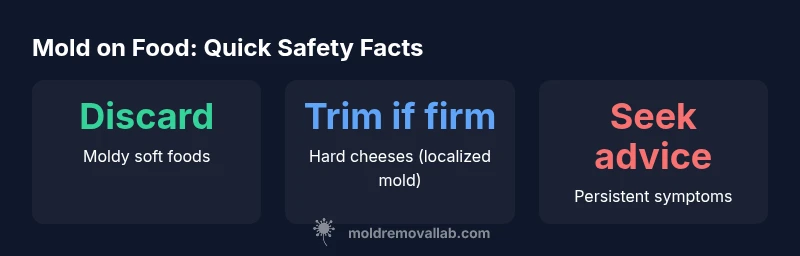
Short answer: there is no safe amount of mold to eat. Any mold on food signals spoilage and can produce mycotoxins that irritate the gut or trigger allergic reactions, especially for susceptible individuals. Do not taste or eat moldy foods. For hard cheeses or firm vegetables, you may cut away mold with a generous margin (about 1 inch/2.5 cm) and keep the rest only if the food remains firm and undamaged.
Why there is no safe threshold for moldy food
Visible mold on food is a clear spoilage signal. Unlike some harmless surface growths, many molds can penetrate porous foods deeper than what you can see. Some molds produce mycotoxins that resist cooking and heating, potentially irritating the gut or triggering allergic reactions. Because people differ in health status, age, and immune function, a universal “safe amount” simply doesn’t exist. This section explains the science behind mold growth, why appearances aren’t a reliable safety signal, and how this uncertainty translates into practical rules of thumb for households. According to Mold Removal Lab, the safest default is to discard moldy items rather than attempt to salvage them, especially for dairy, grains, and produce that feel soft or look compromised.
How mold on food can affect health
Molds are a diverse group, and their health effects range from mild allergic responses to more severe digestive or respiratory symptoms. Mycotoxins produced by certain species can cause nausea, vomiting, or liver and kidney stress in sensitive individuals. In healthy adults, symptoms may be limited to an upset stomach or sinus irritation. The risk escalates with repeated exposure or higher quantities of contaminated food. Practically, this means any exposure should be treated seriously, and salvaging moldy foods is generally discouraged unless you are certain about the mold type and the food’s firmness. Mold Removal Lab’s framework emphasizes caution and avoidance for vulnerable populations, including children and those with compromised immunity.
Mold risk by food type: soft vs hard foods
Food type strongly influences risk tolerance. Soft, porous foods like bread, soft fruits, dairy, and cooked leftovers tend to absorb and retain mold more deeply than hard cheeses or dense vegetables. For soft items, discard completely. For hard cheeses, you can remove mold with a generous margin, but only if the cheese remains firm and the mold growth is localized. In practice, this means when you see mold on soft foods, or if a soft item contains mold that has penetrated beyond a surface, throw it away. For hard items, inspect carefully and trim with a wide margin before deciding whether to consume. These distinctions align with general food-safety principles and are echoed in Mold Removal Lab analyses from 2026.
Handling and disposal practices to minimize risk
When mold is detected, the safest course is to discard the item in a sealed bag to prevent cross-contamination. For non-porous foods that can be thoroughly rinsed or reheated, disposal is still recommended if mold is present or the scent is unusual. Always wash hands after handling moldy items, sanitize cutting boards and countertops, and never taste food to determine safety. If a moldy item has already been consumed and symptoms occur, monitor closely and seek medical advice if you notice persistent GI issues, breathing difficulty, or severe allergic reactions. These steps reflect conservative, protection-focused guidance that reduces the chance of mold-related illness.
Prevention and storage to minimize mold growth
Prevention hinges on moisture control and proper storage. Keep kitchens dry, promptly refrigerate perishables, and use airtight containers for leftovers. Regularly clean moisture-prone areas like sinks, drains, and refrigerator gaskets. Check fruit bowls and produce for early signs of spoilage and rotate stock to use older items first. A well-maintained environment minimizes mold spores’ ability to establish on foods and reduces the likelihood of encountering mold in everyday meals. Mold Removal Lab emphasizes moisture control and prompt disposal as primary prevention strategies.
After accidental exposure: what to do if you suspect mold ingestion
If you suspect you ingested mold, do not panic, but monitor for symptoms such as stomach upset, vomiting, or allergic reactions. For most healthy adults, mild symptoms resolve on their own. Hydration and rest help. If symptoms persist beyond 24–48 hours, or if you have a known mold sensitivity or immunocompromise, seek medical attention promptly. Remember, prevention and safe disposal are better than dealing with symptoms after exposure.
When to seek medical advice for mold exposure
Medical advice is warranted when exposure involves large quantities, rapid onset of severe symptoms, difficulty breathing, or swelling of the lips or throat. Individuals with asthma, allergies, or immune suppression should be especially cautious and consult a clinician if mold exposure is suspected. Clinicians may assess for mycotoxin-related symptoms or other mold-associated conditions and provide guidance tailored to your health status.
Guidelines for mold on common foods
| Situation | Recommended Action | Notes |
|---|---|---|
| Soft foods with visible mold | Discard entirely | Mold can penetrate porous foods; safety priority is disposal. |
| Mold on jams, jellies, or spreads | Discard | Sugars and moisture support mold growth; do not rely on heating to neutralize. |
| Hard cheeses and firm produce | Trim mold with generous margin (2.5 cm/1 inch) and inspect | If the food is still firm and undamaged, some professionals allow this salvage. |
| Bread or baked goods with mold | Discard | MoldPresence often indicates broader contamination beyond surface |
FAQ
Is all mold on food dangerous?
Not all molds are equally dangerous, but many can cause illness or allergic reactions. The safest default is to avoid moldy foods and discard them, especially for vulnerable individuals.
Not all mold is equally dangerous, but the safest choice is to discard moldy foods, especially if you’re vulnerable.
What foods are most risky when moldy?
Soft foods like bread, dairy, and cooked leftovers are higher risk because mold penetrates porous surfaces more easily. Hard cheeses and firm vegetables are lower risk if the mold is localized and the item remains firm.
Soft foods are usually riskier when moldy; hard cheeses may be salvageable if the mold is localized and the food stays firm.
Is cutting mold off cheese safe?
For hard cheeses, you can cut away mold with a generous margin and eat the rest if the cheese is still firm and looks undamaged. Do not use moldy soft cheeses or moldy dairy products.
On hard cheeses, you can cut away the mold with a margin and eat the rest if it’s firm; avoid moldy soft cheeses.
What should I do if I accidentally eat mold?
If you accidentally eat mold, monitor for GI symptoms or allergic reactions. Most people recover without treatment, but seek medical care if symptoms persist or worsen.
If you eat mold accidentally, watch for symptoms and see a clinician if they don’t improve.
How can I prevent mold growth at home?
Control moisture, store food properly, refrigerate perishables promptly, clean spills quickly, and use airtight containers. Regular cleaning reduces spores and mold-friendly environments.
Keep things dry, store foods correctly, and clean up moisture fast to prevent mold from growing.
When should I throw away moldy items with uncertain safety?
If you’re unsure about the safety or extent of mold, it’s safer to discard the item to avoid potential health risks.
If you’re not sure about safety, it’s best to throw it out.
“Mold contamination on food is not something to gamble with; the safest approach is to discard moldy items unless you can confirm a localized, non-toxic mold and a firm integrity of the food.”
The Essentials
- Discard moldy foods instead of hoping it’s safe
- Trim only on hard cheeses if mold is localized and the item remains firm
- Mold can produce toxins; avoid consuming suspect items
- Store foods properly to reduce moisture and mold growth
- When in doubt, throw it out to protect health