How Much Mold Is Dangerous to Eat: A Practical Guide
Explore the realities of mold on food, when it’s safe to discard vs salvage, and practical steps to minimize risk. Mold Removal Lab provides evidence-based guidance for homeowners and renters.


How much mold is dangerous to eat? There isn’t a universal safe threshold. Any ingestion of moldy food can trigger allergic reactions, irritation, or illness depending on mold type and individual sensitivity. In practice, most authorities advise discarding moldy items, especially soft foods; hard foods may be salvageable only if the mold is superficial and the item dense. Mold exposure should be minimized.
How much mold is dangerous to eat
A common question for homeowners is how much mold is dangerous to eat. There is no universal safe threshold, and the danger depends on the mold species, the amount ingested, and individual susceptibility. According to Mold Removal Lab Analysis, there is no single number that guarantees safety; even small amounts can trigger reactions in some people. In general, mold growth signals spoilage and potential toxin production. Food safety guidelines emphasize caution: if you see mold on food, discard it, especially for soft foods where mold can penetrate quickly and deeply. For hard foods with a clearly defined mold patch and a dense, non-porous structure, trimming off the mold or discarding the item may be considered, but this is not a universal rule. Many authorities still err on the side of caution, especially for vulnerable individuals. The overarching takeaway is that there is no risk-free amount; prevention and prompt disposal remain the safest options.
Why mold toxicity varies by species
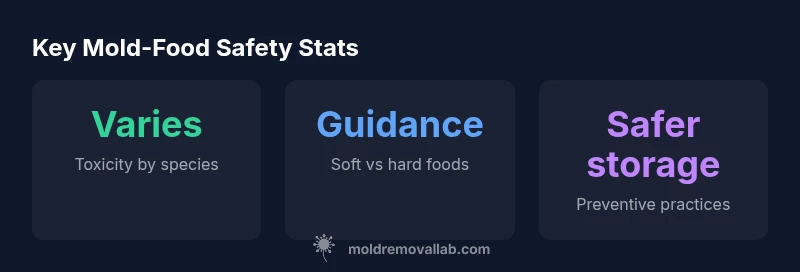
Mold is not a single substance but a diverse group of fungi. Some molds are relatively harmless on certain foods, while others produce mycotoxins that can cause acute illness or long-term health effects. The risk from eating mold depends on species, the extent of growth, and how the toxin distributes through the food matrix. The Mold Removal Lab Team notes that the same mold on cheese may be considered edible in a controlled culinary context, yet the same species on bread or fruit can behave differently once it colonizes; variability means there isn’t a one-size-fits-all rule. People with compromised immune systems, allergies, or asthma are more susceptible to reactions from mold exposure. In practice, the safest approach is to treat any moldy item as potentially unsafe and discard or seek professional guidance when conditions are uncertain. This is why understanding species-level differences matters.
Food type matters: soft foods vs hard foods
Soft foods such as bread, berries, cooked leftovers, yogurt, and sauces readily absorb moisture and mold, allowing toxins and spores to penetrate beyond the surface. On these items, discarding is the recommended course; trimming or salvaging is not reliably safe. Hard foods—such as hard cheeses, firm vegetables, or dense meats—present a different scenario: mold growth often remains on the surface, and if the patch is small and the item dense, some authorities permit trimming a generous margin. However, this is not universal, and any interior mold growth or fuzzy signs indicate risk. Additionally, mold on canned goods can occur if seals fail, so inspect packaging carefully and discard if there’s any doubt. The bottom line: treat soft foods as high-risk; hard foods require careful judgment and sometimes disposal.
Practical steps for handling mold on foods
First, avoid tasting or smelling mold to gauge safety; odors do not reliably indicate toxin presence. If you see mold on a food item, act quickly: place the item in a sealed bag to minimize spore spread, then discard. Wash hands and sanitise surfaces that touched mold-contaminated items. For hard products where trimming is considered, use a clean knife and cut away at least 1 inch (2.5 cm) beyond visible mold, ensuring you discard the removed portion. When mold coverage is extensive, or on dairy, meat, or leftovers, discard the entire item. If unsure, consult local guidelines or a healthcare professional. For mold-free foods, maintain cold storage and regular cleaning routines to prevent recurrence.
Real-world scenarios and decision points
Scenario 1: A wedge of cheddar cheese with a blue mold patch on the surface and no interior holes. If the cheese is hard and intact, you might trim away the mold with a generous margin and keep the rest; if the cheese shows deep penetration or the texture is compromised, discard. Scenario 2: Mold on bread or soft fruit such as strawberries. In such cases, discard to prevent toxin ingestion. Scenario 3: Mold in jam or jelly. Because these foods are porous and can retain moisture, discard the entire jar. For leftovers and casseroles, if any sign of mold appears, the safe move is discard. Follow local guidelines and err on the side of caution, especially for vulnerable individuals.
When to seek professional advice
If you have persistent symptoms after accidentally consuming moldy food—nausea, vomiting, coughing, or throat irritation—or if you suspect environmental mold exposure alongside dietary intake, seek medical help promptly. A healthcare professional can assess symptoms and the need for testing. For mold contamination in your home that might affect food storage, consult a certified mold remediation specialist. When dealing with mold in a commercial kitchen or products for vulnerable populations, regulatory guidelines may require professional assessment. Mold Removal Lab recommends proactive consultation for unclear cases and emphasizes that safer choices come from informed decisions.
Prevention and safer storage practices
Control humidity, store foods properly, and monitor for early spoilage signs. Keep refrigerators at or below 40°F (4°C) and freezers at 0°F (-18°C) to slow growth. Use airtight containers, label leftovers with dates, and rotate stock to minimize spoilage. Avoid storing bread in damp spaces; refrigerate or freeze portions you won’t eat within a few days. Clean spills immediately, sanitize surfaces, and regularly inspect produce. Practicing good hygiene and promptly discarding questionable items helps prevent cross-contamination. Consider immune status and health conditions when planning mold-avoidant strategies, especially in households with children or elderly members.
Quick decision checklist for moldy foods
- Can you clearly identify mold type or edible forms? If uncertain, discard. 2) Is the item soft or porous? If yes, discard. 3) Is it hard and dense with only surface mold? You may trim generously or discard based on your comfort and local guidelines. 4) Was the item stored properly and with a sealed container? If not, discard and sanitize. 5) Are there high-risk individuals in the home? Prioritize discard to reduce exposure.
Guidance table for common mold scenarios on foods
| Situation | Mold Safety Guidance | Notes |
|---|---|---|
| Soft foods (bread, berries) | Discard item entirely | Mold penetrates soft foods quickly |
| Hard cheeses or firm vegetables | Trim mold with margin or discard | Trim if mold is superficial and item is dense |
| Canned foods with mold | Discard if seal compromised | Mold indicates potential contamination; discard |
FAQ
Is all mold on food dangerous to eat?
Not all molds produce toxins or cause illness, but most mold on food is unsafe to eat. Allergic reactions and foodborne illness are possible, so discard moldy items unless you have a clear exception for specific foods.
Most moldy foods should be discarded, especially soft foods. Some cheeses may be exceptions, but avoid risk.
Can I cut away mold and eat the rest?
For hard, dense foods you may remove mold with a generous margin; for soft or porous items, discard the entire item. Cutting mold off does not guarantee safety.
Cutting away mold is generally not recommended for soft foods; err on the side of safety.
What symptoms indicate mold exposure after eating?
Symptoms can include stomach upset, nausea, vomiting, coughing, throat irritation, or allergic reactions. If symptoms occur after consuming moldy food, seek medical advice.
Watch for digestive or respiratory symptoms after mold exposure and consult a clinician if they persist.
Does mold in the kitchen mean all foods are unsafe?
Mold in the kitchen indicates poor storage or contamination risk but does not automatically ruin every item. Inspect and discard questionable items and clean storage areas.
Mold in the kitchen is a signal to inspect containers and storage, not a blanket ban.
Should I throw away takeout with mold?
Yes. Moldy takeout should be discarded, especially if it is soft or has penetrated the food. In some cases, regulatory guidelines may apply.
Discard moldy takeout to be safe; when in doubt, consult guidelines.
“Ingesting mold is not a safe gamble; risk varies by species and the individual, but the safest stance is to avoid moldy foods altogether.”
The Essentials
- Discard moldy food promptly; don’t rely on trimming alone
- Soft foods are high risk; discard completely
- Hard foods may be salvageable if mold is superficial, but verify
- Store foods properly to minimize mold growth
- When in doubt, follow guidelines or seek professional advice