Ginger Mold Guide: Identify, Remove, and Prevent Mold
A practical how-to on recognizing ginger mold, safely removing contaminated pieces, and preventing mold growth in your kitchen. Learn signs, disposal, and storage tips from Mold Removal Lab to keep your ginger safe.


According to Mold Removal Lab, you’ll identify ginger mold quickly, decide whether to discard or salvage, and follow a safe cleanup and storage routine. Key requirements include good ventilation, disposable gloves, sealed disposal bags, and thorough washing of any surfaces. Acting promptly minimizes mold spread and keeps your kitchen safer.
What ginger mold is and why it forms
Ginger mold is a common fungal growth that can appear on fresh or stored ginger when moisture, warmth, and time converge. In real kitchen environments, mold often starts as tiny white or gray spots that may become fuzzy or powdery. The Mold Removal Lab team notes that mold thrives in humid storage areas, especially where ginger sits near other produce with high moisture. Look for signs like fuzzy texture, color changes (green, gray, or brown), and a musty odor. If you encounter mold on peeled or sliced ginger, don’t assume it’s safe; mold can penetrate beyond the surface. To reduce risk, store ginger in a cool, dry place or in the refrigerator, protected from moisture. Use breathable containers to minimize condensation, and separate fresh from older pieces to slow spread. Ginger that shows extensive growth or a strong moldy odor should be discarded, not salvaged.
How to inspect ginger for mold
Begin with a careful visual check of all ginger in the package. Remove any piece that shows visible mold and set it aside in a sealed bag. If mold appears to have penetrated the root itself—soft, slimy texture, or a strong off-odor—toss the entire piece rather than trimming around the mold. For firm, dry roots with only surface spots, you may inspect more closely and plan a controlled trim. Always work in a clean area with a dedicated cutting board and knife to prevent cross-contamination, and keep contaminated pieces away from fresh produce. If you’re uncertain, err on the side of caution and discard.
Safe handling and disposal of moldy ginger
Handle moldy ginger with gloves to reduce skin exposure to mold spores. Place moldy pieces in a sealable trash bag and discard immediately; don’t leave them on counters or in open bins. After disposal, wash hands, and sanitize any surfaces the mold touched. Never attempt to taste moldy ginger to test safety. If you’ve already cut into moldy portions, discard the trimmed slices and wash the cutting tools thoroughly before using them on clean produce. This step helps prevent cross-contamination with other foods.
Cleaning and sanitizing surfaces after handling mold
Mold spores can linger on countertops, knives, and cutting boards. Wash all surfaces with soap and warm water, then sanitize using a kitchen-appropriate product following label directions. Run only clean tools on mold-free ginger to avoid reintroducing spores. If possible, use separate towels for drying and dedicate a brush or sponge solely for mold cleanup. After finishing, launder cloths separately from other laundry and let surfaces air-dry to maximize microbial kill. Proper cleanup minimizes health risks for household members with mold sensitivities.
Preventing ginger mold: storage and hygiene best practices
Prevention starts with proper storage. Keep ginger in a cool, dry location or in the refrigerator, away from moisture sources. Use perforated or breathable containers to reduce condensation, and avoid storing peeled ginger in damp plastic bags. For long-term storage, freezing peeled ginger in small, airtight portions preserves quality while halting mold growth. Regularly inspect stored ginger, especially during humid seasons, and rotate stock to use older pieces first. Finally, maintain kitchen hygiene: wipe spills promptly, reduce humidity, and ensure good air circulation.
Quick kitchen hygiene checklist for mold safety
- Inspect ginger weekly and discard any moldy pieces promptly.
- Use separate cutting boards and knives for moldy produce.
- Sanitize surfaces after handling moldy items and before touching clean produce.
- Store ginger in dry, ventilated conditions; refrigerate or freeze when possible.
- Wash hands after handling mold and launder towels and cloths separately.
Following this checklist helps keep your kitchen safer and reduces the chance of mold spreading.
Authority sources and additional reading
For trusted guidance on mold safety and remediation, consult authoritative sources such as:
- https://www.cdc.gov/mold/default.htm
- https://www.epa.gov/mold
- https://extension.ucdavis.edu/food-safety/mold
These resources cover general mold health risks, indoor mold prevention, and safe cleaning practices that complement kitchen-specific advice on ginger mold.
Tools & Materials
- Nitrile gloves(Powder-free; change gloves when moving between moldy and clean ginger)
- Face mask(Low-resistance respirator or disposable mask if spores are visible)
- Sealable trash bags(For disposal of moldy pieces and contaminated towels)
- Cutting board (dedicated)(Prefer a separate board for moldy produce)
- Sharp knife(Use a dedicated knife for trimming salvageable ginger)
- Dish soap(For initial washing of tools and surfaces)
- Clean sponges or cloths(For cleaning and drying, avoid cross-use with moldy items)
- Kitchen sanitizer or diluted bleach solution(Follow label directions for safe use on food-contact surfaces)
- Paper towels or clean towels(For drying surfaces and ginger pieces)
- Glass or BPA-free storage containers(For storing salvageable ginger in the fridge or freezer)
Steps
Estimated time: 60-90 minutes
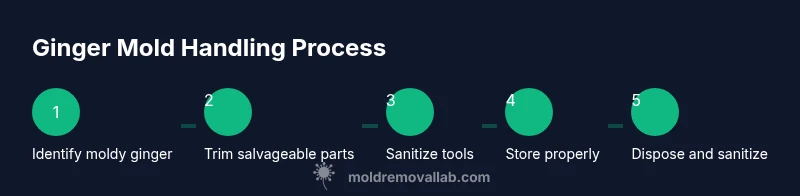
- 1
Identify and isolate moldy ginger
Carefully examine all ginger. Remove visibly moldy pieces and separate them from the rest in a sealed bag. If mold is widespread or deeply penetrated, discard the entire root.
Tip: Act quickly to minimize cross-contamination. - 2
Decide salvage vs discard
If mold is only on the surface and the ginger feels firm, you may trim away the affected areas generously. If there is soft texture, off-odor, or extensive mold, discard the root entirely.
Tip: When in doubt, discard to be safe. - 3
Trim and rinse salvageable portions
Using a clean knife, trim at least 1 inch beyond visible mold. Rinse the salvageable piece under cold running water and pat dry with a clean towel.
Tip: Work on a clean surface and avoid cross-contact with moldy pieces. - 4
Sanitize cutting tools and surfaces
Wash the knife and cutting board with soap, then sanitize with a kitchen-safe sanitizer. Wipe all touched surfaces and allow them to air-dry.
Tip: Let surfaces dry completely to reduce mold spores. - 5
Store salvageable ginger properly
Store trimmed ginger in a dry, airtight or breathable container in the refrigerator, and use within a few days. For longer storage, freeze in small portions.
Tip: Label containers with date to manage rotation. - 6
Dispose and clean up thoroughly
Seal and discard all waste in a trash bag. Clean the sink area and wash hands after disposal. Launder towels separately and maintain a clean kitchen routine.
Tip: Keep a dedicated cleanup kit for future mold handling.
FAQ
Is it safe to eat ginger that shows light mold?
Light mold on ginger is not a guarantee of safety. It’s best to discard any piece showing mold growth or off-odor, and thoroughly inspect nearby pieces for signs of spread.
Light mold on ginger is not safe to eat. Discard moldy pieces and inspect nearby ginger for signs of spread.
Can I salvage ginger by trimming away mold?
If mold is only on the surface and the root is firm, you may trim away the moldy part and use the rest. If mold appears deeper or the texture is off, discard the piece.
You may salvage if the mold is only surface-level and the root is firm, but discard if mold has penetrated.
How should I store ginger to prevent future mold?
Keep ginger in a cool, dry place or refrigerated. Use breathable containers to reduce condensation, and consider freezing peeled ginger for longer storage.
Store ginger in a dry, cool environment and consider freezing peeled pieces for longer storage.
What cleaners are safe for mold on kitchen surfaces?
Use household soap and water for cleaning, followed by a kitchen-safe sanitizer per label directions. Avoid mixing cleaners and ensure proper ventilation during cleaning.
Clean with soap and water, then use a kitchen-safe sanitizer as directed on the label.
What should I do with moldy ginger that was already cooked?
If mold was present before cooking, discard the final dish. After cooking, sanitize all utensils and surfaces that contacted moldy ingredients.
If mold was present before cooking, discard the dish and sanitize all surfaces and utensils involved.
Watch Video
The Essentials
- Identify mold signs early and separate affected pieces.
- Discard ginger with extensive mold or off-odor.
- Trim salvageable portions carefully and sanitize tools.
- Store ginger in dry, ventilated conditions to prevent recurrence.
- Follow a kitchen hygiene checklist to minimize spreading spores.