Bacon Mold Safety: How to Handle Spoiled Bacon at Home
Learn how to identify bacon mold, safely dispose of spoiled bacon, clean affected areas, and prevent future mold growth in your kitchen. Practical, science-based steps from Mold Removal Lab help keep food and surfaces safe.


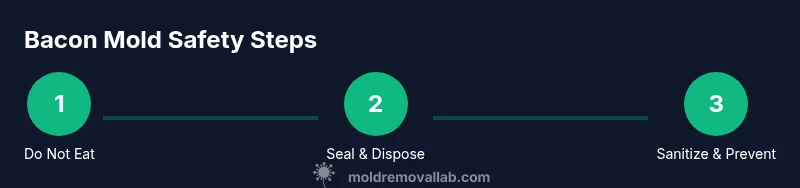
To handle mold on bacon safely, discard the moldy portions, seal the waste securely, sanitize the area, and review storage practices to prevent recurrence. This practical guide from Mold Removal Lab walks you through kitchen-safe steps you can implement today to keep food, surfaces, and your family healthy, in busy kitchens and shared homes.
What bacon mold is and why it forms
Mold is a type of fungus that thrives where moisture and warmth meet organic material. When bacon is stored in damp refrigerators or left unrefrigerated, mold spores present in the environment can settle on its surface and begin to grow. Bacon's high fat and protein content provide rich nutrients that some mold species can exploit, especially if the packaging has been compromised or the meat has thawed and refrozen. This is not just a theory—foods like bacon can become moldy when exposed to air and humidity, turning the surface greenish or fuzzy and releasing a sour, off odor. According to Mold Removal Lab, the safest approach is to treat any mold growth on food as a potential health hazard and err on the side of disposal rather than attempting to salvage the item. In homes, mold can also grow on packaging or in the fridge shelves, creating cross-contamination risks to nearby foods. The key principle is simple: mold on food is a sign that the product is no longer safe to eat, and reducing exposure reduces health risks for you and others in the household.
Health risks and when to discard
Exposure to mold on food can cause allergic reactions and respiratory irritation in sensitive individuals, and some molds produce mycotoxins that pose greater health concerns if ingested in sufficient quantity. Not all molds produce toxins, but you cannot reliably identify the risk just by color or texture. The safest choice is to discard any bacon with visible mold growth or unusual odor, slimy texture, or color change. The goal is to avoid ingestion and inhalation of mold spores and fragmented hyphae that can become airborne when you handle contaminated food or clean up. For households with young children, older adults, or people with compromised immune systems, the margin for error is smaller, so prompt disposal and thorough cleanup are especially important. If you’re unsure whether the bacon is still safe, opt to discard and replace with fresh, properly stored meat. Mold Removal Lab’s guidance emphasizes practical safety: never taste test moldy food and always wash hands after handling suspect items.
How to assess if bacon is moldy (visual cues and smell)
Mold on bacon often appears as fuzzy patches in green, blue, or white shades, sometimes with dark specks or slimy surfaces. The presence of a sour or rancid odor is another red flag. Visual checks should include the area around the edges of the package and nearby foods, since mold spores can travel through the air when the package is opened. If the bacon shows any sign of mold, do not cut away the moldy portion and try to salvage the rest; mold can penetrate below the surface of soft foods. If you only see odd discoloration without distinct mold, err on the side of caution. Always rely on your senses and discard if in doubt. For added guidance, consult official food safety resources from government health agencies such as the CDC and EPA, which provide general principles for mold safety but not specifics for every food product.
Safe disposal steps for moldy bacon
To minimize exposure, put on disposable gloves before handling the moldy product. Place the bacon and any contaminated packaging into a sealed plastic bag, double-bag if possible, and seal the outer bag tightly. Immediately place the bag in an exterior trash bin to prevent spores from circulating inside the house. Do not leave moldy bacon on counters or inside open trash cans. After disposal, wash your hands with soap and warm water for at least 20 seconds and sanitize any surfaces the bacon touched. If the fridge shelves or drawers were contaminated, remove them if feasible and clean with hot, soapy water, followed by a food-safe sanitizer. Allow all surfaces to dry completely before returning food to the fridge.
Cleaning and sanitizing surfaces after dealing with moldy bacon
Mold spores can settle on countertops, shelves, and drawers, so thorough cleaning is essential. Start with a simple detergent wash to remove visible residues, then apply a sanitizing solution recommended for food-contact surfaces. Rinse and dry the area, and re-check nearby foods for signs of cross-contamination. If you use cloths or towels to wipe surfaces, launder them on a hot cycle or discard after a single use. Ventilate the space to reduce lingering odors, and consider using an air purifier with a HEPA filter in kitchens prone to moisture. For ongoing mold prevention, keep humidity low and ensure proper airflow in the refrigerator and pantry.
Prevention: storage best practices to minimize bacon mold
Preventing bacon mold starts before you buy or open it. Store bacon in its original packaging or vacuum-seal portions to limit air exposure, and keep the refrigerator at a steady cool temperature (below 40°F/4°C) to slow mold growth. Use a clean, dry plate or container for opened bacon and keep it tightly sealed. Date leftovers and consume them promptly; never store bacon in damp areas or in the door bin where temperatures fluctuate. Regular fridge checks, prompt cleaning of spills, and maintaining good overall kitchen hygiene reduce the likelihood of mold growth in foods. If mold is a recurring issue in your kitchen, consider alternating storage zones to prevent cross-contamination.
Quick reference: signs of spoilage vs mold growth
- Spoilage signs include sour smell and slimy texture across meats generally, not unique to mold.
- Visible mold on any food item requires discard; do not attempt to cut away mold and salvage the rest.
- When in doubt, rely on official guidance from health agencies and err on the side of safety.
The goal of these steps is to reduce exposure and keep your family safe. The Mold Removal Lab team recommends keeping a clean fridge, practicing good labeling, and disposing of questionable items promptly to minimize mold risks in kitchens.
Tools & Materials
- Disposable nitrile gloves(Use to avoid direct contact with moldy bacon.)
- Sealable plastic bags (heavy-duty)(Double-bag mold waste to prevent leaks.)
- Exterior trash can with lid(Place sealed bags outside to prevent indoor spores.)
- Paper towels or disposable wipes(Clean surfaces without spreading spores.)
- Dish soap or mild detergent(Initial clean on affected surfaces.)
- Food-safe sanitizer or bleach-based sanitizer(Sanitize surfaces after cleaning.)
- Cloths designated for mold cleanup(Use new or washed on hot cycle; avoid cross-use with other areas.)
Steps
Estimated time: 20-40 minutes
- 1
Do not eat moldy bacon
Mold on meat can produce toxins; never taste or rely on appearance alone to judge safety. If you see mold, segregate the item immediately and prepare to discard.
Tip: Handle with gloves to minimize exposure and wash hands afterward. - 2
Contain and seal the moldy package
Seal the moldy bacon and any contaminated packaging in a plastic bag to prevent spores from spreading. Double-bag if possible and seal tightly.
Tip: Do not open the bag near food; keep it away from ready-to-eat items. - 3
Dispose of moldy bacon outdoors
Place the sealed bag in an exterior trash can promptly to prevent indoor contamination. Do not leave moldy food in the kitchen trash overnight.
Tip: Wash your hands after disposal and avoid touching your face. - 4
Clean and sanitize the area
Wash affected surfaces with hot, soapy water, then apply a food-safe sanitizer. Rinse, dry, and ensure good airflow to prevent residual moisture.
Tip: Ventilate the area to disperse any remaining spores. - 5
Inspect nearby foods
Check adjacent shelves and foods for signs of spoilage or odors. Discard any questionable items to prevent cross-contamination.
Tip: When in doubt, discard rather than risk exposure. - 6
Prevent future mold growth
Keep fridge temperature consistently cool, store bacon in sealed packaging, and avoid leaving opened meat exposed to air for extended periods.
Tip: Label storage dates and rotate stock to reduce moisture accumulation.
FAQ
Can you eat bacon if you see mold on it?
No. Mold on bacon should be discarded; tasting or cutting away the mold does not guarantee safety and can be risky.
No—discard moldy bacon and avoid tasting to check safety.
Is all mold on bacon dangerous?
Molds vary in risk; some can produce toxins. Because you cannot judge safety by appearance, discard moldy bacon and sanitize the area.
Mold on bacon can be hazardous, so discard and clean the area.
If one slice shows mold, should I discard the whole package?
Yes. Mold can spread invisibly beyond what you can see, especially in soft foods like bacon. It’s safest to discard the entire package.
If you see mold, discard the whole package to stay safe.
How can I prevent bacon mold in the future?
Store bacon properly, keep the fridge cold, seal opened portions, and practice clean handling to minimize moisture and airflow that encourage mold growth.
Keep it sealed, cold, and clean to prevent mold from returning.
Can I sanitize surfaces and salvage other foods near moldy bacon?
Yes, clean and disinfect nearby surfaces thoroughly to reduce cross-contamination. Inspect nearby foods and discard anything questionable.
Clean the area well so nearby foods stay safe.
Should I call a professional if mold recurs in the kitchen?
If mold keeps returning despite your best efforts, consult a food-safety or environmental health professional for assessment and guidance.
If mold keeps coming back, consider professional help.
Watch Video
The Essentials
- Discard moldy bacon promptly
- Seal waste to prevent spore spread
- Sanitize all touched surfaces thoroughly
- Store bacon properly to prevent future mold