Allergies to Mold: A Practical Remediation Guide
Practical steps to manage allergies to mold at home: moisture control, safe cleaning, when to hire pros, and tips to reduce exposure for families and renters.


Allergies to mold occur when mold spores trigger immune responses, causing symptoms like sneezing, runny nose, and itchy eyes. The fastest way to reduce symptoms is to control moisture, clean visible mold safely, and improve air quality with filtration and ventilation. Start with a moisture audit and a simple cleaning plan before moving to professional remediation.
Understanding mold allergies
Allergies to mold are immune-driven reactions to mold spores and fragments found in damp indoor environments. When spores are inhaled, the immune system may overreact, producing nasal congestion, sneezing, itchy eyes, and coughing. In some people, mold exposure can worsen asthma symptoms or trigger skin reactions. According to Mold Removal Lab, these allergies are a common indoor health concern tied to moisture and hidden mold growth. Diagnosis comes from a clinician, but effective management starts with reducing exposure and controlling the moisture that feeds mold. The goal is not to eliminate every trace of mold—an impossible task in most homes—but to minimize concentrations to tolerable levels and prevent re-growth.
Symptoms vary by person and can mimic other conditions, which is why a professional assessment may be needed if symptoms persist despite modest cleaning. People with chronic respiratory conditions, children, older adults, and individuals with compromised immune systems are especially susceptible to mold-related allergies and should take extra precautions. While education and avoidance help, environmental control—keeping surfaces dry, ventilating damp rooms, and repairing leaks—has the strongest impact on reducing allergic reactions over the long term.
The Mold Removal Lab team emphasizes that early action matters. Small moisture problems often lead to larger mold issues if ignored, creating a feedback loop that sustains allergy symptoms. If you notice musty odors, damp walls, or staining after rain, treat the area as a potential mold hotspot and begin moisture control measures promptly.
Common symptoms and triggers
- Nasal congestion, sneezing, and itchy, watery eyes after exposure to mold in the home.
- Cough or wheeze, particularly in people with asthma or chronic rhinosinusitis.
- Skin irritation or rashes in sensitive individuals who touch moldy surfaces.
- Worsened allergy symptoms during humid months or after water leaks.
Recognizing the pattern of symptoms and their association with moisture helps distinguish mold allergies from other irritants. If symptoms occur mainly in certain rooms or after activities that raise humidity (showering, cooking, laundry indoors), mold exposure is a plausible cause.
Why mold allergies matter in everyday life
Mold allergens are microscopic, but they can travel and settle in HVAC systems, carpets, and upholstery. For renters and homeowners alike, exposure can occur even when no visible mold is present. Managing mold-safe environments improves comfort, reduces indoor irritants, and supports overall health. While there is no substitute for medical advice, environmental control provides a practical foundation for symptom relief and safer living spaces.
note”:null},
blockData-placeholder
Tools & Materials
- N95 respirator(Choose one with a proper seal; fit tested if possible)
- Protective goggles(Non-vented safety goggles recommended)
- Nitrile gloves(Chemical-resistant and disposable for contaminated cleanup)
- Plastic sheeting (6 mil or thicker)(To seal off the work area and prevent spore spread)
- Tape (painter’s or duct tape)(Seal seams around plastic sheeting; creates containment)
- Detergent or mild cleaner(Non-ammonia, non-acid cleaner for initial removal of mold)
- Trash bags (heavy-duty)(For disposing of contaminated materials; double-bag when possible)
- HEPA vacuum (optional)(Useful for final cleanup if available)
- Moisture meter or hygrometer (optional)(To monitor drying progress and humidity levels)
Steps
Estimated time: 4-6 hours for initial cleaning and drying; larger areas may take longer
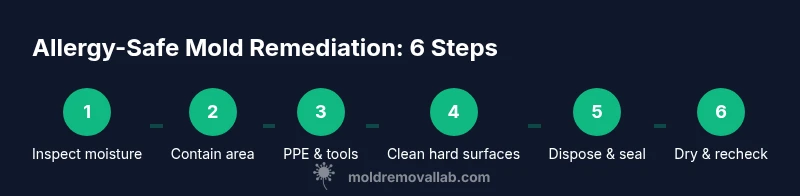
- 1
Inspect moisture sources
Walk through the home to identify leaks, condensation, and poor ventilation. Document findings with photos and note areas that stay damp after cleaning. Understanding the moisture puzzle helps target remediation and reduces repeated mold exposure.
Tip: Take before-and-after photos to track progress and verify problem areas. - 2
Contain the area
Close off the affected space with heavy-duty plastic sheeting, creating a barrier to prevent spores from migrating to other rooms. Seal with tape at all seams and openings; keep doors closed during cleaning.
Tip: Set up a simple negative-pressure feel by keeping the area isolated if possible. - 3
Prepare PPE and tools
Put on an N95 mask, protective eyewear, and gloves before handling mold. Gather cleaners, scrub brushes, and bags; arrange containment materials so you won’t need to re-enter the contaminated space repeatedly.
Tip: Avoid touching your face; keep tools dedicated to the contaminated area. - 4
Clean mold from hard surfaces
Use a detergent solution and scrub nonporous surfaces to remove visible mold. Rinse with clean water, and dry promptly; never rely on bleach as the sole solution for porous materials.
Tip: Use back-and-forth scrubbing motions to lift spores rather than spreading them. - 5
Dispose of porous materials
If materials are porous and visibly moldy (e.g., drywall, insulation) remove and seal in bags before disposal. Do not try to salvage severely contaminated items.
Tip: Label bags clearly and transport them carefully to avoid spreading spores. - 6
Dry and monitor the area
Use a dehumidifier and fans to thoroughly dry the space. Continue monitoring humidity and check for regrowth over 24–48 hours; re-clean if necessary.
Tip: Aim for complete dryness; dampness often leads to regrowth even after initial cleanup.
FAQ
What is the difference between mold allergy and mold exposure?
A mold allergy involves an immune reaction to mold spores, causing symptoms like sneezing and itchy eyes. Mold exposure may irritate the airways without triggering an allergic response. In persistent cases, medical evaluation is advised.
Mold allergies involve an immune reaction to spores, while exposure can irritate airways. If symptoms persist, seek medical advice.
Can allergies to mold develop even if there is no visible mold?
Yes. Mold spores can be hidden behind walls or in HVAC systems and still trigger allergic reactions. A moisture problem must be addressed even if you cannot see mold.
You can have mold allergies even with no visible mold; hidden moisture is the culprit.
What are common symptoms of mold allergies?
Seasonal or persistent cold-like symptoms such as sneezing, congestion, itchy eyes, and coughing can indicate mold allergy, especially after moisture events.
Sneezing, stuffy or runny nose, and itchy eyes are common mold allergy signs.
Is bleach recommended for mold cleanup?
Bleach is not always the best option and can damage some surfaces and release fumes. Use detergent and water on nonporous areas; avoid applying bleach to porous materials.
Bleach isn’t always ideal; use detergent and water for most surface mold cleanup, and be careful with fumes.
How can I prevent mold growth in a rental home?
Report leaks promptly, use exhaust fans, keep humidity controls in check, and request remediation from the landlord for persistent mold sources.
Report leaks quickly, use ventilation, and ask the landlord for remediation when needed.
When should I see a doctor about mold allergy symptoms?
If symptoms persist despite cleaning and moisture control, or if you have asthma or a weakened immune system, seek medical evaluation for potential treatments or allergy testing.
See a doctor if symptoms don’t improve after you manage moisture and clean, especially with asthma or immune issues.
The Essentials
- Identify moisture sources and fix leaks first
- Contain the area to prevent spores from spreading
- Use proper PPE and safe cleaning methods
- Dry thoroughly and re-check to prevent regrowth