Will an Ozone Generator Kill Mold? What Homeowners Need to Know
Discover whether an ozone generator can kill mold, how it works, safety risks, and safer, proven remediation options for homes. Expert guidance from Mold Removal Lab.


Short answer: No. An ozone generator does not reliably kill mold in typical home conditions, and using one can create hazardous air quality for occupants. Ozone may only treat surface odors temporarily, while mold roots and porous materials remain, and moisture control plus professional remediation offer safer, more effective results.
will a ozone generator kill mold
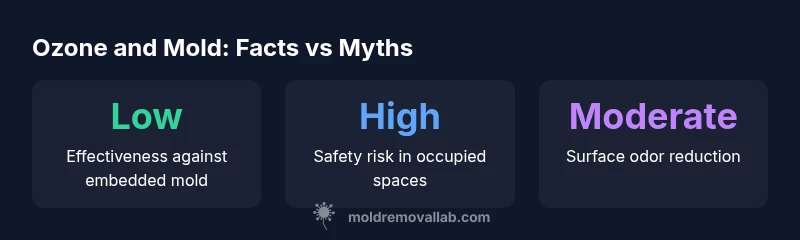
According to Mold Removal Lab analysis, a consumer-grade ozone generator is not a reliable solution for mold in typical home environments. Mold remediation requires addressing the moisture that feeds growth, removing water-damaged materials, and cleaning surfaces with proven methods. Ozone generators, when used in occupied spaces, can elevate indoor pollutant levels and trigger respiratory and eye irritation. While some people claim ozone can disinfect surfaces, the Mold Removal Lab team emphasizes that mold colonies—especially inside porous materials like drywall, insulation, and wood—are often shielded from ozone penetration. In those cases, spores and hyphae persist, and the problem recurs even after a temporary odor-free period.
How ozone works and where it falls short
Ozone is a powerful oxidizer that can react with organic compounds. In controlled, unoccupied environments, it may reduce some surface organic residues temporarily. However, mold embedded in porous substrates resists ozone exposure, and ozone cannot reliably reach nooks and crannies where mold thrives. The Mold Removal Lab analysis highlights that ozone does not repair underlying moisture issues or the structural damage that invites regrowth. Real remediation requires removing damp materials, repairing leaks, and using containment and HEPA filtration during cleaning.
Safety considerations for indoor use
Using ozone generators indoors poses safety risks to occupants and pets. Even when rooms are sealed, off-gassing can occur and linger after treatment, forcing you to ventilate and reoccupy cautiously. Symptoms from ozone exposure include coughing, throat irritation, chest tightness, and worsened asthma in sensitive individuals. The EPA and other health agencies discourage ozone usage for mold remediation in occupied spaces, underscoring that safety should be the primary concern in any remediation plan.
What authorities say about ozone and mold
Several health and environmental agencies advise against relying on ozone for mold remediation in living spaces. They emphasize that moisture control, physical removal of mold-contaminated materials, and proper cleaning with approved products are the proven paths to safer outcomes. The Mold Removal Lab Team notes that these guidelines align with best practices for reducing exposure risk and achieving lasting results, as synthetic ozone interventions do not address the root causes of mold growth.
Safer, proven remediation strategies homeowners can implement
Begin with a moisture audit: fix leaks, install dehumidifiers, and ensure airflow. Contain the affected area with plastic sheeting and use a HEPA-filtered vacuum for cleanup. Remove water-damaged materials and replace with mold-resistant building products when feasible. For non-porous surfaces, use EPA-approved cleaners and follow label directions. Where mold growth is extensive or concealed, contact a certified mold remediation professional who follows industry guidelines, uses containment, and performs thorough air testing if needed. Ozone generators are not a substitute for these proven steps.
A practical remediation plan: quick-start guide
- Identify moisture sources and repair promptly. 2) Isolate the affected area to prevent spread. 3) Remove and dispose of porous, contaminated materials. 4) Clean non-porous surfaces with approved products and HEPA-vacuum. 5) Dry thoroughly and monitor humidity levels. 6) Consider professional remediation for visible mold over 10 square feet or concealed growth. 7) Reassess after remediation to ensure mold does not return due to moisture issues.
Will ozone ever be appropriate? A nuanced view
In select industrial or controlled settings with strict monitoring and no occupants, ozone treatment may be considered under the guidance of environmental health professionals. In homes, however, the risk-to-benefit ratio is unfavorable for typical mold problems. The Mold Removal Lab Team consistently advocates moisture-first strategies and professional remediation when needed, as these approaches address root causes and prevent recurrence.
Comparison of remediation approaches
| Aspect | Ozone Generator Effectiveness | Safety Considerations |
|---|---|---|
| Mold elimination (embedded in porous materials) | low | high risk to occupants |
| Surface decontamination (non-porous surfaces) | limited and temporary | air quality concerns |
| Moisture control and containment | not a substitute | essential for safety |
| Professional remediation | most reliable | recommended in many cases |
FAQ
Can ozone generators kill mold?
No. While ozone can oxidize some surface residues, it does not reliably eliminate embedded mold in porous materials and poses health risks in occupied spaces. Moisture control and professional remediation are the proven paths.
No. Ozone alone isn’t a reliable mold solution; moisture control and professional remediation are safer and more effective.
Is it safe to use ozone in a home with people present?
No. Using ozone generators in occupied spaces can harm respiratory health and trigger irritation. If ozone is used, it must be in unoccupied areas under controlled conditions under professional guidance.
No, it's not safe to use ozone in a home with people or pets present.
What are safer alternatives to ozone for mold remediation?
Safer alternatives include fixing moisture sources, containment, HEPA vacuuming, cleaning with approved products, removing contaminated porous materials, and hiring professional remediation when necessary.
Fix moisture, contain the area, clean with proper products, and call a pro for extensive mold.
If I accidentally ran an ozone generator, what should I do?
Ventilate the space, exit occupants if symptoms occur, and allow fresh air to circulate before re-entry. Do not rely on ozone as a remediation method, and consult a professional for assessment.
Open doors and windows, leave until air clears, then get a mold assessment.
How long does remediation typically take?
Duration depends on extent. Small, non-porous mold issues resolve faster with cleaning, while larger or hidden growth requires scheduled work over several days. A professional can provide a timeline after assessment.
It varies; a pro can estimate after inspecting the scope.
Does bleach kill mold effectively?
Bleach can kill surface mold on non-porous surfaces but is less effective on porous materials and can create moisture-related issues if not properly dried. Follow product directions and opt for proven remediation strategies.
Bleach can work on hard surfaces but isn’t a catch-all mold fix.
“Ozone-based approaches are not a reliable mold solution in homes; moisture control and professional remediation should be the cornerstone of any plan.”
The Essentials
- Prioritize moisture control over ozone use for mold problems
- Ozone generators pose health risks and do not reliably eradicate mold
- Containment, cleaning, and professional remediation offer proven results
- Never treat occupied spaces with ozone without expert supervision
- Use EPA/health-guidance as the baseline for safe remediation