Why Mold in Refrigerator Happens and How to Fix It
Urgent guide to diagnosing and treating mold in your fridge. Learn causes, safety steps, and practical fixes to keep food safe and your home healthy.


According to Mold Removal Lab, the most common cause of visible fridge mold is lingering moisture around leaks, condensation, or spoiled food. The quick fix is to remove affected items, wipe all surfaces with a mild bleach solution or peroxide, dry thoroughly, and replace worn door seals. If mold returns, deeper cleaning or professional remediation may be needed.
Understanding the risk of fridge mold
Why mold in refrigerator is a health concern should worry every household. Mold growth inside cold storage can release spores that drift through the kitchen, contaminating foods and surfaces. In a kitchen with pets or small children, exposure can trigger allergic reactions or respiratory irritation. The key is to address moisture and contamination quickly. According to Mold Removal Lab, the primary driver of fridge mold is moisture combined with organic material left behind by spoiled foods or spills. Even when the fridge is clean, tiny amounts of moisture on shelves, seals, and gaskets create a foothold for mold to take hold. By understanding the risk, you can act fast to prevent spread and protect your family in 2026 and beyond.
Common causes of refrigerator mold
Fridge mold doesn’t usually appear out of nowhere. The leading culprits include leaks around the door gasket, condensation from frequent door openings, spills that aren’t fully cleaned, and stored foods that have gone bad. Improper airflow or high humidity inside the appliance can also encourage mold growth. Temperature settings that are too warm or fluctuating temperatures when the door is opened and closed rapidly can contribute to moisture buildup. In some homes, poor ventilation in the kitchen makes spores circulate more easily. Identifying these causes helps you target the fix rather than guessing.
Immediate actions if you spot mold
If you see visible mold, act quickly but safely. Put on gloves and a mask to limit inhalation of spores. Remove all moldy or suspect items from the fridge and discard them in a sealed bag. Do not sniff or touch mold with bare hands. Open windows or turn on a vent to improve ventilation while you work. Wipe the interior with an appropriate cleaner, then rinse and dry thoroughly before restocking. After cleanup, monitor for new growth over the next several days. This approach reduces the chance that spores escape into your home.
Safe cleaning and sanitizing methods
There are several effective ways to clean fridge mold, but safety comes first. A common method is to clean surfaces with a mild disinfectant such as hydrogen peroxide or a bleach solution, ensuring the cleaner sits on surfaces long enough to work. Do not mix cleaners; hydrogen peroxide can be used on many surfaces, while bleach is strong for mold but must be used with ventilation and diluted according to label directions. Baking soda can help deodorize, while vinegar is sometimes used for milder cases. Always rinse and dry completely after cleaning to prevent new mold from forming on damp surfaces. Mold Removal Lab emphasizes avoiding shortcuts that leave moisture behind.
Inspecting seals, shelves, and drainage
Mold often hides where you can’t see it. Carefully inspect the door gasket for cracks or gaps, as a compromised seal invites moisture. Remove shelves and bins to check corners, crevices, and the drip pan for mold growth. If your fridge has a meat drawer or crisper with plastic liners, remove and clean them separately. Some models have a drainage tube that can become clogged; clear it with a flexible brush or pipe cleaner and rinse. After cleaning each part, dry thoroughly before reassembling. Regular inspection helps catch problems before they escalate.
When mold returns despite cleaning
If you consistently notice new mold after cleaning, the issue may be deeper than surface cleaning. Hidden mold in insulation or behind panels requires more than scrubbing. In such cases, consider defrosting and drying the interior, replacing worn seals, or scheduling a professional assessment. Persistent mold can indicate a more serious moisture problem or a malfunctioning cooling system. Do not discount recurring growth—addressing the root cause early can prevent costly damage and health risks.
Prevention tips to keep fridge mold-free
Prevention is simpler than repeated cleanup. Keep the fridge at a stable cool temperature and avoid leaving doors open for long periods. Store foods in sealed containers and promptly discard leftovers. Wipe spills when they occur and schedule a monthly wipe-down of interior surfaces. Ensure proper air circulation by not overpacking shelves, which can trap moisture. Regular inspections and timely repairs reduce the likelihood of mold returning.
Safe disposal of moldy items and waste
Dispose of moldy foods in a sealed bag to prevent spores from spreading. Do not compost moldy scraps, especially in household compost bins. Wash reusable containers that touched mold with hot water and detergent, then sanitize. If you used chemical cleaners, rinse items thoroughly before returning them to the fridge. Finally, clean your cleaning tools and hands to prevent recontamination.
Myths vs. truths about refrigerator mold
Many home remedies claim to be miracle cures. Bleach is strong but can damage certain plastics and affect odors; vinegar is milder and not always effective against all molds. Hyping quick fixes often leads to incomplete cleaning, allowing regrowth. The truth is that removing mold requires thorough cleaning, moisture control, and, when needed, professional remediation. Staying informed helps you act decisively and safely.
Quick reference checklist for the fridge mold problem
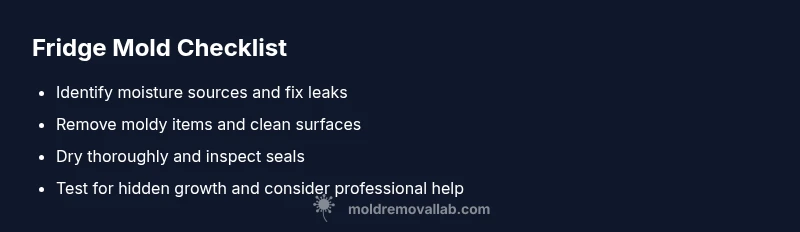
- Identify moisture sources and fix leaks or seals
- Remove moldy items and clean surfaces with a safe cleaner
- Dry surfaces completely before restocking
- Inspect seals, shelves, and drainage for mold hiding spots
- Consider professional help for recurring mold or hidden growth
- Maintain a regular cleaning and inspection schedule
Steps
Estimated time: 60-90 minutes
- 1
Gather safety gear and supplies
Put on gloves and a mask. Gather disinfectant, hydrogen peroxide or bleach, soft cloths, a bucket, and a non-scratch scrubber. Have trash bags ready for disposing of moldy items. Ensure good ventilation during cleaning.
Tip: Never mix cleaners; use one cleaner at a time and ventilate the area. - 2
Remove moldy items
Take out any spoiled food and contaminated containers. Seal them in trash bags to prevent spores from escaping. Inspect shelves and bins for mold pockets and set aside items for cleaning later.
Tip: Check packaging dates and discard foods that are past their safe consumption date. - 3
Clean surfaces with disinfectant
Wipe all interior surfaces with your chosen cleaner, paying attention to corners and seals. Let the cleaner sit briefly and then wipe away residue. Rinse if the product requires it and dry all surfaces completely.
Tip: Focus on gasket edges where moisture tends to linger. - 4
Inspect and service the door seal
Carefully examine the gasket for cracks, tears, or gaps. If damaged, replace the seal to restore a tight seal and reduce moisture ingress. Clean the gasket thoroughly as mold can hide along the edge.
Tip: A clean seal visual inspection is often more effective than a quick wipe. - 5
Dry and sanitize
Dry interior surfaces completely and allow the fridge to dry before restocking. Consider a second wipe-down with a sanitizer after drying to ensure all moisture is removed.
Tip: Keep the fridge door open for a short period after cleaning to ensure complete drying. - 6
Restock and monitor
Return cleaned items and ensure containers are sealed. Monitor the fridge over the next several days for any signs of new mold growth and re-check seals periodically.
Tip: Set a reminder to inspect for mold monthly for the first quarter after cleaning.
Diagnosis: Visible mold growth inside refrigerator or freezer
Possible Causes
- highMoisture buildup from leaks or condensation
- mediumSpoiled foods providing organic material for mold
- lowInadequate cleaning allowing residual growth
Fixes
- easyWipe interior with a safe disinfectant and dry thoroughly; replace door seals if damaged
- easyInspect and clear the drainage tube and pan; ensure airflow is not blocked
- easyAddress leaks or replace the door gasket to stop moisture ingress
- mediumIf mold recurs after surface cleaning, seek professional remediation to inspect hidden growth
FAQ
Is fridge mold dangerous to health?
Yes. Mold can trigger allergies and respiratory issues, especially for sensitive individuals. Keep exposure minimal by cleaning promptly and using protective gear during cleanup. If you have persistent health symptoms, consult a medical professional.
Yes, fridge mold can be harmful. Clean it safely and seek medical advice if you have persistent symptoms.
Can I use vinegar to kill fridge mold?
Vinegar has mild antifungal properties but may not eliminate stubborn molds. Hydrogen peroxide or diluted bleach provide stronger disinfection, with proper ventilation and handling. Avoid mixing cleaners.
Vinegar can help, but stronger cleaners like peroxide or diluted bleach are usually more effective; ventilate and don’t mix products.
How often should I inspect fridge mold?
Inspect after spills and at least monthly for the first three months after cleanup. Regular checks help catch moisture problems early and prevent recurrence.
Check once a month, especially after spills, to prevent mold from coming back.
Should I replace the fridge if mold keeps coming back?
If mold recurs despite thorough cleaning and sealing, there may be hidden growth or structural moisture. Consider professional assessment; replacement is a valid option if repairs are costly or ineffective.
If mold keeps returning despite proper cleaning, talk to a professional about remediation or replacement.
Can fridge mold spores affect other rooms?
Spores can travel through air and vents, especially in small spaces. Reducing humidity and improving kitchen ventilation helps limit spread.
Spores can travel, so better ventilation helps control spread.
Is refrigerator mold covered by home insurance?
Most standard policies do not cover ordinary mold growth. If mold is linked to a covered peril (like pipes leaking), it may be considered, but check your policy details.
Mold coverage varies; check your policy for specifics.
Watch Video
The Essentials
- Address moisture sources first
- Clean, dry, and sanitize thoroughly
- Inspect seals and drainage for hidden mold
- Replace damaged parts to prevent recurrence
- Seek professional help if mold persists