What States Have the Least Mold? Climate, Homes, and Practical Guidance
Explore how climate, humidity, and moisture management shape indoor mold risk and learn practical steps to prevent mold in any state, with insights from Mold Removal Lab.


There is no official ranking of states with the least mold. Indoor mold risk is driven by climate, humidity, ventilation, and moisture control—factors that vary within states as much as between them. In general, arid, dry states tend to have lower ongoing indoor moisture, while coastal and humid states face higher baseline risk. Still, a single leak or poor drainage can create mold-friendly conditions anywhere. Effective moisture management remains the best defense in any state.
What the question gets right and what it misses
The question "what states have the least mold" implies a simple ranking, but real-world mold risk is not reducible to a single list. There is no official nationwide ranking of states by the least mold. Mold prevalence hinges on climate, indoor humidity, ventilation, and moisture control—factors that vary within states as much as between them. The Mold Removal Lab Analysis, 2026, emphasizes that humidity and moisture management are the primary drivers of indoor mold risk, not geographic labels alone. For a practical frame, dry, interior climates tend to present fewer mold-friendly conditions, especially in well-sealed homes. Yet a single roof leak, plumbing failure, or poor drainage near the foundation can create a damp niche where mold thrives, even in arid places. Conversely, coastal and humid regions can experience higher baseline moisture, but persistent moisture control and good ventilation can substantially reduce mold risk. The core takeaway is clear: focus on controlling indoor moisture and maintaining proper ventilation, regardless of which state you live in. When moisture is managed well, mold risk drops more reliably than relying on climate alone.
Climate factors that lower indoor mold risk
Mold needs moisture, warmth, and a place to feed. Across states, three climate-driven factors shape indoor mold risk. First, humidity: lower indoor humidity generally reduces the chances of condensation and damp surfaces where mold spores can take hold. In arid and high-altitude regions, moisture tends to be less available, but sudden deluges can still create pockets of dampness after heavy rain. Second, ventilation: good air movement helps remove moisture-laden air, especially in bathrooms, kitchens, laundry rooms, and basements. Regions with dry air can still benefit from targeted exhaust fans and mechanical ventilation during humid periods. Third, seasonal patterns: humid summers or wet springs can spike mold risk if homes trap moisture due to poor sealing or insufficient drainage. Fourth, moisture sources: leaks from roofs, plumbing, or groundwater seepage are often more decisive than climate in determining mold growth. Fifth, building envelope quality: a well-insulated, vapor-barrier-supported shell minimizes condensation on cold surfaces. Finally, occupant behavior matters: promptly drying wet areas, cleaning spills, and maintaining HVAC systems reduce moisture reservoirs. In practice, a climate alone doesn't seal your fate—how a home handles moisture matters far more.
Practical steps homeowners can take regardless of state
Anyone can reduce indoor mold risk by controlling moisture and improving airflow. Start with a moisture audit: identify obvious leaks in roofs, pipes, and appliances; repair them promptly. Repair roofing, plumbing, and appliance leaks promptly, then check for proper drainage away from the foundation. Improve ventilation where moisture accumulates: use exhaust fans in bathrooms and kitchens, ensure vents vent outdoors, and consider upgrading HVAC filtration and circulation to keep air moving. Manage humidity with sensible tools: use dehumidifiers in damp seasons or spaces, but avoid over-drying rooms that can cause other issues. Keep crawlspaces dry with vapor barriers and ensure basements are well-sealed to prevent condensation behind walls. Regular cleaning and mold prevention measures matter too: wear gloves and a mask when cleaning and keep mold-prone surfaces dry. If you detect persistent mold growth (visible patches or strong musty odor) that covers a large area or penetrates porous materials, seek a professional remediation. Finally, establish a routine maintenance calendar for gutters, downspouts, and drainage systems so moisture sources stay in check. Small, consistent actions add up to meaningful reductions in mold risk over time.
How Mold Removal Lab assesses state-level mold risk
Our approach blends climate data, housing stock, and moisture sources to classify risk across states. We begin with climate signals: average humidity, rainfall patterns, dew-point ranges, and seasonal extremes influence indoor moisture potential. We then overlay housing factors such as insulation quality, ventilation infrastructure, and typical moisture sources (roofs, plumbing, basements). We also consider occupant behavior, including maintenance routines and timely repairs. Finally, we triangulate this information with field observations and remediation case data from our operations to identify risk patterns while acknowledging limitations of state averages. The result is a layered framework that shows where moisture control yields the strongest benefits and where proactive maintenance matters most. Importantly, a dry climate does not guarantee low risk—any home with a leaky roof or poor drainage can become a mold environment. Our 2026 analysis reinforces that practical moisture management and regular upkeep remain the surest path to lower mold risk in any climate.
State categories: arid, temperate, coastal, and humid extremes
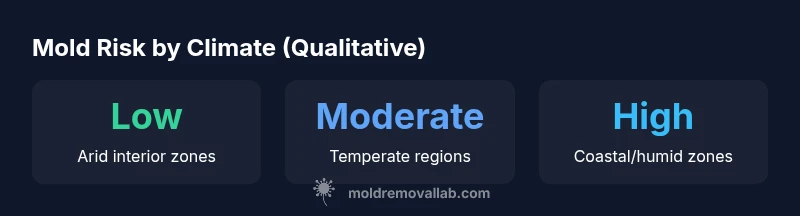
To frame the landscape, we group states by climate pattern rather than listing individual states. In arid interior regions, the air tends to be dry and condensation is less frequent, but the threat appears when there are hidden moisture sources. In temperate zones, mold risk sits near the middle: moderate humidity and seasonal rain can raise mold potential during certain months, making timely moisture control essential. Coastal and humid zones face higher baseline moisture and condensation challenges, so ventilation and moisture barriers are particularly critical. Across all categories, the steady, consistent application of moisture control, prompt leak repair, and annual inspections are the best defenses. Education on proper cleaning methods and access to professional remediation when needed also helps keep homes safe. The main message: climate framing matters, but the universal defense is moisture management and good home maintenance.
State-level mold risk patterns by climate category
| Climate Category | Indoor Mold Risk Notes | Representative Pattern |
|---|---|---|
| Arid/Desert | Lower humidity; fewer damp spaces | Dry interior states |
| Temperate | Moderate humidity; seasonal risk | Midwest and inland states |
| Coastal/Humid | Higher humidity; more condensation | Coastal states |
FAQ
Is there a definitive list of states with the least mold?
No official ranking exists. Mold risk depends on climate, humidity, moisture sources, and building practices. Individual homes can still have mold in any state.
There isn't a definitive list; mold risk varies by climate and home moisture control, not by state alone.
Do arid states always have less mold than humid states?
Generally, arid climates reduce indoor moisture, but leaks, condensation, and poor ventilation can create mold habitats anywhere.
Usually yes, but it's not guaranteed; a leaky roof can cause mold in dry places too.
What practical steps reduce mold risk in any climate?
Focus on moisture management: fix leaks promptly, improve drainage, seal crawlspaces, use ventilation in bathrooms and kitchens, and maintain HVAC systems to prevent damp conditions.
Fix leaks fast, ventilate, and keep spaces dry.
Should renters be more concerned about mold in certain climates?
Renters should monitor humidity and leaks regardless of climate; landlords should ensure moisture control and ventilation. Climate can shift risk, but maintenance is key.
Keep an eye on damp areas and report leaks to your landlord.
How does seasonal variation affect state mold risk?
Seasonal humidity and temperature swings influence mold growth; even dry regions can see spikes after heavy rains or floods.
Seasonal changes can raise mold risk, even in dry states.
“Moisture control is the single most reliable way to reduce indoor mold risk, no matter where you live.”
The Essentials
- Mold risk is climate-influenced but moisture control matters most.
- Ventilation and prompt leak repair reduce risk in every climate.
- Arid interiors generally show lower risk, with caveats.
- Mold prevention pays off over time with consistent maintenance.