Ozone Generator Mold: Safe Use, Risks, and Alternatives
A practical guide for homeowners on using ozone generators for mold, with safety checks, step-by-step practices, and safer alternatives.


Using an ozone generator for mold can be effective in controlled, unoccupied spaces where humidity is already addressed, but it carries serious health risks and regulatory considerations. This guide outlines when to use ozone, how to implement it safely, and why many homeowners should first explore safer alternatives. According to Mold Removal Lab, safety and containment are non-negotiable, and professional guidance is strongly advised.
What is an ozone generator and how it relates to mold
An ozone generator produces ozone (O3), a reactive gas that can oxidize organic compounds, including some mold spores and odors. In theory, ozone can reach microscopic crevices that cleaning agents miss, which is why some people consider ozone for mold remediation. However, its effectiveness depends on multiple variables: space size, humidity, ventilation, materials present, and how long the gas remains at effective concentrations. The Mold Removal Lab team emphasizes that ozone should never be used in occupied spaces and should only be deployed after a thorough assessment of risks, with strict adherence to local regulations and safety guidelines. This tool is not a universal cure; it is a specialized option with clear limitations and potential hazards.
When to consider ozone generators (and when to avoid them)
Ozone generators are sometimes considered when conventional cleaning has failed to remove persistent odors or when moisture problems have been resolved and the space can be isolated. They are not a first-line solution for visible mold growth on walls, ceilings, or HVAC systems. For most homes, proactive moisture control, cleaning with mold-safe products, and, if needed, professional remediation are safer, more reliable options. The Mold Removal Lab analysis cautions against using ozone in living areas or places with porous materials that could absorb ozone, as well as near pets, children, or people with respiratory or cardiac conditions. Consider alternatives first and reserve ozone for specially controlled environments under expert supervision.
Safety first: health risks, exposure limits, and regulations
Ozone is a potent oxidizer and a respiratory irritant. Exposure can irritate the lungs, throat, and eyes, and prolonged exposure may worsen asthma or other lung conditions. Safety standards vary by country and jurisdiction, and many regions require licensed practitioners for ozone-based remediation. Use of ozone indoors is controversial and regulated in some municipalities. The Mold Removal Lab team stresses following manufacturer instructions, using ozone detectors, ensuring area containment, and never operating in occupied spaces. Always consult local environmental health guidelines before beginning any ozone treatment.
Preparation and containment: essential steps before running the unit
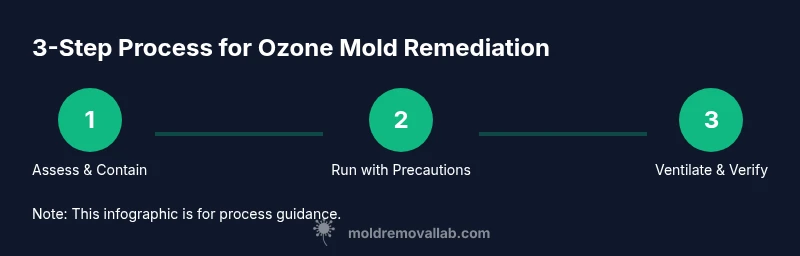
Containment is critical. Before you even turn on the device, seal off the treatment area with plastic sheeting, cover vents, and shut down HVAC systems feeding the space. Post visible warnings to prevent accidental entry. Remove or protect porous items that could absorb ozone, such as fabrics, paper, and certain woods. Ensure all occupants and pets are out of the space and that you have a plan for quick evacuation if symptoms occur. The goal is to create a controlled, isolated zone where ozone can work without spreading to adjacent rooms.
Safe operation: running the treatment and monitoring ozone levels
Set up the generator in a well-contained area and run it according to manufacturer recommendations for duration and output. Use an ozone detector to monitor concentrations and stop the process if thresholds approach dangerous levels. Maintain clear sightlines to the treated space and keep doors/windows closed as required by containment. After the run, ventilate thoroughly and allow time for ozone to dissipate before reentry. The aim is to reduce mold odors and surface contaminants while minimizing exposure risk.
Post-treatment: ventilation, cleanup, and re-entry timing
Ventilate the space completely after treatment and recheck ozone readings to ensure safe levels. Inspect for moisture and any remaining visible mold; clean or replace affected materials as needed. Reoccupy only after air quality is confirmed and any odors have faded. Document the process and results for future moisture-control planning, since ongoing humidity is a major risk factor for mold recurrence.
Alternatives to ozone: safer approaches for most homes
For many households, non-ozone methods—such as moisture control, HEPA filtration, and targeted cleaning with mold-safe products—are safer and effective. If odors persist, address root causes (e.g., leaks, humidity) rather than masking them with gas. When mold covers large areas or penetrates porous materials, professional remediation may be the best option.
Authoritative sources and professional guidelines
Regulatory guidelines and professional organizations emphasize safety, containment, and the limitations of ozone for mold remediation. Always cross-check with local regulations and seek expert advice if you are unsure. The following sources provide context on best practices and safety measures (see AUTHORITY SOURCES).
Practical examples and decision checklist
Use the decision checklist to determine if ozone treatment is appropriate in your situation. Consider space occupancy, moisture control status, material sensitivity, and whether you can implement proper containment and post-treatment ventilation. If any item on the checklist is uncertain, opt for alternative remediation methods or hire a professional.
Tools & Materials
- Ozone generator unit(Indoor-rated device with adjustable output)
- Power extension cord rated for outdoor use(Sufficient length to position device safely)
- Ventilation equipment (fans)(Direct flow away from occupied spaces)
- Personal protective equipment (PPE) including ozone-rated respirator and eye protection(Ensure proper fit and ozone compatibility)
- Ozone detector or air quality monitor(Track ambient ozone levels during treatment)
- Duct tape and heavy-duty plastic sheeting for containment(Seal doors, vents, and access points)
- HVAC shutdown instructions or manual isolation plan(Prevent cross-contamination)
- Timer or remote control(Assist with precise run times)
- Wet/dry vacuum and cleaning supplies for post-treatment cleanup(Address moisture and residual spores after treatment)
Steps
Estimated time: 2-6 hours total (including ventilation and re-entry checks)
- 1
Assess the space and determine suitability
Evaluate whether the space can be isolated, whether moisture is controlled, and whether occupants can be removed for the duration of the treatment. This step sets the stage for safe ozone use.
Tip: If you have any doubt about containment feasibility, pause and consult a professional. - 2
Seal and prepare the area
Use plastic sheeting to seal doors, vents, and openings. Remove porous items or seal them to prevent ozone absorption. Mark the space with warning signs before powering up the unit.
Tip: Double-check seals; a small leak can dramatically reduce effectiveness and raise risk. - 3
Position the generator and set limits
Place the ozone generator away from any occupied zones, with airflow directed outward. Set output and duration per manufacturer guidelines and space size.
Tip: Avoid corner placement that traps ozone near surfaces; aim for even distribution. - 4
Run the treatment under monitoring
Activate the unit and monitor ozone readings with a detector. If readings approach safe thresholds, pause or abort the run. Keep doors closed as required by containment strategy.
Tip: Stay outside the space; never enter during active treatment. - 5
Ventilate and recheck
After the run, thoroughly vent the area and continue to monitor until ozone dissipates to safe levels. Reassess moisture and visible mold after re-entry.
Tip: Allow extra ventilation time if humidity remains high. - 6
Reassess and plan for prevention
Test indoor air quality again, inspect for recurring moisture sources, and implement humidity control to prevent mold regrowth.
Tip: Address root causes to avoid repeating the cycle.
FAQ
Is an ozone generator effective for mold remediation?
Ozone can reduce certain odors and surface contaminants, but it is not a guaranteed mold removal method and may not reach all mold growth, especially within porous materials. It is most appropriate when moisture sources are controlled and the space is unoccupied. Professional guidance is strongly advised.
Ozone can help with odors and some surface issues, but it's not a guaranteed mold fix and requires professional oversight.
What health risks are associated with ozone treatment?
Ozone exposure can irritate the lungs, throat, and eyes, and may worsen respiratory conditions. It should never be used in occupied spaces and should be performed only with proper containment and monitoring.
Ozone can irritate airways and should never be used where people live without strict safety measures.
How long should you run an ozone generator for mold?
Run times vary by space size, device output, and humidity. Follow the manufacturer's guidelines and local safety regulations, and use an ozone detector to determine when it is safe to re-enter.
Follow the device manual and safety rules; use a detector to know when it’s safe to re-enter.
Are there safer alternatives to ozone for mold issues?
Yes. Safer options include moisture control, HEPA filtration, targeted cleaning with mold-safe products, and professional remediation for extensive growth. These approaches carry fewer health risks and are effective in many cases.
There are safer options like moisture control and professional remediation that work well in most homes.
What regulations apply to indoor ozone use?
Regulations vary by location. Some jurisdictions require licensed professionals for indoor ozone treatment and enforce containment and ventilation standards. Always check local guidelines before proceeding.
Regulations differ by location; check local rules and consider professional help.
Watch Video
The Essentials
- Assess necessity; ozone is not a universal fix.
- Contain and ventilate to prevent gas spread.
- Monitor ozone levels; stop if unsafe.
- Prioritize moisture control and safer alternatives when possible.