Mold Bomb Fogger: Safe Use and Alternatives for Mold Remediation
Learn how to safely use a mold bomb fogger for contained mold growth. This guide covers safety gear, labeling, timing, and safer remediation options for homeowners.


According to Mold Removal Lab, a mold bomb fogger can be a last-resort tool for treating contained mold growth in unoccupied areas, but it must be used with strict safety. This quick guide explains when to use it, essential precautions, PPE, timing, and safer alternatives for homeowners. Keep in mind that fogging is not a substitute for moisture control or professional remediation when the infestation is extensive.
What is a mold bomb fogger and how it works
A mold bomb fogger is a device that releases a fine chemical mist designed to coat mold spores and residues in a space. It’s typically considered a last-resort option for small, contained areas where cleaning, containment, and moisture control alone haven’t resolved visible growth. The fog from these products can reach cracks, voids, and porous materials only to a limited extent, so effectiveness varies by surface type and infestation size. According to Mold Removal Lab, fogging should be viewed as a supplemental step within a broader remediation plan, not a standalone fix. Always read and follow the label, seal the space, and plan for post-treatment cleanup and moisture management to prevent reoccurrence.
Safety-first: why foggers carry strict precautions
Foggers introduce pesticide exposure into the home, which means strict safety rules apply. The main safety goals are to protect occupants, pets, and nearby materials while ensuring the toxin disperses evenly enough to contact mold. The fogging process also risks chemical residues on non-target surfaces and potential off-gassing after treatment. For this reason, many professionals reserve fogging for unoccupied spaces and only after other, less invasive methods have been attempted. In all cases, use the lowest effective concentration, ventilate thoroughly after treatment, and maintain clear documentation of the area treated. Mold Removal Lab emphasizes that safety, zoning, and moisture source control are the backbone of any successful mold remediation plan.
When to choose fogging vs. other methods
Fogging may be considered when mold growth is localized to hard-to-clean voids or behind fixtures where manual cleaning is impractical. It is less effective on porous materials like drywall or insulation and won’t reverse moisture damage or kill deeply embedded spores without proper follow-up. If a moisture source remains active, mold will likely return after fogging. Use fogging only after you’ve identified the dampness issue and completed initial containment. For larger infestations or porous surfaces, professional remediation often yields safer, longer-lasting results. As always, consider a layered approach: containment, surface cleaning, moisture control, and verification through inspection or testing if needed.
Preparation: who should be involved and what to plan
Before fogging, assemble a plan with clear roles and timelines. Notify anyone who uses the space, remove occupants and pets, and seal the area to prevent fog from spreading. Gather all required PPE and cleaning supplies, review the product label, and estimate the room’s volume to determine dosing. Plan for post-treatment ventilation and cleaning, including air purification if available. Documentation of pre- and post-treatment conditions helps track progress and support future remediation efforts. The Mold Removal Lab team recommends documenting the moisture source and taking a follow-up inspection after the space re-enters use.
PPE and safety gear you’ll need
Personal protective equipment (PPE) is non-negotiable when fogging. Use a properly fitted NIOSH-approved respirator, chemical-resistant gloves, splash goggles, and disposable coveralls. A hooded suit can add protection in tight spaces. Ensure PPE fits correctly and is maintained in good condition. Do not reuse contaminated PPE in other rooms; dispose of disposable items according to local regulations. Infectious or chemical exposure risk is minimized when PPE is used consistently and removal happens in sequence to avoid cross-contamination.
Step-by-step usage overview (high-level)
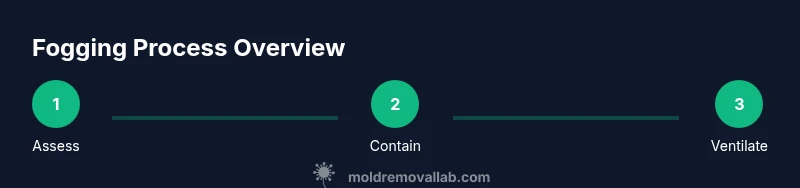
This section provides an overview of the process and should be read in conjunction with the step-by-step instructions to follow. Ensure the space is unoccupied, sealed, and properly vented after treatment. Select the fogger type recommended by the label, determine the correct aerosol density for the room size, and follow the prescribed contact time. After fogging, ventilate the space, wipe any exposed surfaces if required by the label, and re-check for dampness and mold regrowth over the following days. Always prioritize moisture control to prevent recurrence.
Post-treatment cleanup and monitoring
After fogging, thoroughly ventilate the space to remove residual fumes and ensure safe re-entry. Use fans only as directed by the product label and avoid creating drafts that spread fog to other rooms. Inspect surfaces for visible residues and wipe with suitable cleaners if indicated by the label. Monitor humidity levels and repair moisture sources to prevent future growth. A follow-up inspection or testing may be warranted for larger homes or ongoing issues, and documented records help guide future remediation steps.
Alternatives to fogging for safer remediation
If possible, pursue alternatives that reduce chemical exposure. Focus on moisture control, fixing leaks, improving ventilation, and cleaning with detergent and water on non-porous surfaces. HEPA-filtered vacuuming and air purification can help reduce spores, while physical removal of visible growth is often more effective on porous materials than fogging. In many cases, consulting a certified mold professional offers a safer, longer-lasting solution, especially for larger or hidden contamination.
Common myths vs. reality
Myth: Fogging kills all mold in a home. Reality: Fogging may cover some spores, but surface cleaning and moisture control are essential. Myth: Fogging is safe in occupied homes. Reality: Most products require unoccupied spaces and thorough ventilation. Myth: Any fogger works the same in every space. Reality: Effectiveness depends on room size, ventilation, surface types, and mold distribution. The truth is that fogging is just one tool in a multi-step remediation plan.
Authority sources and safety standards
For trusted guidance, consult these sources:
- https://www.epa.gov/mold
- https://www.cdc.gov/mold/default.htm
- https://www.osha.gov/mold
These resources discuss mold health risks, remediation best practices, and safety standards that influence whether fogging is appropriate in a given situation.
Final note from Mold Removal Lab
The Mold Removal Lab team recommends prioritizing containment, moisture control, and professional remediation for larger infestations. Fogging can be a last-resort option for small, contained spaces when used correctly and safely, but it is not a substitute for addressing moisture problems or performing thorough cleaning. Always verify results with a follow-up inspection and keep safety at the forefront of every remediation plan.
Tools & Materials
- Mold fogger product (EPA-registered pesticide, follow label exactly)(Use only as directed for mold remediation and in unoccupied spaces.)
- PPE: NIOSH-approved respirator, chemical-resistant gloves, splash goggles, disposable coveralls(Proper fit and disposal per label.)
- Plastic sheeting and painter’s tape(Seal off the room to contain fog.)
- Sealant tape or duct tape(Secure plastic barriers at doorways and vents.)
- Ventilation tools for post-treatment(Exhaust fans or high-CFM box fans, used as directed by label after fogging.)
- HEPA-filter air purifier (optional)(Helps reduce residual spores after fogging.)
- Detergent and clean water(For post-treatment surface cleaning if the label permits wipe-down.)
- Trash bags and disposal supplies(Dispose of contaminated items per local regulations.)
Steps
Estimated time: 2-6 hours
- 1
Assess and plan containment
Identify the mold-affected area and prepare to seal it off. Document moisture sources and determine the room volume for dosing.
Tip: Define clear entry/exit routes to prevent accidental spread. - 2
Notify occupants and evacuate
Ensure all people and pets are out of the space. Post signs to prevent re-entry during treatment.
Tip: Double-check that adjacent rooms are also contained if they share air paths. - 3
Don PPE and prepare the room
Put on all PPE before handling the fogger. Place barriers, seal openings, and remove porous objects if advised by the label.
Tip: Check that plastic sheeting covers gaps around doors and vents. - 4
Read the fogger label thoroughly
Review active ingredients, dosing instructions, contact time, and post-treatment ventilation requirements.
Tip: If the label conflicts with any other guidance, follow the label first. - 5
Position and deploy the fogger
Place the fogger according to the label, close the door, and start the device. Minimize air movement during fogging as directed.
Tip: Avoid hiding the fogger behind bulky furniture where the mist cannot reach. - 6
Wait for the labeled contact time
Do not re-enter during treatment. Leave the space in a safe, unoccupied state for the prescribed duration.
Tip: Set a reminder to re-enter only after the label confirms safe re-entry. - 7
Ventilate and remove fogger
Ventilate thoroughly as directed after fogging and remove all barriers once it's safe to re-enter.
Tip: Do not reopen doors too quickly; allow adequate air exchange. - 8
Initial cleanup and moisture control
Wipe surfaces if indicated, inspect for wet spots, and address dampness to prevent recurrence.
Tip: Use detergent on non-porous surfaces and dry completely before re-occupying. - 9
Follow-up assessment
Schedule a follow-up inspection or air/mold testing if needed to confirm remediation success.
Tip: Maintain a moisture-control plan to keep mold from returning.
FAQ
Is using a mold bomb fogger safe for DIY mold remediation?
Fogging carries chemical exposure risks and should be used only in unoccupied spaces and as part of a broader remediation plan. Consider professional help for large infestations.
Fogging requires unoccupied spaces and proper safety measures. For larger mold problems, professional remediation is advised.
What surfaces can be treated with a mold bomb fogger?
Foggers are more effective on nonporous surfaces. Porous materials like drywall or insulation may not be fully remedied by fogging alone.
Foggers work best on nonporous surfaces; porous materials often need physical cleaning and moisture control.
How long after fogging is it safe to re-enter?
Re-entry depends on the product label and ventilation. Do not re-enter until the label states it’s safe, and ensure complete ventilation.
Check the label for re-entry timing and ventilate the space thoroughly before returning.
Are there alternatives to foggers for mold remediation?
Yes. Containment, moisture control, detergent cleaning, HEPA vacuuming, and professional remediation are common alternatives or complements to fogging.
Containment, moisture control, and cleaning are often safer and effective alternatives or complements to fogging.
Can foggers eliminate mold that has penetrated walls?
Foggers may not reach deep inside walls; persistent or widespread growth usually requires professional remediation and moisture source repair.
Fogging may not reach deep into walls; larger or hidden mold often needs professional help.
What should I do if I’m unsure about using a fogger?
If unsure, consult a certified mold remediation professional. They can help assess the scope and suggest safe, effective options.
If you’re unsure, talk to a professional to assess risks and choose the right remediation approach.
Watch Video
The Essentials
- Use foggers only in unoccupied spaces and per label.
- Pair fogging with moisture control to prevent reoccurrence.
- Follow up with a surface cleaning and a post-treatment inspection.