Mold Removal from Ceiling: A Practical DIY Guide
A comprehensive, expert guide to remove ceiling mold safely, identify moisture sources, and prevent recurrence. Learn practical steps, safety tips, and when to hire a pro from Mold Removal Lab.


You can remove mild ceiling mold safely with a clear plan: isolate the area, protect yourself, clean with approved products, thoroughly dry, and monitor for recurrence. This guide helps you decide when to DIY vs. call a pro, and outlines essential safety steps and moisture controls.
Understanding ceiling mold: causes, risks, and when to worry
Ceiling mold is more than an eyesore. It signals ongoing moisture problems that can damage structural materials and affect indoor air quality. In many homes, ceiling mold forms on drywall, plaster, or paint after leaks from roofs, plumbing, or HVAC condensation. Condensation can also result from poor insulation or high humidity levels, particularly in bathrooms, kitchens, or basements, where warm air meets a cold surface. Recognizing the difference between cosmetic staining and active growth is important; active mold colonies may appear as fuzzy patches that darken, discolor nearby paint, or emit a musty odor. The health risks vary with mold species and exposure duration, but sensitive individuals—children, pregnant people, seniors, and those with asthma or allergies—may experience coughing, throat irritation, nasal congestion, or headaches. According to Mold Removal Lab, the root cause is often hidden moisture from leaks, condensation, or humidity, so addressing the moisture source is essential for lasting results. Early detection and action reduce spread and protect your home’s air quality.
Safety first: protective gear, containment, and ventilation
Safety is the foundation of ceiling mold remediation. Start with proper PPE: an N95 respirator (or better), safety goggles, chemical-resistant gloves, and long sleeves to minimize skin contact. Contain the workspace by sealing doors and vents with plastic sheeting to prevent spores from migrating to other rooms. Ensure adequate ventilation without blowing spores around by using a staged approach—open a window and run a fan directed away from living spaces. Use a HEPA-filter vacuum to remove loose spores after dampening the area; never sweep dry mold, which can aerosolize spores. If you notice significant water intrusion, crumbling ceiling material, or extensive mold growth, pause and seek professional help. Mold Removal Lab emphasizes prioritizing safety and limiting disturbance until moisture sources are controlled.
Investigating moisture sources and indoor air quality
Ceiling mold thrives where moisture persists, so identifying and eliminating the source is as important as cleaning. Check for roof leaks, plumbing droplets, condensate from improper HVAC installation, and high indoor humidity, especially in humid climates or during winter when warm indoor air meets cold ceiling surfaces. A simple moisture check around the affected area with a hygrometer can reveal elevated relative humidity (RH). According to Mold Removal Lab analysis, recurring moisture from leaks, condensation, and humidity is the leading cause of ceiling mold in many homes. If a source remains unaddressed, cleaning the mold will only be a temporary fix. Simultaneously improve ventilation, address leaks, and consider a dehumidifier for reliable moisture control.
Cleaning options and products: choosing safe methods
Not all products are suited for every ceiling type. For painted ceilings, a mild detergent solution or a mix of dish soap and warm water can be effective for non-porous surfaces. Porous ceilings like drywall or plaster may require gentler approaches and possibly professional-grade products to avoid damage. Hydrogen peroxide (3%) is a common choice for light, non-porous mold on painted surfaces, while for more stubborn growth, a professional propriety fungicidal cleaner may be recommended. Avoid mixing cleaners; never combine bleach with ammonia or acids, and never spray liquids straight into electrical fixtures. Before applying any cleaner, test a small inconspicuous area to confirm it does not strip paint or damage the surface. The Mold Removal Lab team advises documenting the area and following label directions precisely to ensure safety and effectiveness.
Ceiling types and cleaning specifics: paint, plaster, and more
Ceiling material determines the cleaning approach. Painted drywall ceilings are generally more forgiving, but mold can penetrate porous layers. Textured ceilings (popcorn or acoustic) may misrepresent the extent of mold, and puncturing the material can release spores and worsen damage. Plaster ceilings require careful assessment for moisture and potential crumbling; damaged plaster should be removed and replaced rather than scrubbed. For tile or non-porous ceilings (such as enamel-coated surfaces), cleaners and wiping approaches can be more aggressive. Always wear a mask and eye protection, and work slowly to avoid spreading spores to adjacent areas. In all cases, ensure you completely dry the area after cleaning to prevent regrowth.
Step-by-step ceiling mold removal workflow: a practical overview
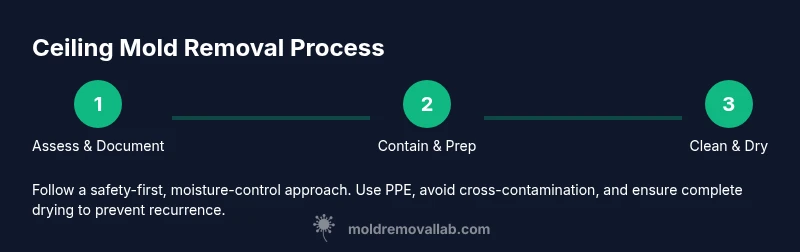
A practical workflow helps keep mold removal organized and safe. Start by documenting the affected area and measuring its size. Next, isolate the area with plastic sheeting to prevent cross-contamination. Then, don PPE and perform a dry cleanup to remove loose spores with a HEPA vacuum. Apply your chosen cleaning solution to the moldy surface, allow it to work for the recommended time, and wipe away using disposable rags. After cleaning, thoroughly dry the area using fans and dehumidifiers, and monitor humidity for several days. If underlying damage is present, plan for patching and repainting after the material dries. This narrative outlines best practices and emphasizes moisture control as the critical factor for lasting results.
Drying, moisture control, and prevention of recurrence
Even after visible mold is removed, residual moisture can invite regrowth. Use dehumidifiers to maintain indoor RH below 50-60% in affected spaces, and improve ventilation in kitchens and bathrooms with exhaust fans or ventilation grids. Fix leaks promptly and consider roof or plumbing inspections if moisture returns after cleaning. Regularly inspect ceilings for new staining, musty odors, or peeling paint. Implement a moisture-management plan: monitor humidity, address structural issues, and keep indoor temperatures steady to reduce condensation. The Mold Removal Lab team stresses that ongoing maintenance and moisture control are essential to prevent recurrence and protect indoor air quality.
When to call a professional and insurance considerations
If mold covers a large area (typically more than a few square feet) or if you suspect hidden structural damage, it’s prudent to consult a licensed mold remediation professional. Large-scale infestations can release significant spores during cleanup, posing risks to occupants and requiring specialized containment. Insurance coverage for mold can vary by policy and cause; if a leak was the source, documentation and professional remediation may be necessary for a claim. The Mold Removal Lab team recommends erring on the side of caution and seeking a professional assessment when you’re unsure about the extent of growth or structural integrity. A professional can provide an accurate assessment, remediation plan, and guidance on moisture-control strategies to prevent future issues.
Common myths, pitfalls, and practical tips
Mold on ceilings is not always a death sentence for a home. Some patches may be surface-level and removable with careful cleaning. However, penetrating growth signals deeper moisture problems that require attention. Common pitfalls include rushing cleanup, mixing cleaners, or delaying moisture repair. A practical tip is to document before-and-after conditions with photos, check for hidden leaks, and rehearse a moisture-control plan before repainting. The goal is durable remediation that reduces health risks and protects your home from future mold events. The Mold Removal Lab team stands by thorough assessment, proper safety measures, and moisture-control investments as the keys to success.
Tools & Materials
- N95 or respirator mask(Prefer a fit-tested respirator; replace if damaged)
- Protective eyewear(Goggles or face shield)
- Gloves (chemical resistant)(Long sleeves; consider disposable coveralls)
- Plastic sheeting (6–10 mil)(To seal work area and prevent spread)
- HEPA vacuum(For dry cleanup of loose spores)
- Buckets and disposable rags(For cleanup and disposal)
- Mild detergent or approved cleaner(Test on inconspicuous area first)
- Hydrogen peroxide (3%) or approved fungicidal cleaner(Use only as recommended by product label)
- Dehumidifier or fans(Maintain low humidity during remediation)
- Moisture meter or hygrometer(Helpful to track RH levels)
Steps
Estimated time: Total time: 2-6 hours depending on area size and moisture control needs
- 1
Document and assess
Survey the affected area, measure its size, and take photos for records. Note water intrusion sources and any signs of hidden damage. This establishes a baseline for remediation and helps decide whether to DIY or hire a pro.
Tip: Keep a simple log of observations and changes over the next 72 hours. - 2
Isolate the space
Seal off the area with plastic sheeting, creating a containment zone to prevent cross-contamination. Close doors, seal gaps, and ensure ventilation directs air outward from living spaces.
Tip: Use tape to secure plastic and prevent gaps where spores could escape. - 3
Protect yourself and others
Put on PPE before touching mold. Ensure children and pets stay away from the area during cleanup.
Tip: Double-check respirator seal and eye protection before starting. - 4
Dry clean loose spores
Vacuum with HEPA on a low setting to remove loose spores from ceilings and surrounding surfaces before applying cleaners. Do not sweep, which can aerosolize spores.
Tip: Use short, deliberate passes to avoid damaging surface material. - 5
Apply cleaner and dwell
Apply a mild detergent solution or an approved cleaner to the moldy area; let it dwell for the time recommended on the product label. Wipe away gently with disposable rags.
Tip: Test on a hidden area first to ensure no surface damage. - 6
Rinse, dry, and monitor
Rinse if required by cleaner, then thoroughly dry the area using fans and a dehumidifier. Recheck humidity over the next several days and look for new staining or odors.
Tip: Aim for RH below 50-60% to reduce regrowth risk.
FAQ
Can I remove ceiling mold myself
Yes, for small, contained areas and when you can identify and fix the moisture source. If growth is extensive or if moisture remains, hire a licensed professional.
You can handle small, contained spots yourself, but for larger areas or ongoing moisture, get a professional.
Is ceiling mold dangerous to my health
Mold can affect health, especially for sensitive individuals. It may trigger allergies or asthma symptoms and should be addressed promptly with moisture control and surface cleaning.
Mold can affect health, especially for sensitive people, so address it promptly and control moisture.
Should I use bleach on ceiling mold
Bleach is generally not recommended for porous ceiling materials because it can fail to fully reach embedded mold and may damage finishes. Use approved cleaners and rinse thoroughly.
Bleach isn't usually the best choice for porous ceilings; use approved cleaners and rinse well.
How long does ceiling mold remediation take
Time varies with area size and moisture control. Small jobs may take a few hours; larger or moisture-prone areas can require days for drying and monitoring.
It depends on the area size and drying conditions, but plan for several hours to days.
When should I call a professional
If mold covers more than a few square feet, if moisture sources persist, or if you aren’t sure about the extent of growth or structural impact, a licensed remediation specialist is recommended.
Call a pro if the area is large, moisture persists, or you’re unsure about the extent.
Can I prevent ceiling mold after cleaning
Yes. Fix leaks, improve ventilation, reduce humidity with dehumidifiers, and regularly inspect ceilings for signs of moisture or staining.
Prevent mold by fixing leaks, increasing ventilation, and monitoring humidity.
Will painting fix ceiling mold
Painting alone does not fix mold or moisture problems. Ensure the area is dry, moisture sources addressed, and consider mold-inhibiting primers only after proper remediation.
Painting is not enough; ensure it's dry and moisture is controlled first.
Does mold on the ceiling mean the entire home is contaminated
Not necessarily. Mold can be localized to damp spots. A professional assessment can determine if broader contamination exists, especially if there is a history of moisture issues.
Usually it’s localized, but a pro can verify if it’s limited to the affected area.
Watch Video
The Essentials
- Identify and fix the moisture source before or during cleanup
- Use proper PPE and containment to control contamination
- Dry thoroughly to prevent regrowth and monitor RH
- Know when to escalate to a professional for large areas or structural damage
- Mold removal is more about moisture control than surface cleaning