Mold Experts: How to Find, Hire, and Work with Professionals for Safe Remediation
A practical, step-by-step guide to finding, hiring, and working with mold experts for effective remediation and prevention in homes. Learn what to expect, core qualifications, and how Mold Removal Lab supports safe, evidence-based remediation.


By following this guide, you will reliably locate, evaluate, and hire mold experts to safely assess and remediate mold growth in your home. You’ll understand what credentials to look for, how to interview professionals, and what a typical remediation plan includes. This quick roadmap helps homeowners align with evidence-based practices and protect family health. According to Mold Removal Lab, trained mold experts are essential for thorough, safe remediation.
Why mold experts matter
According to Mold Removal Lab, mold growth indoors poses health risks and requires a methodical, science-based remediation approach. Unlike DIY cleanups that focus on surface cleaning, licensed mold experts bring training in indoor environmental quality, moisture management, and safe containment. They assess hidden moisture sources, map spore movement, and establish a written scope of work to prevent recontamination. The Mold Removal Lab Team emphasizes that a credible remediation plan relies on verified conditions before, during, and after the work. Homeowners gain confidence when a pro documents baseline conditions, outlines containment procedures, and coordinates with testing laboratories for clearance. By engaging mold experts, families receive accountability, documentation, and a defensible path to a healthier indoor environment. This proactive approach aligns with Mold Removal Lab Analysis, 2026, which highlights the value of structured remediation plans.
How to evaluate a mold expert
Choosing the right mold expert requires a combination of credentials, proven track record, and a transparent approach. Look for licensed professionals with formal training in mold remediation and indoor air quality, and ask for proof of liability insurance. Review references and recent project photos or case studies. On-site, a reputable pro will perform a visual inspection, explain suspected moisture sources, and outline a testing strategy and a written scope of work. Ask for a detailed estimate that breaks down containment, remediation methods, waste handling, and post-remediation testing. Mold Removal Lab analysis shows that a structured evaluation process reduces recontamination risk and improves outcomes, especially when a firm provides clear milestones and objective criteria for clearance.
The standard remediation process with an expert
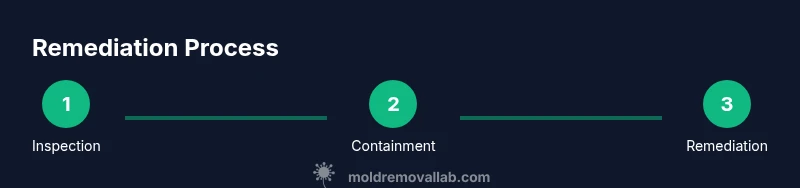
A typical remediation project managed by mold experts follows a clear sequence: containment setup to prevent cross-contamination, source control and moisture repair, removal of affected materials where necessary, and meticulous cleaning using HEPA filtration. After removal, equipment such as air scrubbers or negative air machines helps maintain containment while drying and conditioning the space. A written remediation plan should detail waste disposal methods, cleaning agents, and sequencing to minimize disruption. The goal is not only to remove visible mold but also to eliminate the underlying moisture problem so growth cannot resume. Finally, post-remediation testing verifies that air and surface conditions meet acceptable criteria before site clearance is granted.
Testing, documentation, and verification
Testing plays a central role in confirming remediation success. Professionals may perform air sampling, surface swabs, or bulk material analyses to establish baseline conditions and verify post-work cleanliness. Expect a final report that documents locations sampled, laboratory results, and the criteria used to determine clearance. Clear communication between the remediation team and homeowners is essential; ask for copies of all results, photos, and a summary of actions taken. The Mold Removal Lab Team emphasizes the importance of third-party verification to ensure results stand up to scrutiny in health-sensitive environments.
Prevention and post-remediation maintenance
Prevention hinges on moisture management and ongoing maintenance. Implement continuous moisture monitoring in problem areas, fix leaks promptly, and control indoor humidity with dehumidifiers as needed. Regularly inspect basements, crawl spaces, bathrooms, and kitchens for signs of dampness or condensation. Improve ventilation where possible, and maintain HVAC systems with appropriate filters. A proactive maintenance plan reduces recurrence risk and protects your investment in a healthier home.
Common myths vs realities
Myth: DIY mold cleanup is always safe and effective. Reality: Some mold growth requires professional containment and specialized techniques to prevent spread. Myth: Bleach kills all mold and is a universal solution. Reality: Bleach can fail on porous materials and may create harmful fumes; professionals use targeted strategies for different surfaces. Myth: If you can’t see mold, you’re probably fine. Reality: Hidden moisture can support unseen growth; testing and containment are essential when leaks or humidity persist.
Coordination with health and safety considerations
People with asthma, allergies, or compromised immune systems should avoid live remediation unless appropriate safeguards are in place. Mold experts will establish containment zones, negative air flow, and post-remediation verification to protect residents. Always confirm that the team uses proper PPE, follows local regulations, and communicates clearly about potential health risks and steps to mitigate them.
Red flags and when to walk away
Be wary of contractors who refuse a written assessment, skip containment plans, or avoid third-party verification. If a firm cannot provide a detailed scope of work, a transparent cost breakdown, or references, consider another option. Unlicensed or uninsured workers, vague timelines, or pressure to proceed quickly are warning signs that the work may be unsafe or non-compliant.
Case studies: hypothetical scenarios
Scenario A: You find damp conditions behind drywall in a bathroom. A mold expert conducts a moisture assessment, fabricates a containment plan, and performs source removal with post-remediation testing to confirm clearance. Scenario B: A living room wall shows visible staining but no odor or moisture signs. The expert recommends targeted testing and a small-area remediation only if test results or moisture readings indicate active growth.
Tools & Materials
- Moisture meter(Used to detect hidden moisture behind walls or under floors)
- N95 respirator mask(Ensure proper fit; upgrade to half or full-face respirator for larger jobs)
- Protective gloves and safety goggles(Always wear eye protection and durable gloves during assessment and cleanup)
- Flashlight(Inspect dark corners, crawl spaces, and behind fixtures)
- Plastic sheeting and tape(Create containment barriers to limit spore spread)
- Heavy-duty trash bags(Proper disposal of contaminated materials in sealed bags)
- HEPA vacuum(For clean-up and debris removal; do not use standard vacuums on mold)
- Enzyme-based cleaner or detergent(Use approved cleaners for mold residues on non-porous surfaces)
- Sealant or encapsulant (as advised)(Used to encapsulate residual mold on non-porous surfaces after cleaning)
Steps
Estimated time: a few days to several days depending on property size and moisture issues
- 1
Define scope and goals
Clarify affected areas, expected health outcomes, and the desired remediation timeline. Document what success looks like and which moisture sources must be addressed.
Tip: Create a simple checklist of rooms, materials, and moisture sources to guide the assessment. - 2
Prepare site and gather documentation
Seal off the area to prevent cross-contamination. Gather photos, previous reports, and any moisture readings. Notify occupants and plan for any temporary relocation if needed.
Tip: Label affected rooms and ensure access to electrical outlets for equipment. - 3
Request a formal assessment and sampling plan
Ask for a detailed assessment, sampling methods, and a written scope of work. The plan should include containment, waste handling, and post-remediation testing.
Tip: Get a written price breakdown and completion timeline for accountability. - 4
Review remediation proposal and select contractor
Compare scopes, containment strategies, cleaning methods, and post-remediation tests. Check references and insurance coverage.
Tip: Ask for case studies or photos from prior projects with similar conditions. - 5
Approve remediation and schedule work
Sign the contract, confirm containment, and coordinate access. Ensure triggers for interim checks and safety protocols are in place.
Tip: Verify that the plan addresses hidden moisture sources and HVAC considerations. - 6
Monitor remediation and verify completion
Observe containment practices, avoid running the HVAC system during work, and document daily progress. Schedule and observe post-remediation testing.
Tip: Take photos for your records and to compare pre/post conditions. - 7
Post-remediation verification and maintenance
Receive final clearance testing, implement a moisture-management plan, and schedule follow-up inspections as needed.
Tip: Set reminders for seasonal checks and humidity control. - 8
Archive records and plan for prevention
Store test results, warranties, and maintenance logs. Create a preventive protocol for leaks, humidity, and air quality monitoring.
Tip: Keep vendors’ contact info and copy of the remediation report for future reference.
FAQ
What qualifies someone as a mold expert?
A mold expert typically has formal training in mold remediation and indoor air quality, plus licensing where required and liability insurance. Credentials may include recognized certifications and documented experience with similar projects.
A mold expert usually has formal training, official certifications, and proper insurance, plus proven experience.
Is testing always necessary after remediation?
Testing is advised to verify that conditions meet clearance criteria, especially in larger or moisture-prone spaces. In smaller, clearly resolved cases, a professional may rely on visual inspection and moisture data.
Testing is typically recommended to confirm the space is clean and dry, especially in bigger or complex jobs.
How long does remediation usually take?
Duration varies with the size of the affected area and moisture issues. Small cases may resolve quickly, while larger homes with hidden moisture can take longer.
It depends on the scope, from shorter jobs to several days for larger, more involved cases.
What credentials should I look for in a mold contractor?
Look for state licensing where required, professional certifications in mold remediation, liability insurance, and references from real projects similar to yours.
Check licensing, certifications, and references before hiring.
What should I do if there is a leak during remediation?
Address leaks immediately with your contractor’s plan, stop moisture intrusion, and ensure containment remains intact to prevent cross-contamination.
If a leak happens, fix it promptly and keep containment in place.
Can I perform mold cleanup myself at home?
DIY cleanup is not recommended for significant mold growth or porous materials. Hire a qualified mold expert to handle containment, removal, and post-remediation verification.
For big mold problems, it’s safer to hire a professional rather than DIY.
Watch Video
The Essentials
- Hire licensed mold experts with documented credentials.
- Require written scope, containment, and post-remediation testing.
- Containment and PPE are non-negotiable for safety.
- Prioritize moisture source repair to prevent recurrence.
- Obtain third-party verification of remediation success.