How Long to Let Vinegar Sit on Mold: A Practical Guide
Learn how long to let vinegar sit on mold, when it helps, and how to use it safely as part of a broader remediation plan for homeowners and renters.


To address mold with vinegar, apply undiluted white vinegar to the contaminated area and allow it to sit for about 60 minutes. After the dwell time, scrub the surface with a non-abrasive brush and rinse with water. Vinegar can slow mold growth on nonporous surfaces, but it isn’t a complete solution for porous materials or large infestations; combine with drying and ongoing monitoring.
What vinegar does for mold
Vinegar is a mild acid (acetic acid) typically around 5% in household white vinegar. This acidity can disrupt some mold cells on nonporous surfaces, helping to loosen the colony so it’s easier to remove. The Mold Removal Lab team notes that vinegar performs best on nonporous materials like glass, tile, metal, and sealed surfaces. On porous materials, mold can penetrate deeper layers, where surface application has limited impact. In those cases, vinegar may slow surface growth but won't fully eradicate embedded mold. Always start with a patch test on a hidden area to assess any color changes or material damage. According to Mold Removal Lab, full mold remediation requires addressing moisture sources, cleaning, and thorough drying. The effectiveness of vinegar varies with mold species; common household vinegars rely on about 5% acetic acid, which is sufficient for routine surface cleaning but not for severe infestations. For DIY projects, plan to repeat treatments and monitor for regrowth over several days to weeks. Avoid relying on vinegar as the sole method for large or persistent mold problems; consider professional guidance when moisture problems persist. This approach aligns with general best practices that emphasize moisture control as the primary defense against mold growth in homes in 2026.
-This section expands on how vinegar works and its limitations across different surfaces.
Tools & Materials
- White distilled vinegar (undiluted)(5% acetic acid; apply with spray bottle)
- Spray bottle(At least 16 oz (470 ml))
- Non-abrasive scrub brush(Soft nylon or sponge brush)
- Microfiber cloths(For wiping and drying surfaces)
- Protective gloves(Nitrile or latex; avoid vinyl for mold handling)
- Safety glasses(Eye protection during spraying and scrubbing)
- Face mask (N95 or equivalent)(To minimize inhalation of spores and dust)
- Bucket and water for rinsing(Optional, for rinsing after scrubbing)
Steps
Estimated time: 60-120 minutes
- 1
Inspect the area and identify surfaces
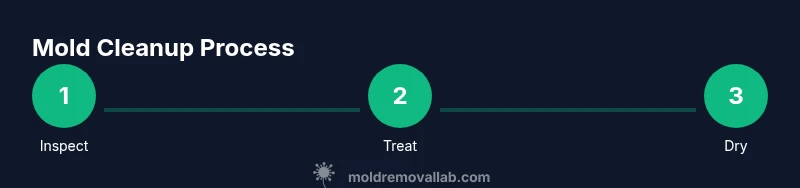
Begin by visually surveying the mold-affected area. Note whether the surface is porous (drywall, wood) or nonporous (tile, glass, metal). Check for ongoing moisture sources such as leaks, condensation, or poor ventilation. Document the extent of visible growth to guide the remediation plan.
Tip: Take photos before you start so you can track progress. - 2
Ventilate the space and protect yourself
Open doors and windows or set up fans to improve airflow. Put on gloves, a mask, and eye protection before handling the moldy area. Proper ventilation helps reduce exposure to spores during cleaning.
Tip: Avoid creating a cross-breeze that pushes spores into other rooms. - 3
Apply vinegar to the mold surface
Spray undiluted white vinegar directly onto the moldy area until it is visibly damp. Do not oversaturate porous materials, which can push moisture into hidden pockets. Let the vinegar sit undisturbed for about 60 minutes on nonporous surfaces; for porous materials, monitor for changes but do not rely on longer dwell times alone.
Tip: Keep pets and children away during the dwell period. - 4
Scrub the area to loosen mold
After the dwell time, scrub with a non-abrasive brush to loosen mold residues. Use steady, circular motions and avoid aggressive scrubbing that damages the surface. Wipe away loosened material with a microfiber cloth.
Tip: Work from the outer edges toward the center to minimize spreading. - 5
Rinse or wipe away mold residue
Rinse with clean water where appropriate or wipe with a damp microfiber cloth to remove remaining vinegar and mold particles. Dry the area thoroughly with a clean towel or cloth. For larger areas, use a fan or dehumidifier to speed up drying.
Tip: Do not leave moisture behind; moisture fuels regrowth. - 6
Dry and monitor for regrowth
Continue to dry the cleaned area for several hours and monitor over the next days for any signs of returning growth, musty odor, or new staining. If mold reappears, repeat treatment or escalate to professional remediation.
Tip: Keep a dampness log to identify recurring moisture problems. - 7
Address moisture sources to prevent recurrence
Mold control requires moisture management. Repair leaks, improve insulation, and ensure proper ventilation in bathrooms, kitchens, and basements. Regularly inspect areas prone to condensation and promptly address any moisture issues.
Tip: Keep humidity below 50% in most homes. - 8
Decide if professional help is needed
If mold covers a large area (beyond about a 10x10 inch patch), is growing behind walls, or if you or others have health sensitivities, consult a certified mold remediation professional. Vinegar alone is rarely sufficient for extensive problems.
Tip: When in doubt, get a professional assessment.
FAQ
Can vinegar kill all mold species?
Vinegar can kill some mold species on nonporous surfaces, but it is not effective against all species or on porous materials. For extensive infestations or hidden growth, professional remediation is advised.
Vinegar helps with some molds on nonporous surfaces, but it isn’t a universal solution.
Is vinegar safe to use on wood or drywall?
Vinegar can be used on some non-porous coatings, but it can be harsh on certain woods and damaged drywall. Always test a hidden patch first and avoid soaking porous materials. If damage occurs, discontinue use.
Test first; vinegar can harm some wood finishes and drywall if overused.
Should I rinse after vinegar dwell time?
Rinsing is recommended to remove mold residues and vinegar scent. Dry the area thoroughly afterward, as lingering moisture supports regrowth.
Yes—rinse and dry well after the dwell time to reduce residual mold particles.
Can I mix vinegar with bleach for faster results?
No. Mixing vinegar with bleach releases toxic chlorine gas. Use vinegar or bleach separately and only where appropriate for the material and mold type.
Don’t mix them; it’s dangerous.
What if mold returns after using vinegar?
If mold reappears, reassess moisture sources, perform a more thorough cleaning, and consider professional assessment, especially for large areas or exposure symptoms.
If it comes back, it’s time to get a professional evaluation.
Watch Video
The Essentials
- Test a patch first before full cleaning
- Dwell time matters on nonporous surfaces
- Vinegar is not a universal fix for porous materials
- Dry surfaces thoroughly to prevent regrowth
- For large infestations, seek professional remediation