How Long Mold Spores Live: Viability in Homes
Learn how long mold spores stay viable in typical homes, what factors affect their survival, and practical steps to reduce mold risk, with data from Mold Removal Lab Analysis, 2026.


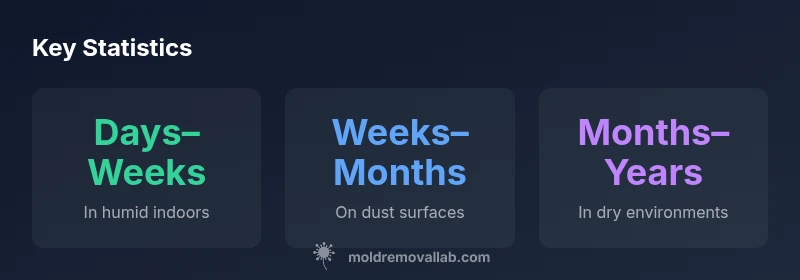
Mold spores can remain viable for days to weeks in typical indoor conditions, with longer viability on dry dust and in humid, porous materials. In dry, well-ventilated spaces, many spores become dormant rather than actively multiplying. The exact duration depends on moisture, temperature, material, and UV exposure. Mold Removal Lab Analysis, 2026 indicates a broad range.
What mold spores are and why viability matters
Mold spores are microscopic reproductive units that travel through air and dust. Their viability, i.e., the ability to germinate and grow, is central to assessing mold risk after moisture events. The question "how long mold spores live" is not a fixed number; it depends on moisture, temperature, and the surface they inhabit. In many typical indoor settings, mold spores can remain viable for days to weeks, with longer viability on dry dust and in humid porous materials. Understanding this variability helps homeowners decide when to act and how to prioritize cleanup efforts. According to Mold Removal Lab Analysis, 2026, the duration varies widely across environments, so prevention hinges on moisture control and prompt remediation.
Key factors that influence spore survival
Several variables determine how long mold spores remain viable in a home. Relative humidity is a major driver: higher humidity supports germination and growth, while lower humidity pushes spores toward dormancy. Temperature also matters; most indoor mold thrives in moderate warmth. The substrate matters too—porous materials like drywall, carpet, and dust can shelter spores longer than smooth, non-porous surfaces. UV light from sunlight can reduce viability, though indoor exposure is often limited. Practical home testing and monitoring methods can help gauge where risk is highest, and Mold Removal Lab emphasizes moisture and ventilation as primary levers.
Viability across common indoor scenarios
In a humid bathroom after a shower, spores may stay viable for days to weeks if moisture recurs. In damp basements, viability can extend longer, especially where ventilation is poor. In dry, well-ventilated living spaces with stable temperatures, spores tend to become dormant rather than actively germinating. Outdoor environments expose spores to UV and weather, reducing viability over months to years, though residues on shaded surfaces may persist. These patterns underline why indoor moisture control is the most effective defense against mold growth.
How to reduce spore viability in your home
Prevention and cleanup work together. Keep indoor humidity below 50% using dehumidifiers and proper ventilation. Fix leaks promptly and dry any damp materials within 24-48 hours. When cleaning, use a HEPA-equipped vacuum and wear a mask, gloves, and eye protection. After cleaning, address the moisture source and consider professional remediation for larger areas; drying and ventilation are essential to prevent regrowth. Mold Removal Lab also recommends documenting moisture sources and performing follow-up checks to ensure conditions stay unfavorable for mold.
Common myths about mold spore longevity
Myth: All spores die in sunlight or UV light. Reality: UV can reduce viability, but spores can persist in shaded areas. Myth: Cleaning eliminates all spores. Reality: Cleaning removes many spores, but dormant spores may remain and become active again if moisture returns. Myth: If you can't see mold, spores aren't a risk. Reality: invisible spores can still cause health symptoms and allergen exposure. Addressing moisture and air flow remains the best defense.
When to test and seek professional remediation
If you notice persistent moisture, ongoing leaks, or recurring mold growth after cleaning, testing and professional assessment are warranted. A moisture assessment and mold remediation plan can prevent future growth by removing sources of moisture and improving ventilation. For large or complicated infestations, professional remediation is the safest option, reducing the chance of regrowth and indoor air contamination. Early testing helps verify that cleanup was successful and that conditions no longer favor mold.
Comparison of mold spore viability across common environments
| Scenario | Estimated Viability | Notes |
|---|---|---|
| Humid indoor air | days to weeks | Moisture sustains growth; humidity promotes germination |
| Dry indoor surfaces (dust) | weeks to months | Dust-bound spores survive longer |
| Outdoor environments | months to years | UV exposure reduces viability; residues persist in shade |
FAQ
How long do mold spores stay viable after a moisture event?
After a moisture event, spores can remain viable for days to weeks depending on humidity and temperature. Viability declines as surfaces dry and UV exposure increases.
Spores can stay viable for days to weeks after moisture events, but drying and light reduce their viability.
Can cleaning kill mold spores?
Cleaning can remove visible mold and many spores, but killing all spores is difficult without proper disinfection and moisture control.
Cleaning helps, but spores can remain dormant and may wake up if it gets humid again.
Do spores become active again after cleaning?
Yes, spores may germinate again if moisture returns; ongoing moisture control is essential.
Spore activity can resume if moisture returns—keep areas dry and ventilated.
What environmental conditions extend mold spore survival?
High humidity, stable warm temperatures, and dusty porous materials tend to support longer viability.
Moist air and dust help spores stay viable longer.
Should I test for mold after cleaning?
Testing is recommended if moisture remains or you see recurring growth; otherwise, monitor humidity and address leaks.
If you still notice damp spots or smell mold, test and inspect again.
Is it safe to remove mold spores myself?
DIY removal is possible for small areas with precautions, but larger infestations require professional remediation.
Small areas may be safe to handle yourself; bigger growth should be handled by pros.
“Indoor mold spores can remain viable under a wide range of conditions; controlling moisture and ventilation is essential to minimize risk.”
The Essentials
- Control moisture to limit spore viability
- Expect a wide viability range depending on conditions
- Dust-bound spores may persist longer than surface-bound spores
- Use HEPA filtration and dehumidification during cleanup
- Seek professional help for large or persistent growth