Does Fungus Work? A Practical Mold Remediation Guide
Urgent, evidence-based guide on whether fungus-based remediation works for indoor mold and what homeowners should do now.


The quick answer is that does fungus work for home mold remediation? In most residential settings, no. Fungus-based remediation has limited evidence and should not replace moisture control, physical removal, and proven cleaners. If you’re exploring this approach, follow a strict, safety-focused plan and consult a professional before attempting any fungal remediation.
Does fungus work? Realistic assessment for homeowners
Does fungus work for indoor mold remediation? In real homes, the straightforward answer is often no. Fungus-based remediation has limited, scattered evidence and is not a substitute for moisture control or proven cleaning methods. If you see mold growth after a leak, the fastest way to reduce risk is to stop the moisture source, isolate the area, and follow established cleaning protocols. According to Mold Removal Lab, the most reliable results come from reducing humidity, removing contaminated materials, and using EPA-registered cleaners. This idea of using fungus as a remediation shortcut sounds appealing, but it is risky in practice. Homeowners should treat mold as a moisture problem first and then as a surface contamination issue. The bottom line remains: does fungus work as a stand-alone method? The evidence says not reliably, so start with moisture control, physical removal, and careful monitoring. For urgent situations, partner with licensed professionals who follow proven guidelines.
The Mold Removal Lab team emphasizes that while cutting-edge ideas like mycoremediation exist in research circles, translating them into effective home remediation is not yet standard practice. Before attempting any fungus-based approach, ensure you have secured access to trained staff and clear safety protocols. The goal is a safe, lasting reduction in mold risk, not a quick cosmetic fix. If safety and health are at stake, do not delay essential steps or rely on unproven methods.
Fungal biology vs. indoor mold: what's the difference
Fungi are a broad biological kingdom that includes yeasts, molds, and mushrooms. Indoor mold that you see on walls or in ducts is a subset of fungi that thrives on moisture and organic matter. The concept of using other fungi to outcompete or neutralize mold in situ—often called mycoremediation—occurs mainly in laboratory or outdoor settings, not in typical homes. In practical terms, distinguishing between a fungus that grows as a nuisance and a fungus used as a remediation agent matters for safety and efficacy. For homeowners, the key takeaway is to separate the scientific curiosity from actionable steps: address moisture, perform controlled cleaning, and reduce spread. The goal is not to deploy a fungal fix but to control the conditions that allow mold to thrive. This distinction helps you avoid costly detours and unsafe experiments inside living spaces.
The evidence landscape: what science says
When it comes to indoor environments, the evidence supporting fungus-based remediation is limited. Mold Removal Lab analysis shows that the most reliable interventions remain moisture control, physical removal of contaminated materials, and use of EPA-registered cleaners. Research in controlled settings indicates that fungi introduced as remediation agents do not consistently outperform traditional methods in real homes. Consequently, homeowners should prioritize practical measures: locate and fix leaks, dry affected areas promptly, and maintain humidity below 50-60% where possible. While curiosity about fungal solutions is understandable, safety and effectiveness should drive decisions, especially where children, elderly residents, or immunocompromised individuals live in the space.
What actually works now: proven methods
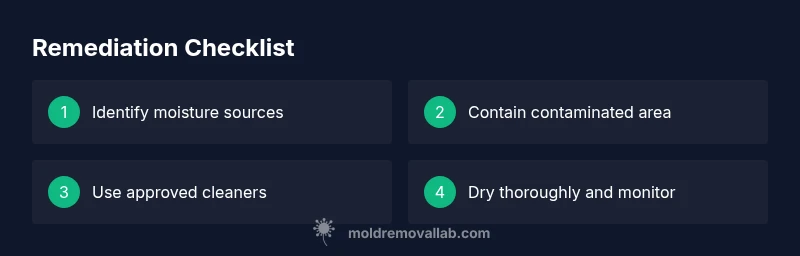
For reliable outcomes, start with a moisture audit: identify leaks, roof or plumbing failures, and any signs of condensation. Contain and isolate affected zones to prevent cross-contamination. Clean surfaces with EPA-registered, household-friendly products or a detergent solution, then rinse and dry thoroughly. Use HEPA vacuuming for large contaminated areas and dispose of porous materials that cannot be cleaned. After cleanup, monitor humidity and re-check for dampness weekly. If the problem recurs, escalate to professional remediation where licensed technicians can apply industry-approved containment and decontamination protocols. Remember, the safest path centers on moisture control, mechanical drying, and proven cleaners, not experimental fungal remedies. Mold Removal Lab advises that keeping a proactive maintenance routine can prevent mold from returning and protect health over the long term.
Myths about fungus-based remedies debunked
Myth: Fungus can directly outcompete mold in a living space. Reality: indoor environments rarely support such a balance, and results are inconsistent. Myth: Fungus-based products are a universal fix for all mold problems. Reality: mold remediation depends heavily on the moisture source and extent of contamination, not a single biological intervention. Myth: DIY fungus-based remediation is safe and effective. Reality: improper handling can spread spores and worsen health risks. Health and safety guidelines emphasize controlling moisture, containing the area, and using registered cleaners. If you encounter mold growth, treat it as a moisture problem first and consult a professional for significant infestations. The Mold Removal Lab team stresses that evidence-based methods remain the standard of care, even as researchers explore new strategies.
Step-by-step plan for a safe, effective remediation
A practical remediation plan starts with safety and moisture control. Wear appropriate PPE and keep others out of the work area. Establish containment to prevent cross-contamination, and turn off HVAC systems in the affected zone to avoid spreading spores. Remove and bag porous materials that are deeply contaminated, then clean hard surfaces with a detergent solution and rinse. Dry all areas thoroughly using fans and dehumidifiers, keeping humidity below 50-60%. Finally, repair the moisture source and schedule a follow-up inspection to verify that mold levels remain under control. If you have significant water damage, or if anyone in the home has respiratory or allergic conditions, seek professional remediation promptly. This sequence aligns with current safety standards and minimizes the risk of reoccurrence, with ongoing monitoring to ensure long-term success.
Steps
Estimated time: 60-90 minutes
- 1
Inspect moisture sources
Survey the area for leaks, condensation, and any ongoing water intrusion. Document the extent of visible mold and take photos for reference. Identify the real moisture source before starting cleanup.
Tip: Start with the most obvious leak and work outward to find hidden sources. - 2
Contain the area
Seal off the affected space to prevent spores from drifting to clean areas. Use plastic sheeting and negative air pressure if possible. Keep others and pets out of the zone during work.
Tip: Set up a simple containment barrier with tape and poly sheeting for a quick win. - 3
Choose cleaning plan
Select an EPA-registered cleaner or a detergent solution for hard surfaces. Avoid mixing cleaners. Follow label directions and wear PPE to reduce exposure risk.
Tip: Test a small area first to ensure no surface damage. - 4
Remove contaminated materials
Carefully remove porous materials that cannot be thoroughly cleaned, placing them in sealed bags for disposal. Avoid agitating the area excessively to limit spore spread.
Tip: Double-bag waste and place in outdoor bins promptly to minimize indoor exposure. - 5
Dry thoroughly
Use fans and a dehumidifier to bring humidity to recommended levels. Ensure all surfaces are dry to prevent regrowth. Re-check moisture balance after a few hours.
Tip: Aim for humidity below 50% to discourage mold comeback. - 6
Reassess and prevent
Repair the moisture source and implement ongoing moisture monitoring. Schedule a follow-up inspection to confirm remediation success and prevent recurrence.
Tip: Install humidity sensors and maintain routine checks to catch leaks early.
Diagnosis: Visible mold growth or musty odor after water damage
Possible Causes
- highMoisture intrusion from leaks or high humidity
- mediumPoor ventilation or air circulation
- lowUse of non-approved cleaning agents
Fixes
- easyIdentify and fix moisture source; repair leaks
- easyImprove ventilation and run dehumidifiers
- easyClean affected areas with EPA-registered cleaners and dispose of contaminated materials
FAQ
Is fungus safe to use indoors for mold remediation?
Generally, indoors, fungus-based remediation is not proven safe or effective. It should not replace moisture control, containment, and approved cleaning methods. Always consult professionals for significant mold problems.
Generally, fungus-based remediation isn't proven safe or effective indoors and shouldn't replace standard moisture control and cleaning. Seek professional guidance for significant mold.
Can fungus-based methods replace moisture control?
No. Moisture control remains the cornerstone of mold remediation. Fungus-based methods do not reliably fix the underlying moisture issue and may leave mold behind.
No, moisture control is essential, and fungus-based methods don't reliably address the root cause.
What does the current science say about mycoremediation at home?
Current home-focused science shows limited evidence for mycoremediation efficacy. Most guidance emphasizes moisture control, cleaning, containment, and professional help for larger infestations.
Science on home mycoremediation is limited; focus on moisture control, cleaning, and professional help for larger problems.
Do I need professional help for mold problems?
Yes, especially for water-damaged structures or extensive growth. Professionals can safely contain, decontaminate, and verify remediation with testing where appropriate.
For large or water-damaged mold, yes—professionals can safely handle containment and decontamination.
Are there DIY fungus-based treatments that work?
DIY fungus-based treatments are not reliably effective and can worsen exposure. Follow established cleaning methods and moisture control, and consult a professional if needed.
DIY fungus treatments aren’t reliably effective and can increase exposure; rely on proven methods and professional help if needed.
Watch Video
The Essentials
- Moisture first, mold second—address leaks before cleaning.
- Fungus-based remediation has limited residential evidence.
- Use proven cleaners and containment to prevent spread.
- Consult licensed professionals for significant infestations.