Concrete Bench Mold: Build and Pour Durable Forms Guide
Learn how to craft a durable concrete bench mold, from form design and sealing to curing and demolding, with tips to prevent cracking and mold growth.


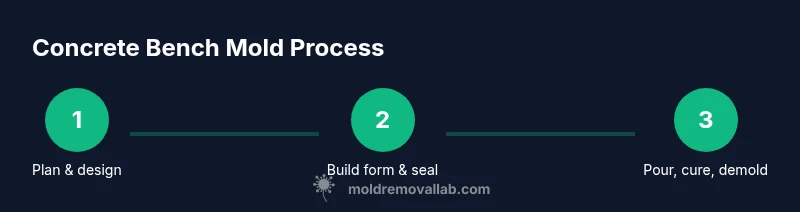
By the end, you'll design a durable concrete bench mold and complete the pour with proper curing and demolding. This guide covers form selection, material ratios, moisture control, and finish options, plus practical setup tips for indoor or outdoor benches. Expect actionable steps, safety reminders, and maintenance guidance to minimize cracking and mold risk around new concrete seating features.
What is a concrete bench mold and why it matters
A concrete bench mold is a temporary form that shapes freshly mixed concrete into a bench's seat, back, and legs until it cures. The quality of the mold determines symmetry, surface texture, and dimensional accuracy. For DIY projects, you can build simple wooden or melamine forms, or use metal or silicone inserts for different profiles. According to Mold Removal Lab, moisture management around any concrete feature is essential to prevent future mold growth, especially when a bench is placed indoors or near living spaces. The mold's edges should be aligned with the intended final dimensions, and the form should resist bulging during pour. Planning includes considering seating height (typically around 17-19 inches for adults), seat depth, and leg spacing. Using a rigid, well-braced form minimizes variances that cause cracks or stress concentrations. The bench mold should also be designed to accommodate reinforcement, such as rebar or welded wire mesh, without obstructing the pour. Temporary bracing, cut from scrap lumber, helps maintain square corners during assembly. Finally, think about release considerations—applying a release agent or wax prevents the cured concrete from sticking to the form, reducing demolding risk and surface damage.
Design considerations for a durable bench mold
Durability hinges on how you design and assemble the form. Choose materials that won’t deform under wet concrete, like plywood with melamine-faced panels or rigid plastic inserts. Plan for escape routes where venting is needed and ensure all joints are sealed with quality tape or caulk to prevent leaks and flow irregularities. Consider adding spring-loaded clamps or corner bracing to keep the form square as concrete fills. If you expect outdoor use, factor in thermal expansion and potential UV exposure; select weather-resistant materials and use a sturdy base to avoid warping. Finally, build in demolding clearance and space for edge finishing. A well-designed mold reduces surface imperfections and speeds up the project timeline.
Materials and finishes to achieve a smooth surface
Surface quality starts with form finish. Melamine-coated boards provide a smooth interior when joined tightly; rough plywood may transfer texture to the concrete unless adequately sealed. Apply a release agent to the form before pouring to minimize adhesion. For a uniform texture, consider bench profiles that match seating ergonomics and a light trowel pass after the concrete first stiffens. If you want a decorative finish, pigment the mix or apply a thin overlay after curing. Finally, seal the finished bench with a penetrating sealer to improve moisture resistance and reduce staining from outdoor exposure.
Pouring, curing, and demolding strategies
Pour in layers if the mold is large, letting each layer set slightly to reduce heat buildup and shrinkage. Use a screed to level the surface, followed by a darby or float for a clean edge. Control cure conditions by maintaining consistent temperatures and moisture; cover with plastic or burlap to slow moisture loss. Demolding should occur only after the concrete has reached enough strength; prying too soon can cause cracking. Release from the mold should be gradual; work around edges to prevent edge chipping. After demolding, allow any final cure in a controlled environment before light sanding or finishing.
Tools & Materials
- Plywood or melamine boards for form walls(Exterior-grade plywood or melamine-faced panels sized to bench dimensions)
- Screws or brads and clamps(For secure assembly and square corners)
- Release agent (wax, oil spray, or commercial form release)(Coats form surfaces to prevent sticking)
- Measuring tape and square(Accurate dimensions and straight edges)
- Circular saw or handsaw(Cut form pieces to size with straight edges)
- Caulk or tape for sealing joints(Prevent leaks and surface blemishes)
- Release liner or plastic sheeting(Optional extra protection for complex shapes)
- Reinforcement (rebar or welded wire mesh)(Add strength without obstructing pour)
- Concrete mix (Portland cement, sand, aggregate)(Choose a design mix; add pigment if desired)
- Water and mixing tools(Clean container and mixing paddle; measure water carefully)
Steps
Estimated time: 60-120 minutes active, plus curing time of 24-72 hours depending on mix and conditions
- 1
Define bench specs
Decide seat height, depth, and overall dimensions based on typical user comfort and space. Create a simple drawing or sketch to guide the form dimensions and reinforcement placement.
Tip: Use a carpenter’s square to ensure corners are true and prevent future alignment issues. - 2
Cut and assemble the form
Cut panels to size, assemble into a rectangular or curved profile, and brace securely. Check for square and level surfaces to avoid deviations in the final shape.
Tip: Temporarily clamp corners during dry fit to verify alignment before fastening. - 3
Seal edges and apply release
Seal all joints with caulk and apply a release agent evenly on the interior surfaces. This reduces surface defects and makes demolding easier.
Tip: Let sealant cure as directed before pouring. - 4
Mix the concrete
Combine Portland cement, sand, and aggregate in the recommended ratio until you reach a workable slump. Add pigment if you want color.
Tip: Avoid over-watering; a too-fluid mix can shrink and crack. - 5
Pour and level
Fill the mold in layers, tamping lightly to remove air pockets. Screed the top flat and use a float for a smooth finish.
Tip: Work in even strokes and keep the surface free of debris. - 6
Surface finish and texture
If you want a textured edge or seat surface, apply a light texture while the concrete is still workable. Smoothing at this stage minimizes later grinding.
Tip: Do not overwork the surface to prevent pinholes. - 7
Cure and protect
Keep the concrete moist for the initial curing phase for 24–72 hours, then protect from rapid temperature changes and direct sun.
Tip: Use plastic sheeting or burlap to control moisture loss. - 8
Demold and final finish
Carefully remove the form after initial strength is reached. Inspect for cracks and perform any light sanding or sealing as needed.
Tip: Demold slowly to avoid edge chipping.
FAQ
What is the purpose of a concrete bench mold?
A mold shapes the fresh concrete into a bench form with consistent dimensions and surface quality. It allows multiple copies to be produced with the same profile and helps prevent defects by providing stable boundaries for the pour.
A bench mold defines shape and size, helping you repeat the same bench every time.
Do I need a release agent for concrete benches?
Yes. A release agent prevents the concrete from sticking to the form, reducing surface damage during demolding and helping you reuse the mold more easily.
Yes, use a release agent so you can remove the bench without damaging the form or finish.
What concrete mix is best for benches?
A balanced mix with cement, sand, and aggregate is typical; you can adjust the aggregate size for surface texture. Consider a small amount of water to reach the desired slump but avoid a runny mix.
A standard mix with cement, sand, and aggregate works well; avoid over-watering.
How long does curing take before demolding?
Curing times vary with temperature and humidity; wait until the concrete has gained sufficient strength as indicated by your mix instructions before demolding.
Let the bench cure until it gains enough strength according to the mix guide, then demold carefully.
Can I reinforce the bench mold for extra strength?
Yes. Adding rebar or welded wire mesh inside the mold increases strength, especially for longer benches. Plan reinforcement placement so it won’t interfere with the pour.
You can add reinforcement, but place it where it won’t disrupt the pour or surface finish.
How can I prevent cracks after demolding?
Maintain consistent curing moisture and avoid rapid drying. A sealed surface and gradual temperature changes help minimize cracking risk.
Keep the curing steady and protect from heat to prevent cracks.
Watch Video
The Essentials
- Plan bench dimensions before building the mold
- Use a rigid, well-braced form with a reliable release
- Control curing moisture for crack-free finishes
- Seal and protect surfaces to minimize moisture-related issues