Can You Take Mold from One House to Another? A Safe Remediation Guide
Learn why transferring mold between homes is unsafe, plus a clear, step-by-step path for containment, remediation, and safe relocation of belongings.


Can you take mold from one house to another? No—it's not advisable. Mold spores cling to clothing, tools, and belongings and can spread during relocation, contaminating the new home. The safe approach is to contain and remediate the mold on-site, fix the moisture source, then reintroduce items only after proper cleaning and clearance. According to Mold Removal Lab, avoidance protects health and property.
Why transporting mold between houses is a bad idea
Relocating belongings in a mold-affected space may seem practical, but it carries significant risks. A common question homeowners ask is can you take mold from one house to another; the answer is generally no. Mold spores are lightweight and versatile: they ride on clothing, shoes, upholstery, tools, and even dust that rides along in a moving truck. When you relocate items that have even small traces of mold, you’re not just moving visible patches—you’re potentially ferrying invisible spores into a previously clean home. Once spores arrive, they settle on new surfaces, find a moisture source, and begin to form new colonies. Exposure to mold spores can irritate the eyes, nose, and lungs, and people with allergies or asthma may experience worse symptoms. The risk is not only to health but also to property: mold can invade insulation, drywall, and framing, creating hidden damage that is expensive to repair. From a practical standpoint, the best approach is to treat the mold where it is, fix the moisture source, and plan a clean relocation of belongings only after on-site remediation and clearance testing.
How mold behaves in structures and on belongings
Mold spores are highly adaptable and can cling to many surfaces and fabrics. In a typical home, porous materials like drywall, wood, carpet, and textiles can harbor mold growth when moisture remains present. Non-porous surfaces such as metal or sealed plastic are easier to clean, but spores can still hitch a ride on tools, shoes, or contaminated bags. Mold movement is not limited to an interior space: spores can transfer via air currents, on clothing, and with items that leave the affected area. This means that even items that look clean may carry hidden colonies into a new residence. Understanding this behavior underscores why relocation before proper remediation is risky and why containment and moisture control are central to any effective plan, as highlighted by Mold Removal Lab Analysis, 2026.
What to do instead: containment, assessment, and remediation
If mold is present, the safest path is to stop spreading it and address the root cause. Start with containment: seal the affected area with plastic sheeting, close doors, and minimize traffic through the space. Next, identify and fix the moisture source—leaks, high humidity, or condensation—that sustains mold growth. A professional remediation plan typically includes moisture control, removal of contaminated materials, cleaning of salvageable surfaces, and verification that conditions meet clearance standards. Documentation of the remediation steps can help with insurance claims and future housing decisions. The aim is not simply to remove visible mold but to ensure that the environment remains inhospitable to mold growth in the long term, reducing the risk of recontamination during any relocation of belongings later in the process.
Safe, step-by-step remediation approach (without moving mold)
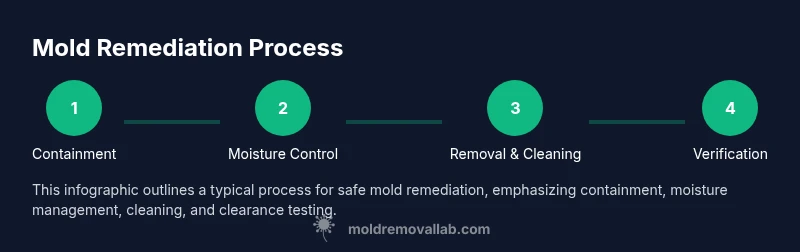
Remediation should prioritize containment, moisture control, removal, cleaning, and verification. Professionals assess the extent of growth, isolate the area, and use HEPA filtration to prevent airborne spread. They then remove porous, mold-damaged materials and thoroughly clean non-porous surfaces. After cleanup, a thorough drying phase follows to prevent relapse. Clearance testing confirms the space meets health-based guidelines before any reoccupation or relocation of items. This approach minimizes exposure, protects occupants, and limits further damage to the structure.
Cleaning and decontaminating belongings before relocation
Before transporting items out of a mold-affected zone, clean and decontaminate what is salvageable. Porous items that harbor deep mold growth are often best disposed of, while non-porous items can be cleaned with industry-standard methods. Bag and seal contaminated materials in puncture-resistant bags to prevent spore escape, and bag any items returned to the home after remediation to protect other areas during unpacking. For textiles and soft goods, consider professional cleaning or dry cleaning when feasible. Always use a well-ventilated area and appropriate PPE during any handling or cleaning tasks to minimize exposure.
Health, safety, and legal considerations
Mold exposure can irritate the eyes, skin, and respiratory system, particularly for sensitive individuals. PPE is essential when handling or moving items near a mold source: wear a respirator, eye protection, and gloves, and use HEPA filtration where possible. Keep children and pets away from affected areas during remediation and cleaning. Legally, remediation records and professional certifications may be required or beneficial for insurance claims, landlord agreements, or resale; check local regulations and policy requirements. Documented remediation actions, moisture control steps, and post-remediation inspections provide a transparent trail that supports safe, compliant housing decisions.
Tools & Materials
- Plastic sheeting (6 mil or thicker)(To seal off areas and create containment barriers between spaces)
- Duct or painter's tape(For securing plastic sheeting and forming containment seals)
- NIOSH-approved respirator (P100 or higher)(Protects against inhaling mold spores during remediation)
- Nitrile gloves(Barrier between skin and contaminated surfaces)
- Safety goggles(Eye protection against splashes and spores)
- HEPA vacuum(Used for initial debris removal and minimizing airborne spores)
- Moisture meter / hygrometer(To assess drying progress and moisture baselines)
- Trash bags / sealable disposal bags(For contaminated materials and waste control)
- EPA-registered surface disinfectant(For non-porous surface sanitization after cleaning)
Steps
Estimated time: 2-3 weeks
- 1
Assess and map contamination
Document the extent of visible mold and suspected hidden growth. Record moisture sources and affected materials. This baseline guides containment and remediation decisions.
Tip: Take photos from multiple angles before you start any removal. - 2
Contain the area
Seal doors and vents with plastic sheeting to prevent spore spread. Create a dedicated entry/exit to limit cross-contamination.
Tip: Set up a negative pressure environment if you have access to an air scrubber. - 3
Fix the moisture source
Repair leaks and address condensation. Without moisture control, mold will recur after remediation.
Tip: Document repairs to support future insurance or landlord claims. - 4
Protect yourself and the workspace
Don PPE, and avoid disturbing mold mats or growth. Keep tools dedicated to the remediation area.
Tip: Never mix cleaning agents; follow product labels and safety data. - 5
Remove contaminated materials
Dispose of porous materials that show extensive mold growth in sealable bags. Keep cleanup contained and contained.
Tip: Bag waste securely and label as mold-contaminated for disposal. - 6
Clean and disinfect surfaces
Clean non-porous surfaces with appropriate cleaners and disinfectants. Use HEPA filtration during drying and cleanup.
Tip: Rinse and allow to dry thoroughly before re-entry or relocation planning. - 7
Dry thoroughly and verify
Run dehumidification and ventilation until moisture readings stabilize. Schedule clearance testing to confirm safety before reoccupation.
Tip: Do not rush drying—premature reoccupation raises relapse risk.
FAQ
Can you transfer mold by moving belongings between houses?
No. Mold spores can cling to porous items and travel with belongings, increasing contamination risk in a new home. Relocation before proper remediation should be avoided.
No—mold can cling to belongings and spread to a new house; relocation before remediation is not safe.
When is it necessary to hire a professional remediation service?
If mold covers large areas, involves porous materials, or moisture problems persist, professional remediation is recommended to ensure safe removal and moisture control.
If mold is extensive or moisture issues persist, hire a professional remediation service.
How long does remediation typically take?
Duration varies with extent and moisture control success. Plan for several days to weeks, depending on the size of the affected area and material risk.
Remediation time depends on the scope and moisture control needs; it can take days to weeks.
Do I need a mold inspection after remediation?
Yes. A follow-up inspection or clearance test confirms that mold is removed and conditions are safe for reoccupation or relocation of items.
Yes—get a post-remediation inspection to ensure safety before moving items back in.
What should I do with personal items that were in the moldy area?
Porous items with heavy mold should be discarded. Non-porous items can be cleaned and dried thoroughly, then moved only after full clearance.
Discard porous items with heavy mold and thoroughly clean salvageable items after clearance.
Is it safe to DIY mold cleanup for small areas?
Small, non-porous areas may be cleaned by homeowners with proper PPE and guidance. For larger or porous areas, professional remediation is advised.
Small, non-porous areas can sometimes be cleaned by homeowners with care; larger jobs should be done by pros.
Watch Video
The Essentials
- Do not move mold-contaminated belongings between homes.
- Containment and moisture control are the foundation of safe remediation.
- Professional remediation reduces exposure and prevents recurrent growth.
- Post-remediation clearance testing confirms safety before relocation of items.
- Document steps to support insurance and future housing decisions.