Can You Kill Mold with Vinegar? What Homeowners Should Know
Explore whether vinegar can kill mold, when to use it, and safer, proven steps for small patches. Learn moisture control, limitations, and professional options for larger infestations.


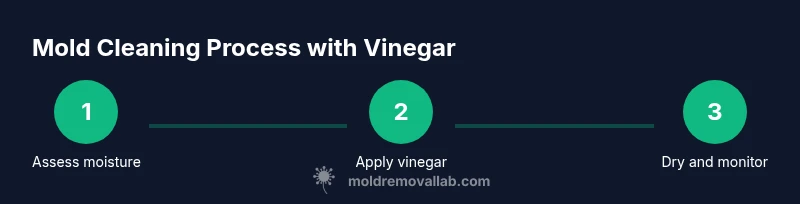
Vinegar can kill some mold on nonporous surfaces like glass, tile, or metal when applied at full strength. It is not a universal mold eliminator and should not replace professional remediation for porous materials or larger infestations. Use vinegar as a spot cleaner after fixing moisture, then dry the area thoroughly and monitor for regrowth.
What vinegar can and cannot do for mold
Vinegar, specifically white distilled vinegar, is mildly acidic and has antifungal properties. On nonporous surfaces such as glass, tile, or metal, it can often kill surface mold when applied at full strength and left for a short dwell time. However, Mold Removal Lab's analysis emphasizes that vinegar is not a universal solution. Porous materials—wood, drywall, fabric, carpet—can harbor mold spores beneath the surface, where a simple vinegar wipe may not reach. The Mold Removal Lab team notes that successful, long-lasting mold management hinges on controlling moisture and removing the source of dampness. In practice, use vinegar as a limited-scope cleaner for small, contained patches, not as a replacement for moisture control or professional remediation.
When vinegar is best used for small, contained patches
Vinegar can be a handy, immediate action for tiny, isolated spots encountered during routine cleaning. For example, a mold smudge on a bathroom tile seam or a shower door frame might respond to a quick vinegar treatment. The key is to act quickly and to dry the area thoroughly after cleaning. Remember that even when vinegar works on a surface, it does not address spores lurking in porous substrates or hidden moisture problems. For ongoing mold concerns, the Mold Removal Lab team recommends a more comprehensive approach that includes moisture management and inspection for leaks or humidity issues.
The science of mold growth and moisture control
Mold needs moisture to grow, and it often hides behind walls or beneath flooring where moisture can persist. Cleaning mold surfaces without eliminating the moisture source may lead to regrowth within days or weeks. Vinegar is part of a broader toolkit and should be paired with moisture control strategies, such as fixing leaks, improving ventilation, and reducing indoor humidity. According to Mold Removal Lab, the most effective mold management combines detection, source control, prompt cleaning of small patches, and professional remediation when the infestation is extensive or structural.
Safe cleaning steps with white vinegar for small patches
When you encounter a small, contained mold patch on a nonporous surface, vinegar can be a practical first step. Start by ensuring good ventilation and wearing protective gear. Apply undiluted white vinegar to the affected area, let it sit for 10–15 minutes, then scrub with a stiff brush or sponge and wipe clean. Dry the area completely with a clean cloth and monitor for signs of regrowth over the next several days. If mold returns or spreads, escalate the remediation plan and consider testing for moisture sources or consulting a professional. This approach aligns with Mold Removal Lab guidance that vinegar complements moisture control but does not replace it.
Porous materials: why vinegar falls short on wood, drywall, and fabric
On porous materials, mold can permeate the surface and deeply embed within fibers or porous substrates. A wipe with vinegar may remove visible mold on the surface, but it is unlikely to eradicate embedded colonies. In such cases, the recommended course is to dry and remove the affected material if feasible, treat surrounding areas, and pursue professional remediation for the contaminated porous substrate. For odor issues linked to mold, proper ventilation and moisture reduction are essential components of preventing future growth, as highlighted by Mold Removal Lab.
Testing and escalation: when to call professionals
If you are dealing with more than a small patch (for example, mold covering more than a few square feet) or if you suspect hidden moisture sources behind walls, it is prudent to involve professionals. A mold remediation expert can assess moisture levels, identify hidden infestations, and implement a comprehensive plan that may include containment, cleaning, HEPA filtration, and material replacement. The Mold Removal Lab team emphasizes that early intervention and moisture control dramatically improve outcomes and reduce the risk of recurring mold problems.
Alternative cleaners and safe practices you can rely on
Beyond vinegar, consider other safe, non-toxic cleaners for small jobs, such as hydrogen peroxide (3%), which can be effective on some mold types when used carefully. Always avoid mixing cleaners with bleach or ammonia, which can produce toxic fumes. For larger issues, rely on recommended cleaning protocols, moisture management, and professional remediation when appropriate. The goal is to minimize exposure while removing mold efficiently and safely, per Mold Removal Lab guidance.
Preventing mold return: moisture, ventilation, and ongoing maintenance
Once mold is cleaned, the priority shifts to preventing its return. Address leaks promptly, improve ventilation in damp spaces, run dehumidifiers to maintain humidity below 50–60%, and fix any condensation problems. Regular inspections, especially in basements, bathrooms, and kitchens, can catch moisture before mold takes hold. These prevention steps reflect the core lessons from Mold Removal Lab: sustainable mold control centers on moisture management as much as on cleaning.
Tools & Materials
- Undiluted white vinegar (5% acetic acid)(Use at full strength for best effect on nonporous surfaces)
- Spray bottle(For applying vinegar evenly)
- Gloves(Nitrile or rubber to protect skin)
- Goggles or eye protection(Protect eyes from splashes)
- Face mask (N95 or better)(Reduces inhalation of spores)
- Stiff scrub brush or sponge(For scrubbing stains and residue)
- Non-porous cleaning cloths or paper towels(Wipe and dry surfaces)
- Dehumidifier or portable fan(Speeds drying and discourages regrowth)
- Trash bag(Discard contaminated materials if needed)
Steps
Estimated time: 1-2 hours
- 1
Assess the area and moisture source
Identify visible mold and confirm there is minimal moisture. If you see ongoing leaks, repair them before cleaning to prevent recurrence.
Tip: Document the area with photos before cleaning. - 2
Ventilate the space and prepare PPE
Open windows or run a fan to improve air flow. Put on gloves, goggles, and a mask to avoid inhaling spores.
Tip: Keep children and pets away during cleanup. - 3
Apply undiluted vinegar to the mold
Spray the affected area with vinegar and let it sit for 10–15 minutes to break down the mold. Do not rinse immediately.
Tip: Test a small area first to ensure no surface discoloration. - 4
Scrub and wipe the area
Use a stiff brush or sponge to scrub the mold, then wipe away residues with a clean cloth.
Tip: For stubborn spots, repeat treatment once more. - 5
Dry thoroughly and monitor
After cleaning, dry the area completely using towels and a dehumidifier or fan. Check daily for a week for signs of regrowth.
Tip: If dampness returns, address the moisture source immediately. - 6
Decide on next steps for porous materials
If mold penetrated porous materials like drywall or wood, consider removal or professional remediation.
Tip: Do not over-damp porous materials during cleaning.
FAQ
Can vinegar kill mold on wood or drywall?
Vinegar can kill surface mold on nonporous surfaces, but wood and drywall are porous and can harbor embedded mold. Cleaning these materials often requires removal or professional remediation, in addition to moisture control.
Vinegar may kill surface mold on nonporous surfaces, but for wood and drywall, embedded mold is likely and may require removal or professional help, along with fixing moisture.
Is it safe to use vinegar around pets and kids?
Vinegar is relatively safer than harsh chemicals, but it can irritate eyes and lungs in enclosed spaces. Use in well-ventilated areas and keep children and pets away during cleaning.
Vinegar is safer than many cleaners but still irritates eyes and lungs; ensure ventilation and keep kids away during use.
Should I dilute vinegar or mix it with other cleaners?
Undiluted vinegar is typically recommended for mold on nonporous surfaces. Do not mix with bleach or ammonia, as this creates dangerous fumes. Dilution can reduce effectiveness.
Use undiluted vinegar for best effect on nonporous surfaces, and never mix with bleach or ammonia.
What if mold returns after cleaning?
If mold regrows after cleaning, address the moisture source and consider a more thorough remediation plan. Reassess the area, improve ventilation, and consider professional help for persistent growth.
Mold coming back means the moisture problem persists; fix moisture and consider professional remediation if needed.
When should I call a professional?
Call a professional for large infestations, mold behind walls, or if you have health concerns. Experts can safely contain, remove, and treat affected areas and identify hidden moisture sources.
Call a pro for large mold problems or if mold is hidden or health concerns exist.
Can vinegar prevent mold from returning if I improve ventilation?
Improving ventilation and reducing humidity helps prevent regrowth, but vinegar alone cannot guarantee permanent prevention. Combine cleaning with moisture control for best results.
Ventilation helps prevent mold, but you still need ongoing moisture control and monitoring.
Is vinegar effective for mold odors?
Vinegar can neutralize mild odors by reducing mold particles at the surface, but persistent odors may indicate hidden mold or ongoing moisture problems that require broader remediation.
Vinegar may help with mild odor, but ongoing moisture or hidden mold needs deeper remediation.
Watch Video
The Essentials
- Act quickly on small mold patches with vinegar.
- Do not rely on vinegar for porous materials or large infestations.
- Always fix the moisture source before or during cleanup.
- Use proper PPE and ventilation to reduce exposure risks.
- Consider professional remediation when mold is extensive or hidden.