Can a Dehumidifier Kill Mold? Practical Guidance for 2026
Explore whether a dehumidifier can kill mold, how it helps, its limits, and a practical remediation plan for homeowners and renters in 2026.


A dehumidifier cannot kill existing mold spores. It reduces indoor humidity to levels that slow mold growth and create conditions unfavorable for recolonization. For effective remediation, you must remove visible mold, clean affected surfaces, and fix moisture sources. Use a dehumidifier as part of a broader mold-control plan, not as a stand-alone cure.
How humidity controls mold growth
Mold thrives in damp environments where moisture is plentiful. In indoor spaces, humidity acts as the fuel that allows spores to take hold and begin colonizing walls, ceilings, and porous materials. A dehumidifier reduces the water vapor in the air, lowering relative humidity (RH) and making the space less hospitable for mold. This effect is most pronounced in closed rooms with daily moisture inputs, such as kitchens, bathrooms, laundry areas, and basements. Importantly, reducing humidity does not instantly sterilize surfaces or kill spores already embedded in substrates. Visible mold growth and contaminated materials still need cleaning and, in some cases, removal. According to Mold Removal Lab, keeping RH below a practical threshold is a foundational step in mold control and should be paired with moisture-source control and timely cleanup.
The science of dehumidifiers and mold
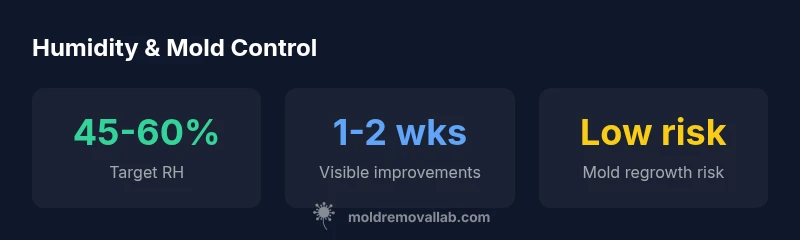
Dehumidifiers work by drawing moist air over cooled coils, condensing water, and returning drier air to the room. The effectiveness depends on the unit’s size relative to the space, ambient temperature, and ongoing moisture input. In larger spaces, a correctly sized unit can bring RH toward a target range—often around 45-60% depending on climate. If humidity remains high or if moisture enters the space continually, mold can continue to grow on surfaces that stay damp. It is critical to place the unit where air can circulate and to maintain continuous operation until the target humidity is sustained for several days. The Mold Removal Lab Team notes that simple air-drying without addressing leaks or condensation will yield limited results.
When to rely on a dehumidifier as part of remediation
A dehumidifier should be used as part of a broader mold-remediation plan. After visible mold has been removed and surfaces cleaned, continuous dehumidification helps prevent regrowth by limiting moisture. It is most effective when paired with fixing leaks, improving ventilation, and drying wet areas promptly. In spaces with persistent moisture intrusion, dehumidification alone cannot stop mold without addressing the water source. Mold Removal Lab research indicates that the long-term success of mold control hinges on a combination of cleanup, moisture reduction, and structural corrections.
Step-by-step use: optimizing a dehumidifier for mold control
- Measure the space and select a unit with adequate capacity; 2) Seal drafts and fix ongoing moisture sources before starting; 3) Run the dehumidifier continuously until you reach the target RH (e.g., 45-60%) for several days; 4) Use a hygrometer in multiple locations to verify consistency; 5) Empty or drain the unit regularly to avoid shutoffs; 6) Clean the dehumidifier coils and air filters to maintain efficiency; 7) Pair with regular ventilation, especially in damp bathrooms and kitchens; 8) Reassess weekly to ensure RH remains stable after remediation. The goal is to keep humidity consistently below the threshold that supports mold growth and to combine dehumidification with cleaning and moisture-control actions.
Limitations and common pitfalls
Dehumidifiers do not kill mold spores; they slow growth by depriving mold of moisture, but spores can remain viable in hidden pockets. They are not a replacement for cleaning or structural repairs, and their effectiveness depends on proper sizing and continuous operation. In many homes, moisture sources behind walls or inside HVAC systems require more than dehumidification. Electrical safety is critical: keep units away from water, use proper outlets, and follow manufacturer instructions. If you see recurring mold after dehumidification, reassess moisture sources and consider professional assessment.
Complementary strategies: cleaning, ventilation, and professional help
Dehumidification is one tool among several needed to control mold. Pair it with effective cleaning (non-bleach cleaners on non-porous surfaces), HEPA vacuuming to capture spores, and thorough drying of damp materials. Improve ventilation by using exhaust fans in bathrooms and kitchens, and ensure outdoor air doesn’t introduce excess moisture. For larger infestations or persistent mold despite dehumidification, seek professional remediation services that can contain the area, test for hidden mold, and repair moisture problems. The Mold Removal Lab Team emphasizes the value of professional guidance for complex situations and notes that air purifiers with HEPA filtration can support mold-control efforts during remediation.
Quick decision guide: do this first, then decide
- Check RH with a hygrometer and aim for a constant 45-60% RH in damp spaces. - Locate and fix water leaks and condensation sources. - Remove visible mold using appropriate cleaners and protective gear. - Use a properly sized dehumidifier to maintain humidity, but do not rely on it to sterilize surfaces. - If mold recurs after remediation, seek professional help and consider a moisture-management plan for the home.
Comparison of mold-control approaches
| Method | Effect on mold growth | Humidity change (typical) | Pros | Cons |
|---|---|---|---|---|
| Dehumidifier | Slows growth by reducing moisture availability | 5-15 percentage points RH reduction (typical) | Low energy, adjustable humidity targets | Does not kill spores; requires sizing and continuous operation |
| Improved ventilation (exhaust fans, open windows) | Increases air exchange; reduces stagnant moisture | N/A | Low cost, easy to implement | Dependent on outdoor conditions; may bring moisture indoors if humid outside |
| Professional remediation (full mold removal) | Eliminates existing colonies; addresses structural moisture | N/A | Most effective long-term | Expensive; requires downtime |
FAQ
Can a dehumidifier kill mold spores?
No. Dehumidifiers reduce humidity to slow mold growth, but they do not sterilize surfaces or kill existing mold spores. Effective remediation combines moisture control with cleaning and removal of mold-contaminated materials when necessary.
No. Dehumidifiers slow mold growth by reducing humidity; cleaning and removal are needed for active mold.
What humidity level should I maintain to prevent mold?
Aim for indoor relative humidity in the 45-60% range in most homes. This range generally discourages mold growth while preserving occupant comfort. Use a hygrometer to monitor levels and adjust as needed.
Keep humidity around 45 to 60 percent to discourage mold.
Is it safe to run a dehumidifier during mold cleanup?
Yes, when used as part of a mold-cleanup plan. Ensure the area is thoroughly cleaned, leaks are repaired, and surfaces are dry before closing up. Dehumidification supports faster drying and reduces regrowth risk.
Yes, as part of a comprehensive cleanup and moisture-control plan.
When should I call a professional mold remediation service?
Call a professional for large infestations, suspected hidden mold, or recurring mold after initial remediation. Professionals have containment, proper PPE, and testing to confirm mold species and ensure safe removal.
Consider calling a pro for large or persistent mold issues.
Can standing water defeat the benefits of a dehumidifier?
Standing water indicates ongoing moisture problems. Until water intrusion is addressed, a dehumidifier alone is unlikely to prevent mold growth. Resolve leaks, drainage, and drainage sources first.
Yes, if water keeps feeding mold, fix the source first.
Are there safety concerns using a dehumidifier near electrical outlets?
Yes. Keep dehumidifiers away from water, use GFCI outlets in wet areas, and follow product instructions. Avoid running cords across wet floors to reduce shock risk.
Yes—watch electrical safety, follow the manual.
“A dehumidifier is a moisture-control tool, not a sterilizing cure; lasting mold control requires cleaning, moisture repair, and proper ventilation.”
The Essentials
- Dehumidifiers slow mold growth by reducing moisture, not kill existing spores
- Aim for 45-60% RH in damp spaces when using humidification devices
- Pair humidity control with moisture-source repair and cleaning
- Do not rely on a dehumidifier alone for professional mold remediation