Black Mold Facts: A Practical Homeowner Guide
Explore essential black mold facts, health risks, detection tips, and practical steps for safe remediation and prevention in homes. Mold Removal Lab provides evidence-based guidance for smart, safe cleanup.


Black mold facts show that exposure in damp indoor spaces can affect health, especially for sensitive groups. The mold most linked to water damage is Stachybotrys chartarum, which needs cellulose-rich materials like drywall to grow. Visible patches range from greenish-black to dark gray, often with a musty odor. Mitigation requires moisture control and careful cleaning.
What black mold facts mean for your home
According to Mold Removal Lab, black mold facts anchor consumer awareness around moisture control and rapid remediation. The Mold Removal Lab team found that health risk is higher for children, older adults, and people with asthma or allergies in spaces with sustained dampness. In practice, homeowners should treat any visible mold growth or musty odor as a warning sign and address the moisture source before cleaning. This section outlines the core facts you need to know to evaluate risk and plan practical steps for safe cleanup and prevention.
How black mold grows: moisture, surfaces, and materials
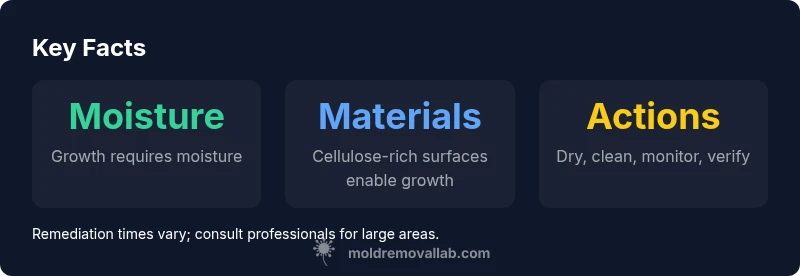
Mold growth requires three elements: moisture, suitable substrates (like drywall, wood, or wallpaper), and spores that can travel through the indoor environment. Black mold, often associated with damp basements, bathrooms, or leaky roofs, thrives where cellulose is present. Porous materials retain moisture and provide food sources, enabling colonies to spread behind walls and under flooring. Temperature also influences growth, with many molds preferring warm, humid conditions. The key takeaway for homeowners is that controlling moisture, repairing leaks promptly, and improving ventilation dramatically reduces the chance of black mold establishing itself.
Health implications of exposure to black mold
Exposure to mold spores can trigger allergic reactions, coughing, wheezing, eye irritation, and skin rashes in some individuals. In sensitive groups—children, the elderly, and people with asthma or immune compromise—the health effects can be more pronounced. While not all black molds release toxins, certain species under chronic exposure have been linked to more serious respiratory symptoms. Practical safety steps, such as avoiding direct handling and wearing a mask during cleanup, can minimize risk while you address moisture issues.
How to identify black mold safely in your living spaces
Visible dark patches on walls, ceilings, or under sinks, especially after leaks, are common indicators. A musty odor often accompanies mold growth. Use good lighting to inspect hidden areas like behind appliances or inside wall cavities after removing a small patch to check for additional growth. Personal protective equipment is essential: NIOSH-approved respirator, gloves, and eye protection during any investigation or cleanup. If you discover mold in a moisture-damaged area larger than a few square feet, treat it as a potential safety issue and proceed with caution.
Testing and confirmation: when to test and how
Testing can help confirm the presence of mold and identify species, but it should not be the sole basis for remediation decisions. Accredited labs can perform air and surface tests; results can take several days. Visual inspection alone is not sufficient to determine safety, particularly for hidden growth behind walls. If testing is recommended, pair it with a moisture assessment to pinpoint sources.
Immediate steps if you discover suspected black mold
- Contain the area to prevent spread—close doors, reduce airflow, and avoid disturbing patches. 2) Fix obvious moisture problems: leaks, condensation, or humidity above 60%. 3) For small, isolated patches (under 10 square feet), carefully clean with detergent and water, dry completely, and re-check after 24-48 hours. 4) Keep children and pets away from the area and wear proper PPE. 5) Consider hiring a professional for confirmation and safe remediation if concerns persist.
When to call a professional for black mold remediation
Large infestations, mold growth in HVAC systems, or mold on porous materials like drywall usually require professional remediation. A certified mold contractor can assess contamination, set up containment, and use specialized equipment to remove mold and properly dispose of waste. They can also verify that moisture sources are addressed and perform post-remediation testing to confirm safety.
Prevention strategies to minimize black mold return
Prevention focuses on moisture control: fix leaks promptly, use dehumidifiers in damp spaces, ensure adequate ventilation, and maintain indoor humidity between 30-50%. Regular inspections of bathrooms, kitchens, basements, and crawl spaces help catch issues early. Use mold-resistant products in high-moisture areas and promptly dry surfaces after spills or cleaning. A routine cleaning plan combined with moisture monitoring reduces the likelihood of recurrence.
Common myths about black mold facts debunked
Myth: All dark mold is black mold and highly toxic. Reality: Many dark molds are common and benign, but some species pose health risks; proper identification matters. Myth: Bleach kills all molds. Reality: Bleach can be ineffective on porous materials and may not reach hidden growth. Myth: If you can't see it, you're fine. Reality: Hidden mold can still contaminate indoor air; testing and moisture control are essential.
Overview of factors related to black mold management
| Mold aspect | Guidance | Why it matters |
|---|---|---|
| Mold type | Stachybotrys chartarum commonly labeled as black mold | Health risk context |
| Moisture trigger | Sustained dampness, leaks, high humidity | Growth conditions |
| Remediation approach | Prompt moisture control; professional remediation for large infestations | Impact on safety |
FAQ
What is black mold?
Black mold is a term used for certain dark mold species commonly found in damp structures, notably Stachybotrys chartarum. It can accompany health concerns, but not all dark molds are dangerous.
Black mold refers to dark molds that grow in damp areas; some species can affect health, so identification matters.
Is black mold dangerous to health?
Exposure risk depends on species and exposure level; some molds release toxins. People with allergies or asthma may be more affected, so caution is advised.
Exposure risk varies; sensitive individuals should avoid prolonged exposure and seek assessment.
How can I safely identify black mold?
Look for dark patches on moist surfaces and a musty odor. Do not disturb mold; if in doubt, have a professional confirm.
Dark patches plus a musty smell can indicate mold; for certainty, get it tested by pros.
Can I remove black mold myself?
Small patches (under 10 square feet) may be cleaned with care using proper PPE and cleaners. Larger infestations should be handled by professionals.
For tiny spots you can try cleaning with protection; bigger problems need a pro.
How long does remediation take?
Time varies by area size and complexity; expect a few days to a couple of weeks for larger projects, with post-remediation checks.
Duration depends on extent; is usually days to weeks.
Should I test for black mold?
Testing can confirm presence and guide action, but should be paired with moisture assessment. Use accredited labs for results.
Testing helps confirm mold, but don’t rely on DIY tests alone.
“Black mold facts underscore that prevention is far more effective than reactive cleanup; moisture control is the cornerstone of safe homes.”
The Essentials
- Act quickly on moisture problems to prevent mold.
- Identify and address the source of dampness.
- Consult professionals for large or uncertain infestations.
- Prioritize moisture control to prevent recurrence.