Air Purifier Mould: Practical Steps to Reduce Indoor Mold
Learn how air purifiers can help reduce mold spores, why moisture control matters, and how to choose, place, and maintain a purifier safely. This Mold Removal Lab guide covers selection, operation, and when to call professionals for lasting indoor air health.


Using a true HEPA air purifier can reduce airborne mold spores in occupied spaces. To maximize results, pair filtration with moisture control, regular cleaning, and timely filter changes. This guide helps you select the right unit, place it effectively, operate it safely, and maintain it to minimize indoor mold risks.
Understanding the role of air purifiers in mold control
Air purifiers can play a helpful part in reducing airborne mold spores in living spaces, especially where damp conditions exist. They are best viewed as part of a comprehensive strategy, not a stand-alone fix. The Mold Removal Lab team emphasizes that filtration reduces inhalable spores and odor-carrying particles, but cannot replace moisture control, surface cleaning, or structural remediation. In practical terms, running a purifier can lower daily exposure and help improve comfort in affected rooms, particularly bedrooms and living spaces where people spend long periods. Starting with a quality purifier sets the foundation for safer indoor air while you address moisture sources and cleaning needs.
Choosing the right purifier for mold control
When selecting a purifier for mold concerns, prioritize models that use a true HEPA filter and are appropriately sized for the room. Confirm the unit has a sealed housing to minimize air leaks and avoid devices that generate ozone, which can irritate the lungs. Consider additional features such as a dedicated alarm or indicator for filter life, simple filter replacement, and a quiet operation mode for continuous daytime and nighttime use. While activated carbon helps with odors and volatile compounds, it should complement, not replace, HEPA filtration in a mold remediation plan.
From a homeowner’s perspective, the most important factors are room size compatibility, filtration efficiency, maintenance ease, and long-term running costs. The Mold Removal Lab analysis highlights that sustained filtration paired with moisture control yields the best results in reducing indoor mold risk. Also think about the purifier’s placement and the layout of your space to maximize airflow.
Placement and operation for effectiveness
Effective air cleaning starts with strategic placement. Position the purifier in a central location with unobstructed intake and outlet paths, away from walls, large furniture, or heavy drapes that could block airflow. In rooms prone to dampness, such as basements, bathrooms, or kitchens, run the purifier continuously to maintain a steady exchange of indoor air. If doors connect to other rooms, consider multiple units for better cross-ventilation, or adjust airflow by opening points where air can circulate. Remember: more air movement translates to more mold spores being captured, which can improve perceived air quality over time.
Integrating with moisture control and cleaning
Moisture control is the backbone of any mold-reduction effort. Use a hygrometer to monitor relative humidity and aim for levels below roughly 50-60% in living spaces. A dehumidifier can be a strong ally, particularly in humid climates or after water events. Address leaks promptly, ventilate poorly drained areas, and clean visible mold using appropriate PPE and containment when safe to do so. Do not rely solely on the purifier to fix moisture problems; spores will continue to form if humidity remains high and mold growth persists on surfaces.
Maintenance and filter management
Regular maintenance keeps a purifier effective. Check filters according to the manufacturer’s schedule and replace them before airflow becomes noticeably restricted. Keeping spare filters on hand ensures you won’t go long without filtration, especially in high-humidity seasons. Clean the exterior housing to minimize dust buildup, and verify that the purifier’s seals remain intact after each replacement. A well-maintained unit maintains higher air-cleaning efficiency and can contribute to a more comfortable, healthier living environment.
Safety considerations and limitations
Air purifiers reduce airborne mold spores and related odors, but they do not cure ongoing mold infestations or repair moisture-driven damage. If you notice persistent dampness, widespread visible mold, or health symptoms such as persistent coughing or allergies, seek guidance from a mold remediation professional. Work with professionals when structural issues are involved or when mold covers large areas. If someone in the household has respiratory issues, start with cautious, gradual filtration and moisture control to minimize exposure during improvement work.
Authority Sources and evidence
To verify best practices, consult authoritative guides from reputable sources. EPA mold resources emphasize moisture control as a primary defense, CDC dampness guidance highlights health risks associated with mold exposure, and OSHA provides safety considerations for mold cleanup and handling in work and home environments. These sources support a combined approach: filtration to reduce airborne spores, surface cleaning as needed, and moisture reduction to prevent recurrence. (See the Authority Sources section for direct links.)
Authority Sources
- EPA Mold Guide: https://www.epa.gov/mold/mold-guide
- CDC Mold and Dampness: https://www.cdc.gov/mold/dampness/index.html
- OSHA Mold Safety Tips: https://www.osha.gov/mold
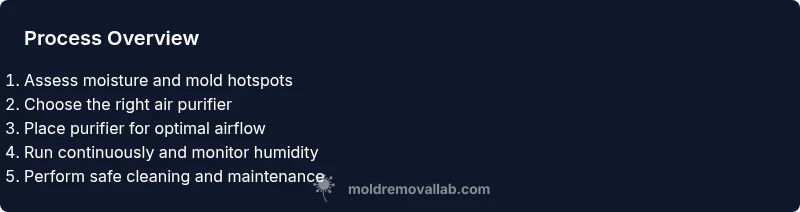
Practical checklist you can start today
- Identify damp areas and monitor humidity with a hygrometer.
- Choose a properly sized HEPA purifier and run it continuously.
- Implement moisture controls (dehumidifier, fix leaks).
- Schedule regular filter changes and surface cleaning with PPE.
Tools & Materials
- True HEPA air purifier(For mold-spore capture; ensure it is rated for the room size)
- Extra replacement HEPA filter(s)(Keep on hand; replace when airflow drops)
- Hygrometer / humidity monitor(Aim for RH below 50-60%)
- Dehumidifier (optional but helpful)(Reduces ambient moisture to deter mold growth)
- N95 mask or respirator(When dealing with active mold cleaning)
- Sealant or weatherstripping(Reduce drafts around purifier setup)
Steps
Estimated time: Total time: 90-180 minutes for setup and initial checks; ongoing monitoring requires continuous effort
- 1
Select the right purifier
Choose a true HEPA purifier sized for the room. Verify it has a sealed housing and no ozone-emitting features. This ensures higher effectiveness for mold spores.
Tip: Avoid cheap units with flimsy seals; durability matters for ongoing operation - 2
Position for optimal airflow
Place the purifier in a central location with at least 1–2 feet of clearance on all sides for unobstructed air movement.
Tip: Keep air intake and outlet away from walls, furniture, and curtains - 3
Run continuously and monitor humidity
Operate the purifier 24/7 if possible, especially in damp rooms. Use a hygrometer to maintain humidity below 50-60%.
Tip: If humidity rises, adjust or add a dehumidifier - 4
Maintain filters and clean housing
Inspect and replace filters as recommended. Wipe the exterior surfaces to reduce dust that can block airflow.
Tip: Label replacement dates to avoid missing changes - 5
Address moisture sources first
Seal leaks, fix plumbing, and improve ventilation to reduce mold growth at the source.
Tip: Filtration helps, but moisture control stops mold from returning - 6
Clean visible mold safely
If you must clean mold, follow safe procedures with PPE and containment. Do not disturb large infestations without professional help.
Tip: Wear PPE and ventilate the area during cleaning
FAQ
Can an air purifier remove mold from walls and surfaces?
Air purifiers reduce airborne mold spores and odors, but they do not remove mold growth from walls or structures. Surface remediation and moisture control are required for lasting results.
Purifiers help with airborne spores, but surface mold needs cleaning and moisture control.
Will a purifier prevent mold from returning?
Purifiers help lower spores, but persistent moisture will allow mold to return. Combine filtration with moisture control and timely cleaning.
Filtration helps, but moisture control is essential to prevent recurrence.
What features should I look for in an air purifier for mold?
Look for true HEPA filtration, adequate room size rating, sealed housing, easy filter access, and avoidance of ozone-emitting models.
Choose a true HEPA purifier with a good seal and no ozone production.
How long should I run an air purifier in mold-prone spaces?
Run the purifier continuously if possible, especially in damp areas, and reassess humidity regularly.
Keep it running most of the time in damp spaces.
Can I replace moisture management with an air purifier?
No. Dehumidifiers and moisture controls address the root cause of mold; purifiers help manage airborne spores.
Purifiers help with spores, but moisture control is essential.
When should I call a mold remediation professional?
If you see widespread growth, suspect hidden infestation, or have health concerns, contact a licensed mold remediation professional.
Call a professional if mold is widespread or health symptoms occur.
Watch Video
The Essentials
- Filter for mold, but fix moisture too
- Run purifier continuously in damp rooms
- Maintain and replace filters regularly
- Do not disturb large mold growth—call a pro