Humidifier Without Mold: Practical Prevention Guide
Learn how to use a humidifier without mold risk. This educational guide covers water quality, humidity targets, cleaning routines, and maintenance to protect indoor air quality in your home.


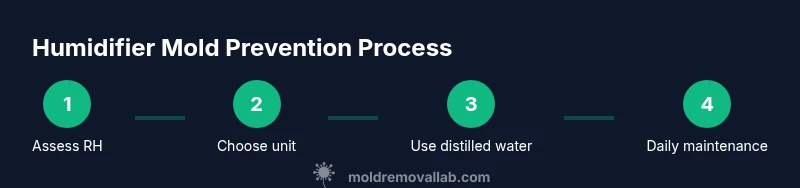
To prevent mold growth from a humidifier, use a clean, well-maintained unit in a ventilated room, start with distilled water, and clean daily. Empty and dry the tank when not in use, and maintain indoor humidity around 30–50%. Change filters regularly, and inspect surfaces for dampness or condensation. Good setup reduces mold risk and protects indoor air quality.
Understanding mold risk with humidifiers
According to Mold Removal Lab, humidifiers can improve comfort but may become mold sources if not managed properly. Mold thrives where moisture accumulates, so rooms with poor airflow or lingering condensation are hotspots. In homes, many mold issues stem from humidity mismanagement around devices designed to add moisture. This section explains how humidifier design, placement, and routine care influence mold risk, and why simple habits are often enough to prevent problems. Proper care starts with choosing the right unit, placing it away from walls and furniture, and cleaning all parts of the device regularly. By understanding these dynamics, homeowners can reduce common mold pitfalls and maintain healthier indoor air.
Choosing the right humidifier type for mold prevention
Humidity-add devices come in several designs, and some are more mold-friendly than others. Ultrasonic humidifiers produce fine mist that travels farther and can condense on walls or ceilings if not properly ventilated. Evaporative models tend to be less likely to over-humidify a room because they rely on a wick and a fan, which helps regulate output. Warm-mist units boil water, which can reduce bacteria but may pose a scald risk in homes with children or pets. For mold prevention, prioritize evaporative or carefully managed ultrasonic units, ensure good room ventilation, and avoid running devices in closed spaces without airflow. In all cases, use distilled water to minimize mineral residue that can harbor microbes and follow manufacturer cleaning recommendations to minimize mold-friendly residues.
Water quality and cleaning regimen that fights mold
Water quality matters far beyond taste. Tap water contains minerals that can accumulate as scale inside the tank, creating niches where mold can thrive. Distilled or demineralized water reduces mineral buildup and helps keep the tank clean. Implement a regular cleaning routine: rinse the reservoir daily, wipe all surfaces with a mild cleaner, and let parts dry completely before reassembly. Deep clean with a mixture of white vinegar or a hydrogen peroxide solution periodically to disrupt any biofilm that forms. Avoid leaving water standing in the tank for extended periods, and never store a humidifier with standing water inside. These practices dramatically reduce mold-friendly environments and support healthier humidity management.
Humidity targets and room setup
Aim for indoor humidity in the moderate range, typically around 30–50% RH, to balance comfort with mold risk. Use a reliable hygrometer to monitor RH levels, and adjust output accordingly. Place the humidifier on a hard, level surface away from walls or electronics to prevent moisture from collecting on surfaces. Ensure the room has adequate ventilation, such as a ventilation fan or open door periodically, to prevent stagnant air. If the room tends toward dampness, reduce output or shorten operating times. Correct placement and monitoring are essential to preventing mold without sacrificing comfort.
Daily maintenance routine to keep mold away
Create a quick daily ritual: check the water level, empty the reservoir if you won’t be using the unit for several hours, wipe down all interior tank surfaces with a damp cloth, and dry the tank completely before storing. Drying prevents residual moisture that could feed mold between uses. Change the water daily if you’re using a portable unit in high-humidity areas, and never leave damp parts exposed to air overnight. Regular maintenance reduces the chance of mold taking hold and keeps your unit performing efficiently.
Filter care and replacement
If your humidifier uses a filter, follow the manufacturer’s guidance for replacement intervals. Dirty or clogged filters can become fungal growth zones and reduce efficiency. Rinse or replace filters as recommended, and avoid reusing old filters. When you replace a filter, rinse the tank and all contact surfaces, then dry thoroughly before reassembly. Keeping filters clean and fresh is a simple but powerful step in preventing mold in the humidifier environment.
When to avoid humidifiers and signs of mold
If you notice a persistent musty odor, visible mold growth on the device, or chronic condensation on walls, stop using the unit and inspect both the humidifier and surrounding spaces. Mold can grow behind furniture or inside walls where moisture from a humidifier has accumulated. If symptoms worsen or you suspect household mold beyond the device, contact a mold remediation professional. Regular inspection and cautious operation help you avoid unsafe conditions and protect your home.
Practical deployment in different spaces
Bedrooms, living rooms, and bathrooms each have unique humidity dynamics. In bedrooms, use a compact, easy-to-clean model and place it away from headboards or fabric that can wick moisture. In living rooms, ensure the unit is on a stable surface with good air circulation. In bathrooms, consider a vented setup and a small unit that won’t saturate tiles or walls. Adapting your approach to each space reduces the risk of mold while maintaining comfort.
Troubleshooting and verification
If moisture appears on walls or windows after running a humidifier, recheck your RH settings and venting. Consider moving the unit to a more ventilated area or shortening run times. Use your hygrometer to verify RH stays within target range over 24–48 hours. For ongoing issues, deep-clean the unit and check for scale buildup inside the tank. Documentation of humidity readings over time helps identify patterns and prevent mold formation.
Authoritative sources and further reading
For deeper guidance, consult official sources on mold prevention and indoor air quality: • https://www.cdc.gov/mold/default.htm • https://www.epa.gov/mold • https://www.osha.gov/mold. These resources explain mold risks, humidity management, and safe cleaning practices that complement hands-on steps you can take at home. Integrating these standards with practical maintenance forms a solid defense against mold related to humidifiers.
Tools & Materials
- Humidifier (evaporative or ultrasonic)(Choose a model with a cleanable water tank and accessible base for descaling)
- Distilled water(Minimizes mineral buildup and bacterial growth)
- Hygrometer / indoor humidity monitor(Target RH ~30-50%)
- Soft microfiber cloth(For daily wipe-downs and tank exterior)
- White vinegar (5%)(Use for periodic tank deodorizing and mineral removal)
- Hydrogen peroxide (3%) or baking soda(For tough cleaning spots; neutralizes odors)
- Gloves(Protect skin during cleaning)
- Soft brush or old toothbrush(Scrub corners and tank seams)
Steps
Estimated time: 20-40 minutes
- 1
Assess room humidity
Place a hygrometer in the target room and record baseline RH. If RH is consistently above 50% or below 30%, adjust your plan before operating the humidifier.
Tip: Use a digital hygrometer for quick readings and always measure for at least 24 hours when possible. - 2
Choose and position the unit
Select a unit with a cleanable tank. Position it on a stable surface away from walls, electronics, and fabrics to reduce moisture transfer to surfaces.
Tip: Keep at least 3 feet of clearance around the unit for proper airflow. - 3
Fill with distilled water
Fill the reservoir with distilled water to minimize mineral buildup. Do not mix water sources, which can promote scaly deposits where microbes hide.
Tip: Label containers to avoid accidental re-use of mineral-rich water. - 4
Set target humidity
Set the device to maintain 30–50% RH in the room. Use the hygrometer to verify that the RH remains within this range over several hours.
Tip: If you notice condensation on windows, reduce output or run the unit intermittently. - 5
Run and monitor ventilation
Keep the room ventilated with occasional doors/windows open or a connected exhaust fan to prevent stagnant air.
Tip: Ventilation helps distribute humidity evenly and reduces mold risk. - 6
Daily surface maintenance
Wipe exterior surfaces and the tank rim daily with a damp cloth, then dry. Remove visible moisture promptly to prevent microbe growth.
Tip: Never leave standing water in the reservoir overnight. - 7
Weekly deep clean
Empty the tank, rinse with distilled water, and scrub corners with a soft brush using a solution of vinegar or hydrogen peroxide. Rinse again and dry completely.
Tip: Descale mineral deposits during deep clean to improve efficiency. - 8
Check filters (if applicable)
If your model uses a filter, inspect and replace it per the manufacturer's schedule. A clogged filter can harbor mold and reduce effectiveness.
Tip: Discard old filters in sealed bags to minimize contaminant spread. - 9
Ongoing verification
Continue to monitor RH and surfaces. If musty odors appear or RH drifts, re-evaluate placement, cleaning frequency, or consider alternative devices.
Tip: Keep a simple log of RH readings and cleaning dates for accountability.
FAQ
Can a humidifier cause mold if it's not cleaned properly?
Yes. If a humidifier is not cleaned regularly, mineral buildup and damp surfaces can harbor mold and bacteria. This can affect indoor air quality. Regular cleaning and drying are essential.
Yes. If you skip cleaning, mold can grow in the reservoir and on surfaces, affecting air quality.
What humidity range helps prevent mold growth?
A safe target is roughly 30–50% relative humidity. This range helps reduce mold risk while keeping the air comfortable.
Aim for about 30 to 50 percent humidity to minimize mold risk.
Is distilled water always necessary?
Using distilled or demineralized water reduces mineral deposits that can shelter mold and bacteria. It’s highly recommended for most humidifiers.
Yes, distilled water is strongly recommended to reduce mineral buildup.
How often should I clean my humidifier?
Do a daily wipe-down of accessible surfaces and a deep clean at least once a week. If you notice odd odors or visible buildup, clean sooner.
Clean daily and do a deep clean weekly, or more often if you notice issues.
What signs indicate mold in or around a humidifier?
Look for musty smells, visible discoloration, or slimy residues in the tank. Condensation on walls or windows around the unit is also a warning sign.
Musty odor or visible mold around the unit means you should stop using it and inspect thoroughly.
Watch Video
The Essentials
- Use distilled water to minimize mineral buildup.
- Maintain room humidity at 30–50% RH.
- Clean and dry the humidifier daily; deep clean weekly.
- Monitor surfaces for moisture and adjust placement as needed.