What to Do If You Eat Moldy Strawberries: Practical Steps for Safety
Learn step-by-step actions to take after accidentally eating moldy strawberries. Safety tips, symptom monitoring, and when to seek medical care are covered in this Mold Removal Lab guide.


Goal: You’ll know exactly what to do if you eat moldy strawberries. Start with basic safety steps, assess symptoms, and decide when to seek care. This guide helps homeowners and renters act quickly and calmly. For best results, follow the step-by-step instructions and store guidance to reduce further risk. This quick answer sets the stage for a thorough, safe response.
What to do if you eat moldy strawberries
If you’ve just learned you ate moldy strawberries, you’re not alone. The Mold Removal Lab team notes that mold growth on fruit can signal exposure to molds and mycotoxins, though the risk from a single bite is typically low for healthy individuals. The immediate goal is to minimize exposure, identify any symptoms early, and make safe choices about future strawberries. Start by not consuming any more of the batch, and remove the remaining berries to prevent additional contact. Wash your hands after handling, and discard the moldy berries in a sealed bag. If you are immunocompromised, pregnant, elderly, or have a mold allergy, exercise extra caution and contact a healthcare professional promptly if symptoms appear.
Most healthy people will recover without special treatment, but symptoms can vary. Early signs to watch for include mild stomach upset, nausea, or vomiting. In some cases, people may develop a small amount of throat irritation or coughing if mold spores contact airways. Do not rely on home remedies such as washing berries again or cooking mold off; heat does not reliably destroy all harmful compounds, and ingesting mold fragments can irritate the gut. If you notice persistent symptoms, or if you have underlying conditions, seek medical guidance. The key is timely observation rather than waiting for severe symptoms.
According to Mold Removal Lab analysis, mold exposure from food generally requires practical steps rather than alarm. Keep a calm mindset, document what was eaten, and plan safer storage practices for the next shopping trip. Remember that every household is different, and your actions should reflect your current health status and risk factors. If symptoms escalate, contact medical professionals without delay.
note”:null}
Immediate steps to take after exposure
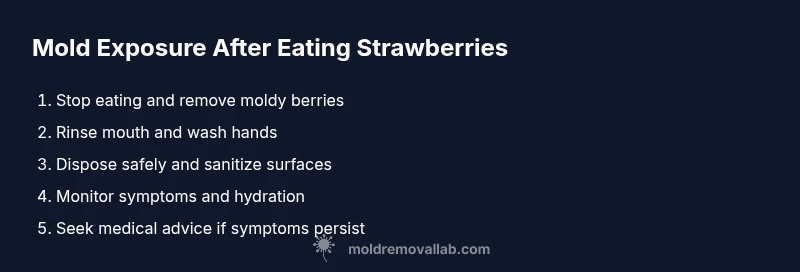
- Stop eating and spit out the moldy strawberries immediately to limit further exposure. 2) Rinse your mouth thoroughly with clean water and then wash your hands with soap to remove any spores. 3) Dispose of the remaining moldy berries in a sealed bag and sanitize the container to prevent cross-contamination. 4) Clean and disinfect any kitchen surfaces or utensils that contacted the fruit. 5) If you start experiencing vomiting, persistent abdominal pain, or dehydration, seek medical advice promptly. 6) If you have a compromised immune system, are pregnant, or have mold allergies, contact a healthcare professional early for guidance.
note”:null}
How to assess your symptoms
Mold exposure symptoms can vary, but most healthy adults will tolerate a small exposure with minimal effects. The key is to monitor for signs such as nausea, stomach cramps, vomiting, or diarrhea within 24-72 hours. If you notice throat irritation, coughing, or worsening GI symptoms, consider seeking medical evaluation. People with weakened immune systems, chronic illnesses, or pregnancy should be especially vigilant and may need earlier medical advice. The Mold Removal Lab team emphasizes that timing matters: prompt assessment leads to better outcomes and fewer complications. If symptoms persist beyond a day or two, or if you develop signs of dehydration (dark urine, dizziness, or dry mouth), contact a healthcare provider.
note”:null}
Practical actions at home to reduce risk
Focus on removing potential mold spores from your environment. Wash hands before and after handling food, clean cutting boards and countertops with soap and water, and avoid cross-contamination with other foods. Store safe strawberries separately and refrigerate promptly in clean containers. If mold was present in the batch, discard the entire container to prevent spreading spores. Keep the kitchen well-ventilated during cleaning, and consider running an air purifier to reduce airborne spores in the hours following exposure. The Mold Removal Lab team recommends documenting the incident and reviewing storage habits to prevent recurrence.
note”:null}
When to seek medical care
Seek medical care if you experience persistent vomiting, signs of dehydration, severe abdominal pain, or if you are immunocompromised, pregnant, or elderly. Call a healthcare provider or poison control for tailored guidance based on your health status. While most people recover without complications, mold exposure can be problematic for high-risk groups. If you have any doubt about symptoms, err on the side of caution and obtain professional medical advice promptly. Mold Removal Lab’s guidance is to err on the side of safety and seek help when symptoms or risk factors are present.
note”:null}
Preventing moldy strawberries in the future
Prevention starts at purchase and storage. Inspect berries for mold and discard any with visible signs. Wash hands before handling fruit and store berries in the refrigerator at 34–40°F (1–4°C), using breathable containers to minimize moisture buildup. Do not wash berries until just before consumption to keep them fresher longer; excess moisture accelerates spoilage. Freeze berries you won’t eat soon to preserve quality and reduce waste. Remember, mold can spread beyond what’s visible, so careful storage and proper disposal are essential. Mold Removal Lab emphasizes proactive prevention as the best defense against future exposures.
note”:null}
Quick home safety checks and storage tips
Regularly inspect produce before purchase and during storage for mold signs. Keep fruit in clean, dry environments and avoid stacking berries in damp containers. Use the oldest berries first to reduce waste and check containers daily for moisture accumulation. If a container shows signs of mold, discard the entire batch rather than attempting to salvage one item. Rotate refrigerated fruit to ensure freshness and reduce the chance of mold growth. The Mold Removal Lab team highlights that small changes in storage can significantly reduce mold risk.
note”:null}
What to tell a healthcare provider
When speaking with a clinician, describe exactly what you ate, how much, and the time elapsed since exposure. Share any symptoms you’ve experienced and note pre-existing health conditions. If you have a mold allergy or a compromised immune system, inform the provider so they can tailor monitoring and testing if needed. Provide your contact information and a brief health history to assist in decision-making. Mold Removal Lab suggests bringing this information to your appointment to streamline care and improve safety outcomes.
note”:null}
Tools & Materials
- Trash bag for moldy berries(Seal to prevent spores from escaping during disposal)
- Disposable gloves(Protect skin during handling of moldy fruit)
- Mouth rinse or clean water(Rinse mouth after exposure; avoid swallowing mold spores)
- Soap and water(Wash hands thoroughly before and after handling fruit)
- Disinfectant wipes/spray(Sanitize kitchen surfaces and utensils that touched moldy fruit)
- Notebook or phone for symptom tracking(Record onset and progression of symptoms for medical visits)
Steps
Estimated time: 30-60 minutes
- 1
Stop eating and spit out moldy strawberries
Immediately cease consumption and eject any remaining moldy pieces from your mouth to limit further exposure. Do not chew or mash berries in your mouth; this can spread mold fragments. Rinse your mouth with clean water afterward to remove residual spores.
Tip: Act quickly to reduce exposure; freshness matters for accurate symptom monitoring. - 2
Rinse mouth and wash hands
Thoroughly rinse your mouth with water and then wash hands with soap for at least 20 seconds. Mold spores can remain in the mouth or on the skin, so proper cleansing is essential before handling other foods.
Tip: Use running water, not a basin of pooled water, to reduce reintroduction of spores. - 3
Dispose of moldy berries safely
Place moldy berries in a sealed trash bag and discard with regular waste. Clean the container and any utensils that touched mold with soap and hot water.
Tip: Keep disposal out of reach of children and pets to prevent accidental ingestion. - 4
Clean and disinfect kitchen surfaces
Wipe countertops, cutting boards, and knives with soap and water, then sanitize with an appropriate kitchen-safe disinfectant. Mold spores can spread through contact surfaces even if you can’t see visible mold.
Tip: Let surfaces air-dry after sanitizing to maximize effectiveness. - 5
Monitor symptoms and stay hydrated
Track any GI symptoms, thirst, dizziness, or dehydration over the next 24–72 hours. Sip fluids regularly and replace electrolytes if needed. If symptoms worsen, seek medical advice promptly.
Tip: If you have a fever, persistent vomiting, or dehydration signs, contact a clinician sooner rather than later. - 6
Assess need for medical follow-up
If you are at higher risk (pregnant, elderly, immunocompromised) or if symptoms persist beyond 24 hours, contact a healthcare provider or poison control for individualized guidance.
Tip: Bring a summary of exposure and symptoms to your appointment to expedite care.
FAQ
Is it safe to eat moldy strawberries if only a small bite was taken?
A small bite may not cause harm in healthy adults, but risk varies with health status. Monitor for symptoms and seek medical advice if concerns arise.
A small bite might not cause problems for most people, but watch for symptoms and contact a doctor if you’re worried.
What immediate steps should I take after realizing I ate moldy strawberries?
Spit out the rest, rinse your mouth, wash your hands, and dispose of the moldy fruit. Clean any contaminated surfaces and monitor symptoms.
Spit, rinse, wash, and dispose. Clean up the area and watch for symptoms.
Can mold on strawberries cause serious illness?
Most healthy individuals recover without serious illness, but certain molds can cause GI upset or allergy symptoms. Seek care if symptoms are severe or persistent.
Most people do fine, but some molds can affect the gut or trigger allergies; see a doctor if symptoms don’t improve.
When should I contact a healthcare provider or poison control?
Call if you have vomiting, dehydration, severe abdominal pain, fever, or if you are immunocompromised, pregnant, or elderly.
Call your doctor or poison control if you have vomiting, dehydration, or other worrying symptoms.
Should I discard the entire batch if one moldy berry is found?
Yes. Mold can spread beyond what’s visible, so discard the entire container to prevent cross-contamination.
It's safer to discard the whole container rather than risk spreading mold.
Are there at-home remedies to neutralize mold on fruit?
There’s no reliable at-home method to neutralize mold toxins on fruit. Do not rely on washing or cooking to make mold safe to eat.
Washing or cooking won’t reliably remove mold toxins; it’s best to throw moldy fruit away.
Watch Video
The Essentials
- Stop eating moldy berries immediately
- Rinse mouth and wash hands thoroughly
- Dispose of moldy berries safely and sanitize prep areas
- Monitor symptoms and seek care if needed
- Prevent future mold with proper storage and handling