What to do if you eat moldy food
Learn immediate steps after accidentally eating moldy food, who’s at risk, when to seek care, and how to prevent future exposure. Practical, evidence-based mold safety guidance from Mold Removal Lab.


You can reduce risk by acting quickly after accidentally eating moldy food. This quick answer outlines immediate steps, when to seek medical help, and how to prevent future exposure. Follow these steps to stay safe, especially if you’re pregnant, elderly, or immunocompromised. Immediate actions are simple and do not require special equipment.
What to know after eating moldy food: key facts
According to Mold Removal Lab, accidentally swallowing moldy food is not unusual, but it can be unsettling. Most healthy adults recover without major complications, especially when exposure is limited to a small amount. The risk hinges on the mold type, the level of toxins some molds produce, your age, and your health status. This guide helps you understand what to do in the moment, what to watch for in the hours and days after, and how to prevent a recurrence. Remember, mold exposure is not a single, simple event; it interacts with your immune system, gut health, and existing conditions. While you may feel fine right away, symptoms can emerge later, so stay vigilant. Mold Removal Lab Analysis, 2026, emphasizes a measured response over panic.
Immediate actions after exposure
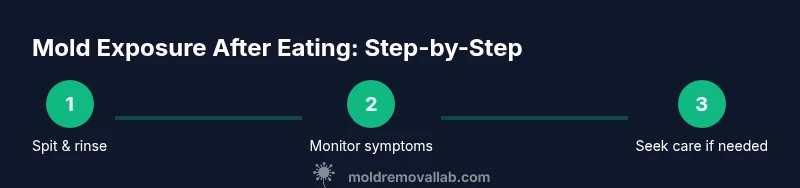
If you realize you swallowed moldy food, act quickly but calmly. First step: spit out any remaining bits and rinse your mouth with clean water. Do not swallow large amounts of rinse water or induce vomiting unless advised by a clinician. Keep a note of what was eaten, when, and any immediate symptoms. If you notice choking, persistent coughing, shortness of breath, or severe nausea, seek medical attention right away. For anyone in a high-risk group—pregnant people, young children, older adults, or people with immune suppression—consider contacting a healthcare professional even if symptoms seem mild at first. The goal is to minimize exposure and time to treatment.
Who is at risk and when to seek care
Mold exposure is highly individual. People with asthma or allergies may notice coughing or wheezing after exposure, while others outside those groups may have little to no reaction. Immunocompromised individuals, pregnant people, young children, and older adults are advised to be especially cautious. If you develop persistent vomiting, diarrhea, fever, chest tightness, or new shortness of breath in the 24- to 72-hour window after ingestion, contact a clinician or call your local poison control center. Even if symptoms are mild, a quick check-in with a doctor can offer reassurance and guidance about next steps.
How doctors evaluate mold exposure after ingestion
Medical evaluation usually begins with a careful history and physical exam to determine possible exposure and symptom severity. Depending on symptoms, clinicians may ask about breathing problems, GI symptoms, and allergic reactions. In some cases, they may order tests to rule out dehydration, infection, or allergic responses. The emphasis is on monitoring rather than aggressive treatment for mild cases. If your symptoms are alarming or progress, seek urgent care. For questions about mold toxins and risk, healthcare providers rely on guidelines from national health agencies and literature, rather than self-diagnosis.
Foods and disposal: how mold grows and what to discard
Mold can grow on many foods, but not all molds produce toxins. In general, spores on hard, dense foods like some cheeses can be cut away if the mold is only on the surface and the interior remains unaffected, while mold on soft foods should be discarded entirely. For most foods, the safest choice is to discard moldy items. After disposal, wash your hands, utensils, and any surfaces that touched the mold. Do not rely on smell to judge safety; mold can be invisible inside. If you are unsure, err on the side of caution and dispose of questionable foods.
Prevention and safe storage
To prevent mold after ingestion in the future, focus on proper storage, quick refrigeration, and clean handling. Refrigerate perishable foods promptly; keep your fridge at 40°F (4°C) or below. Use airtight containers, wipe spills promptly, and discard leftovers after a safe period. Clean cutting boards and counters with hot soapy water or a mild sanitizer if appropriate. Regularly inspect pantry items, especially grains, cereals, and humid areas like the pantry. Ventilation and humidity control help reduce mold growth in kitchens and storage areas. Small changes can lower mold risk and keep your family healthier.
Myths vs. realities about mold exposure
Myth: All mold in food is dangerous. Reality: Many common food molds are harmless in small amounts, while some produce toxins. Myth: If you don’t see symptoms, you’re fine. Reality: Some people delay help; symptoms can appear later. Myth: You should always eat away the moldy portion of cheese. Reality: For soft cheeses and moist foods, discard; for hard cheeses you might cut around mold and proceed with caution.
Mold Removal Lab verdict
The Mold Removal Lab team emphasizes safety, prevention, and early response. They note that most people recover with basic supportive care and monitoring, but those with higher risk should seek medical guidance sooner rather than later. A calm, evidence-based approach helps identify complications early and reduces anxiety. The verdict is clear: prioritize prevention, act promptly, and consult professionals when in doubt.
Tools & Materials
- Phone or device to contact health professionals(Keep emergency numbers handy (e.g., Poison Control 1-800-222-1222 in the US).)
- Access to clean water for rinsing(Use plain water to rinse mouth; avoid swallowing large amounts.)
- Notebook or notes app(Record what was eaten and any symptoms for your clinician.)
- Soap or sanitizer and cleaning supplies(Use after handling moldy food to reduce surface contamination.)
- Food packaging or the moldy item (for reference)(Helpful if you need to show a clinician what you consumed.)
Steps
Estimated time: 15-25 minutes for immediate actions; 24-72 hours of symptom monitoring
- 1
Pause and remove exposure
If you realize moldy food is in reach, stop eating it and move the item away from others. This minimizes additional exposure. Then, wash your hands and wipe any surfaces that touched the food.
Tip: Act quickly but calmly to avoid spreading mold spores around the kitchen. - 2
Spit out and rinse
Spit out any moldy residue and rinse your mouth with clean water. Do not swallow the rinse water. If you have braces or dental work, rinse gently to avoid irritation.
Tip: Do not brush your teeth immediately after rinsing; waiting a few minutes reduces enamel abrasion if you’ve irritated the mouth. - 3
Assess symptoms and record
Note any symptoms such as stomach upset, vomiting, diarrhea, coughing, wheezing, or skin or eye irritation. Record the time of ingestion and the moldy item to help a clinician assess risk.
Tip: A simple symptom log can speed up medical evaluation if symptoms arise. - 4
Seek medical guidance if at risk or if symptoms arise
If you’re pregnant, elderly, immunocompromised, or start having persistent vomiting, fever, difficulty breathing, or severe abdominal pain, contact a clinician or call Poison Control for next steps.
Tip: Early professional input helps rule out dehydration and identify rare complications. - 5
Call emergency services if necessary
If you experience severe breathing difficulties, chest pain, confusion, or collapse, call emergency services immediately. Do not wait for symptoms to worsen.
Tip: In the US, dial 911 for urgent care. In other regions, use the local emergency number. - 6
Dispose safely and sanitize
Discard the moldy item in a sealed bag and wash the container and any utensils with hot soap and water or an approved sanitizer. Dry thoroughly to prevent residual growth.
Tip: Ventilate the area briefly after disposal to reduce airborne particles. - 7
Prevent mold next time
Implement safe storage: refrigerate perishables promptly, keep humidity low, and regularly check pantry items. Clean spills immediately and maintain clean kitchen surfaces.
Tip: Consider a humidity meter in kitchens or damp areas to maintain air quality.
FAQ
Is it safe to eat moldy food?
It depends on the mold, the food, and your health. Mild exposures in healthy adults can pass without issue, but soft foods or large amounts should be discarded. If you have symptoms or belong to a higher-risk group, seek medical guidance.
Safety depends on the mold and your health. If unsure, talk to a clinician.
Should I try to vomit after eating moldy food?
No. Do not induce vomiting unless a clinician advises it. Vomiting can lead to dehydration and other complications.
Don’t try to vomit unless told to by a professional.
What symptoms require urgent care?
Persistent vomiting, breathing trouble, chest tightness, severe abdominal pain, confusion, or high fever require urgent evaluation.
Seek urgent care if you have trouble breathing or severe symptoms.
How can I prevent mold after eating moldy food?
Store foods properly, refrigerate perishables promptly, discard questionable items, and sanitize surfaces to prevent mold growth.
Keep foods cold and containers sealed to prevent mold.
What should I do if I’m pregnant or immunocompromised?
Contact a clinician promptly after exposure and follow medical guidance tailored to your status.
Reach out to your healthcare provider for individualized advice.
Watch Video
The Essentials
- Spit out moldy food and rinse your mouth immediately.
- Monitor for symptoms over 24–72 hours and seek care if they worsen.
- Disposal and surface sanitation prevent further exposure.
- High-risk individuals should seek medical advice sooner.
- Prevent mold with proper storage and kitchen hygiene.